Electric Vehicle Financing Options: San Jose Dealer Insights
A San Jose buyer's guide to EV financing options, electric car loans, and lease specials — plus how California incentives shape the smartest path forward.

If you're shopping for an electric vehicle in San Jose, the question isn't usually whether to go electric — it's how to pay for it without overcomplicating your finances. Between traditional loans, manufacturer-subsidized leases, credit union promotions, and a layered stack of California incentives, the financing decision often matters more than the model decision. Get it right and you can drive a new EV for less per month than a comparable gas car. Get it wrong and you'll leave thousands on the table.
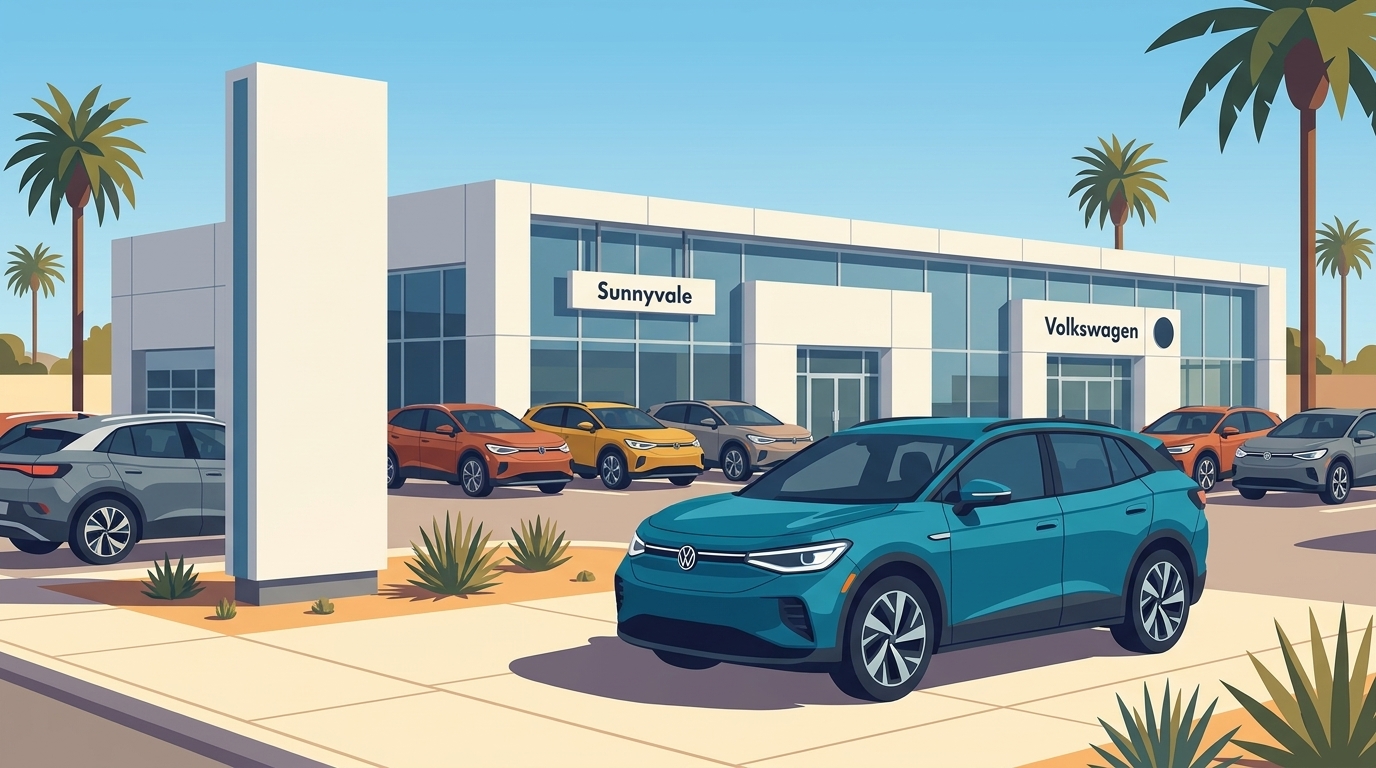
At Sunnyvale Volkswagen, we work with buyers across Silicon Valley — from Willow Glen to Berryessa to commuters coming up from Almaden Valley — and the same financing questions come up every week. Here's how to think through them.
Why EV Financing Is Different in San Jose
San Jose isn't a typical EV market. The Bay Area has one of the densest concentrations of EV ownership in the country, which means lenders here are fluent in EV residual values, charging infrastructure assumptions, and the interplay between federal credits and California's state-level rebates. That fluency works in your favor — you're more likely to find competitive rates and lease structures tuned for EVs specifically.
It also means you should expect more from your dealer's finance office. A San Jose buyer financing an ID.4 in 2026 should be walked through the federal Clean Vehicle Credit, the California Clean Vehicle Rebate Project (CVRP) eligibility status, and any utility-specific rebates from PG&E or Silicon Valley Power — not just handed a payment quote.
The Three Main EV Financing Paths
1. Traditional Auto Loans (Electric Car Loans)
A standard auto loan works the same for an EV as it does for a gas car: you finance the purchase price minus your down payment, pay it off over 36 to 72 months, and own the vehicle at the end. The wrinkles unique to EVs are tax credits and resale value.
The federal Clean Vehicle Credit of up to $7,500 can, under current rules, be transferred to the dealer at the point of sale and applied as a down payment — meaning eligible buyers don't have to wait until tax season. Eligibility depends on the vehicle, the buyer's income, and the vehicle's assembly and battery sourcing. We always confirm eligibility on the specific VIN before promising a credit, because the rules shift and not every trim qualifies.
Loans make sense if you drive a lot of miles, plan to keep the car beyond five years, or want to build equity. Bay Area commuters putting 18,000+ miles a year on a vehicle often come out ahead buying rather than leasing.
2. EV Lease Specials
Leasing has become unusually attractive for EVs, and that's not an accident. Because of how the federal Clean Vehicle Credit applies to leased vehicles, manufacturers can frequently pass through the full $7,500 as a capitalized cost reduction on a lease — even for vehicles or buyers that wouldn't qualify for the credit on a purchase. This is the single biggest reason EV lease specials in San Jose often look dramatically better than the equivalent loan math.
Leasing makes sense if:
- You want lower monthly payments and a newer vehicle every two to three years
- You're uncertain about long-term battery tech (a real concern as charging standards evolve)
- You drive under 12,000–15,000 miles per year
- You want to capture the federal credit without navigating personal eligibility rules
One recent reviewer described leasing a 2026 Tiguan with us as a process where the salesperson was "patient, professional, and incredibly helpful" — and that's the bar we hold ourselves to on lease conversations, because the structure of a lease (money factor, residual, acquisition fee, disposition fee) deserves real explanation.
3. Credit Union and Bank Financing
San Jose buyers have strong local credit union options — Technology Credit Union, Star One, Meriwest, and Provident among them — and these institutions often run EV-specific rate promotions. Bringing pre-approval to the dealership gives you a benchmark, and a good finance team will tell you honestly when the credit union beats what they can offer and when manufacturer-subsidized financing wins.
How California Incentives Stack
California's incentive landscape adds real money to the equation, but it's also where buyers get confused. As of 2026, here's the general framework San Jose buyers should ask about:
- Federal Clean Vehicle Credit: Up to $7,500 for qualifying new EVs, transferable to the dealer at point of sale for eligible buyers
- California Clean Vehicle Rebate Project (CVRP): Status and funding have shifted over time — always confirm current availability with your dealer or the CARB website before counting on it
- PG&E EV rebates: Utility-specific incentives for EV purchase and home charger installation
- HOV lane access: Not a financial incentive directly, but the time savings on 101, 280, and 880 have real value for Silicon Valley commuters
- Sales tax in California: Note that California taxes the full purchase price of a vehicle — trade-in value does not reduce the taxable amount, unlike some other states
That last point matters more than people realize. If you're trading in a $20,000 vehicle on a $50,000 EV, you'll pay California sales tax on the full $50,000, not on the $30,000 difference. It doesn't change whether trading in is the right move — but it should change how you compare offers.
What to Bring to the Finance Conversation
Before sitting down at any San Jose dealership, gather:
- Recent pay stubs or proof of income
- Your current auto insurance information
- Any pre-approval letter from your bank or credit union
- A realistic annual mileage estimate (be honest — under-reporting on a lease costs more later)
- Your most recent tax return if you plan to claim the federal credit on your return rather than transferring it at point of sale
Frequently Asked Questions
Is leasing or buying an EV better in San Jose right now?
For most buyers in 2026, leasing produces lower monthly payments because of how the federal credit passes through on leases. Buying makes more sense for high-mileage drivers and people planning to keep the vehicle long-term. We walk through both scenarios side by side with every buyer.
Can I get the $7,500 federal credit at the dealership instead of waiting for tax season?
For eligible new EVs and qualifying buyers, yes — current federal rules allow the credit to be transferred to the dealer and applied as a down payment at the point of sale. Eligibility depends on income limits, the vehicle's MSRP cap, and battery sourcing requirements, so confirm on the specific VIN.
Do San Jose credit unions offer better EV rates than dealer financing?
Sometimes. Local credit unions frequently run promotional EV rates that beat standard auto loan rates. However, manufacturer-subsidized financing on specific models can be lower still. The only way to know is to compare both — bring your credit union pre-approval to the dealership and ask for an honest comparison.
How does California sales tax affect my EV purchase?
California applies sales tax to the full purchase price of the vehicle, not the post-trade-in amount. Santa Clara County's combined rate applies in San Jose. Factor this in when comparing total out-the-door costs.
Closing Thoughts
EV financing in San Jose rewards buyers who slow down enough to understand the full stack — federal credit, lease pass-through, California incentives, utility rebates, and how your specific driving pattern interacts with all of it. The math isn't hard, but it's layered, and a thoughtful finance conversation can shift the real cost of ownership by thousands.
San Jose drivers who want this walked through in plain language — with the loan-versus-lease comparison done side by side and the incentive eligibility confirmed on a specific VIN — can reach the team at Sunnyvale Volkswagen at https://www.sunnyvalevw.com/. Whether you end up driving home in an ID.4, a plug-in hybrid, or deciding to wait another model year, the goal is for you to make the financing decision with the full picture in front of you.