New vs Used Electric Cars: Which Is Better in San Jose?
Comparing new and used electric vehicles in San Jose? Here's how price, range, warranty, and incentives stack up for Bay Area EV buyers in 2026.
For Bay Area drivers weighing their first — or next — electric vehicle, the question isn't whether to go electric. It's whether to buy new or used. San Jose has one of the deepest EV markets in the country, with strong dealer inventory on both sides of the equation and more than 1,600 public charging stations citywide. That depth is a gift to buyers, but it also makes the decision harder. The right answer depends on budget, daily driving needs, and tolerance for the small risks that come with pre-owned batteries.
This guide breaks down how new and used EVs compare across the dimensions that actually matter in San Jose: purchase price, range, warranty, battery health, incentives, technology, and local availability.
Purchase Price: Where Used EVs Pull Ahead
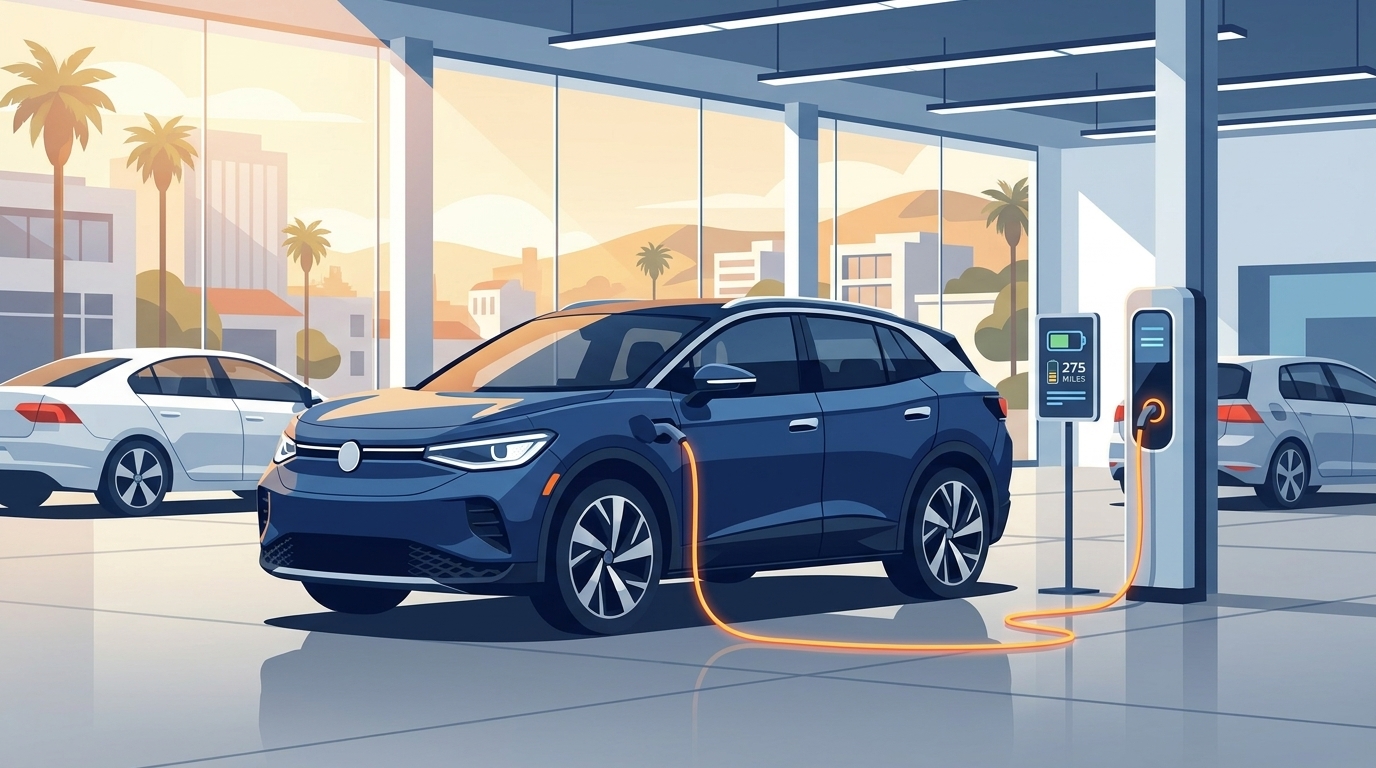
On sticker alone, used wins decisively. Quality used EVs can be found in the San Jose area starting around $10,000, with newer or premium pre-owned models commonly running $20,000 to $40,000 or more. New EVs, by contrast, generally start under $30,000 before incentives.
Incentives complicate the picture. San José Clean Energy notes that some new EVs can be effectively priced under $10,000 after stacking federal and California rebates — putting them in direct competition with entry-level used inventory. The catch: incentive eligibility depends on income caps, vehicle price caps, and current program rules, all of which are subject to change. The prior $4,000 federal used-EV credit has been eliminated, so used buyers should not count on federal support and should verify any remaining state or local programs before signing.
Driving Range and the San Jose Commute
The average new EV now exceeds 200 miles of range, with many current-generation models exceeding 250 to 300 miles EPA-rated. Used EVs vary far more widely. Earlier-generation models — particularly those from the first wave of mass-market EVs — often deliver 70 to 120 miles of real-world range, while more recent used inventory can approach new-EV figures.
For most San Jose drivers, even the lower end of that range is workable. The average Californian drives less than 32 miles per day, which means a 90-mile commuter car easily handles round trips between Willow Glen and downtown, or between Almaden Valley and a job in North San José. The math changes for drivers who routinely run the length of Silicon Valley up to San Francisco, or who take weekend trips to Tahoe or the Central Coast. Those drivers should lean toward longer-range new or late-model used EVs.
Warranty Coverage and Battery Life
One of the most common questions Bay Area buyers ask is how long electric car batteries last. The industry-standard answer is encoded in the warranty: most EVs carry an 8-year/100,000-mile battery warranty, and that coverage is transferable to subsequent owners. A new EV provides full bumper-to-bumper and battery coverage from day one. A used EV provides only what remains of the original warranty.
Consumer Reports explicitly recommends buying a used EV that is still under battery warranty. Outside that coverage window, the financial risk of a battery issue grows substantially, because the battery is the single most expensive component in the vehicle. Buyers shopping older used inventory should ask for the original in-service date and current odometer reading, then calculate exactly how much coverage is left.
Battery Health: The Used-EV Wildcard
New EVs come with factory-fresh batteries and the latest thermal management chemistry — no degradation to verify, no surprises. Used EVs require homework. Battery degradation is real, particularly on older models, and buyers should check the dashboard's range estimate against the vehicle's original EPA rating, use an OBD-II diagnostic tool, or consult third-party services that produce battery health reports. Some models have built-in battery health meters that make this straightforward.
Consumer Reports has flagged that many older EVs show below-average reliability scores, with the battery as the most consequential failure point. This doesn't disqualify used EVs — it just means the inspection step is non-negotiable.
Depreciation and Total Cost of Ownership
Depreciation is the single biggest argument for going used. EVs depreciate steeply in their early years, which is painful for original owners but a windfall for the second buyer. Used EVs rank among the most budget-friendly used cars on the market, and a buyer with a $25,000 budget can often get a significantly newer and more feature-rich EV than they could a comparable gas vehicle.
Operating costs are essentially identical between new and used. Charging an EV in San Jose costs about half the per-mile cost of gasoline, and SJCE customers can charge with electricity that is 60% renewable. That math holds whether the car cost $12,000 or $52,000.
Technology, Charging Speed, and Daily Usability
New EVs come with the latest driver assistance systems, current-generation infotainment, over-the-air software updates, and the fastest DC fast-charging rates available. Older used EVs often lack modern safety features and may charge noticeably slower at public fast chargers — a real consideration when using busy stations along the 101 or 880 corridors.
Newer used EVs (three to five years old) typically still offer competitive technology. The gap is largest at the older end of the used market.
The San Jose Dealer Landscape
Searching for "used electric cars for sale near me" or "electric vehicle dealership near me" in the San Jose area returns a deep set of options. The Stevens Creek auto corridor is a primary hub, with Stevens Creek Toyota recently listing 41 used EVs, and Honda of Stevens Creek, Audi San Jose, Capitol Acura, and Stevens Creek Chevrolet all carrying pre-owned electric inventory. High EV adoption in the Bay Area has built a robust off-lease and early-adopter trade-in pipeline.
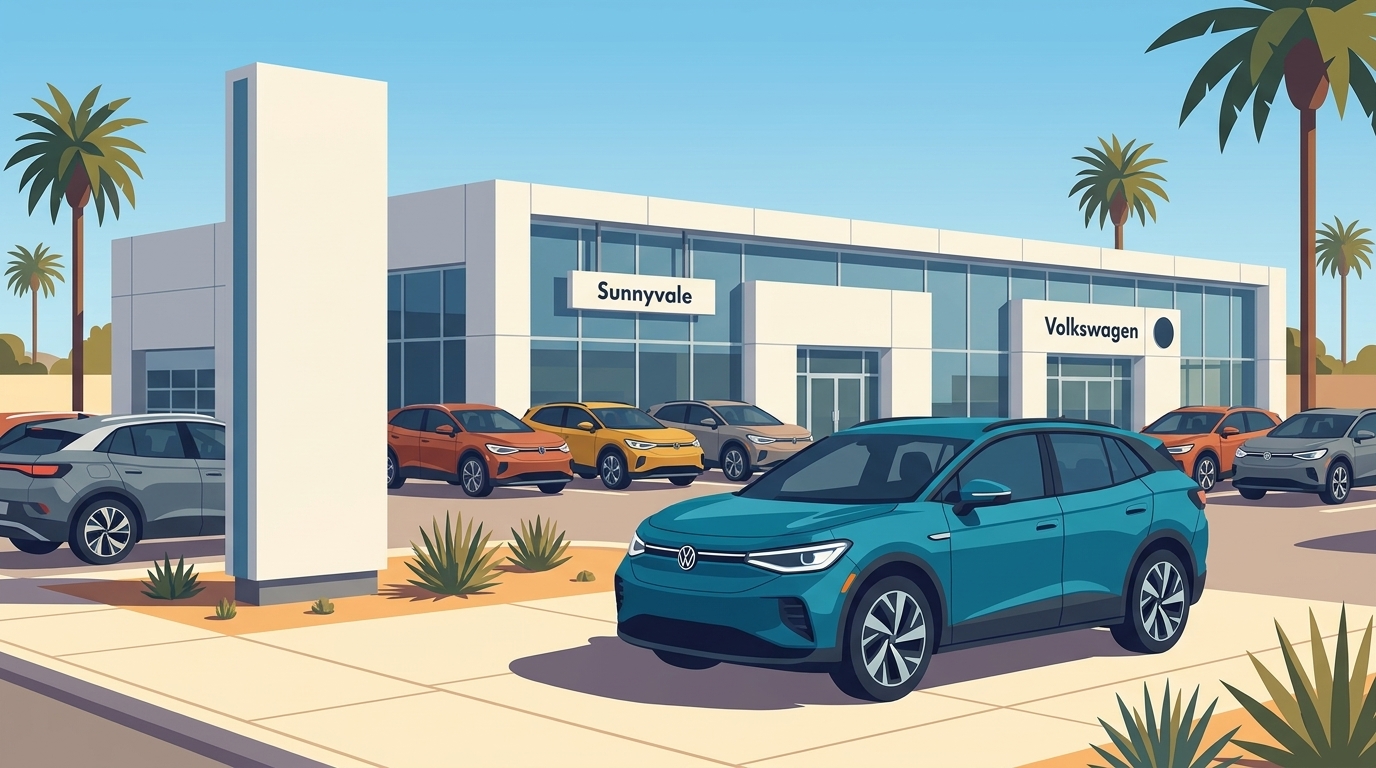
On the new side, dealers across the region run lease and finance promotions, with competitive pricing on slower-moving trims and occasional wait times on the most popular configurations. Sunnyvale Volkswagen, serving San Jose and the broader Bay Area, holds a 4.4-star rating from more than 1,455 Google reviews — with customers frequently noting the no-pressure environment and transparent process. One customer wrote: "from start to finish, the entire buying experience was smooth and stress-free." Another noted their sales representative was "the only sales representative to give me a complete breakdown of the cost" across multiple dealerships visited. Sunnyvale Volkswagen is among the franchised dealers buyers can consider when shopping the new and pre-owned EV market.
Which Should San Jose Buyers Choose?
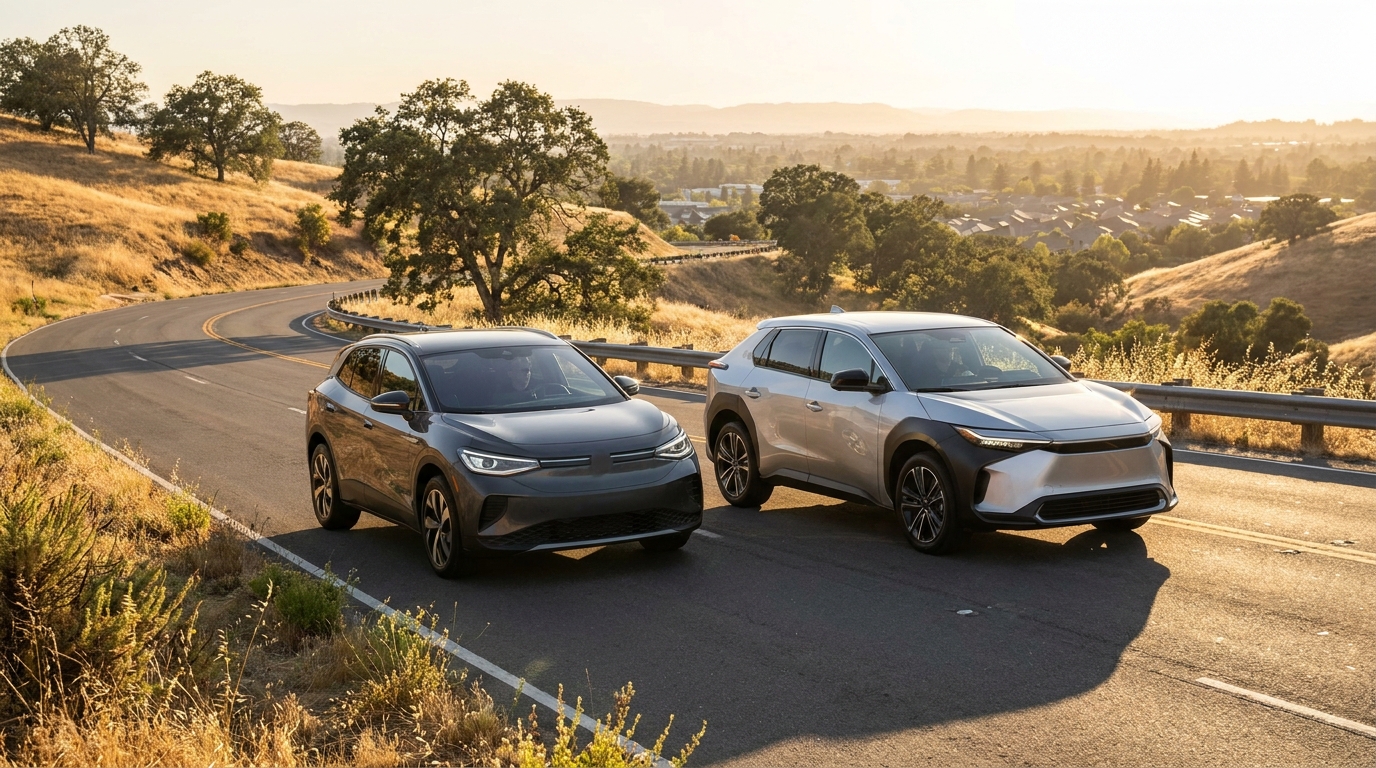
The decision usually comes down to three questions. First, what's the realistic budget after incentives? Buyers who qualify for the full stack of federal and California incentives on a new EV may find the net cost competitive with mid-tier used inventory. Second, what's the daily driving profile? Short urban commutes inside San Jose can be served by almost any used EV; long-distance or multi-city driving favors new or recent used models. Third, how much risk tolerance is there on battery condition? Buyers who want zero ambiguity should go new or stay strictly inside the 8-year/100,000-mile warranty window.
FAQs
How long do electric car batteries last?
Most EV batteries are covered by an 8-year/100,000-mile manufacturer warranty, and many continue functioning well beyond that period. Degradation varies by model, climate, and charging habits. Consumer Reports recommends buying a used EV that is still under battery warranty to limit financial exposure.
Are used EVs still a good deal without the federal tax credit?
Often, yes. The prior $4,000 federal used-EV credit has been eliminated, but heavy depreciation means used EVs still offer some of the lowest entry prices in the used-car market overall. State and local programs may still apply and are worth verifying.
Is charging infrastructure a concern in San Jose?
Less than in most U.S. markets. San José has more than 1,600 public charging stations, part of California's network of over 100,000 stations. Both new and used EVs use the same public infrastructure.
How can a buyer verify a used EV's battery health?
Compare the dashboard range estimate to the vehicle's original EPA rating, use an OBD-II diagnostic tool, check for built-in battery health meters where available, or use a third-party battery health reporting service before purchase.
Does it make sense to lease a new EV rather than buy new or used?
Leasing a new EV can make sense in San Jose when incentives are strong and technology is evolving quickly. Leasing caps exposure to future depreciation and battery uncertainty, and lease payments often incorporate available credits at the dealer level. The tradeoff is no ownership equity and mileage limits — worth weighing against your commute distance.
How does climate affect used EV battery health in the Bay Area?
The Bay Area's mild, temperate climate is one of the more favorable environments for EV batteries. Extreme heat accelerates degradation; San Jose's moderate temperatures generally slow that process compared to hotter inland or desert markets. Used Bay Area EVs are often in better battery condition than equivalent-mileage vehicles from hotter climates, though a battery health check remains essential.
The Bottom Line
For San Jose buyers prioritizing the lowest possible purchase price, a short commute, and willingness to verify battery condition, a used EV is hard to beat. For buyers who want maximum range, full warranty coverage, the latest technology, and the strongest incentive stack, a new EV often makes more sense — particularly once California and federal rebates are applied.
San Jose drivers who want to walk through the tradeoffs with a franchised dealer can reach Sunnyvale Volkswagen at https://www.sunnyvalevw.com/ to discuss new and pre-owned electric options suited to their commute, budget, and incentive eligibility.
"