Used Electric Cars for Sale in Santa Clara, CA
Compare new vs. used EV value in Santa Clara with data on depreciation, battery life, financing, and California incentives for 2026 buyers.

For Santa Clara buyers, a used EV typically delivers stronger dollar-per-mile value than a new one — but only if the battery health, warranty transfer, and California incentive stack align. The San Jose–Sunnyvale–Santa Clara metro has the highest zero-emission vehicle share of any California metro, nearly double the statewide average of roughly 6.5%, which means unusually deep local inventory from off-lease and early-ownership turnover. It also means prices sit above national norms, so the new-vs-used calculation here is different than it would be in, say, Fresno or Sacramento.
New vs. Used Electric Car: Which Is Better in 2026?
For most Santa Clara commuters, a two-to-four-year-old used EV is the better value; for buyers who need the latest range, charging speed, or federal tax credit certainty, a new EV can still pencil out. Mainstream midsize used EVs — Tesla Model 3/Y, Chevy Bolt EUV, Hyundai Kona EV, VW ID.4, Ioniq 5 — commonly list between $20,000 and $35,000 at franchised Bay Area dealers, which is where the depreciation curve starts to favor the second owner rather than the first.
The tradeoff is transparency. New EVs come with a full factory warranty and the current model year's battery chemistry and software. Used EVs require diligence around battery state-of-health, warranty transfer, and — in California specifically — CPO disclosure rules that don't exist in every state.
Where used wins
- Depreciation absorbed by the first owner. A Tesla Model Y in the Bay Area currently ranges from about $30,000 to $63,000 depending on trim and mileage, versus a considerably higher new-vehicle sticker.
- California's point-of-sale used EV rebate of up to $1,750 applies to qualifying used EVs under $25,000, which does not exist for new purchases.
- Broader model selection, including discontinued or hard-to-find configurations.
Where new wins
- Longer bumper-to-bumper coverage and the full 8-year/100,000-mile federal battery warranty floor.
- Newer battery chemistry and faster DC fast-charging curves.
- Access to NACS ports natively on more 2026 models, relevant for Bay Area Tesla Supercharger use.
How Long Do Electric Car Batteries Last?
Most modern EV batteries are engineered to retain 70–80% of their original capacity through the federally mandated 8-year/100,000-mile warranty, and real-world fleet data suggests many will function well beyond that. For a used EV shopper in Santa Clara, the meaningful question isn't "how long will it last" in the abstract — it's "how much capacity remains today, and how much warranty transfers to me."
California CPO law requires dealers to explicitly disclose battery and powertrain warranty transfer terms, which is an advantage over private-party purchases where those details are often unclear. When shopping used, ask for a battery state-of-health report (Tesla, Hyundai/Kia, and VW ID-series vehicles can produce one) rather than relying on range estimates from the dash, which recalibrate based on recent driving.
Bay Area climate helps here. Santa Clara's mild coastal-influenced temperatures put less thermal stress on EV batteries than desert markets like Phoenix or Las Vegas, which is one reason local off-lease inventory tends to test well.
What Used EVs Cost in Santa Clara in 2026
Pricing in Santa Clara runs above national averages because of local demand density and Bay Area cost-of-living. Realistic bands from current regional dealer inventory:
- Older or short-range EVs (2026–2026 Nissan Leaf, early Fiat 500e, Spark EV): $10,000–$19,000.
- Mainstream midsize used EVs (Model 3/Y, Bolt EUV, Kona EV, ID.4, Ioniq 5): $20,000–$35,000.
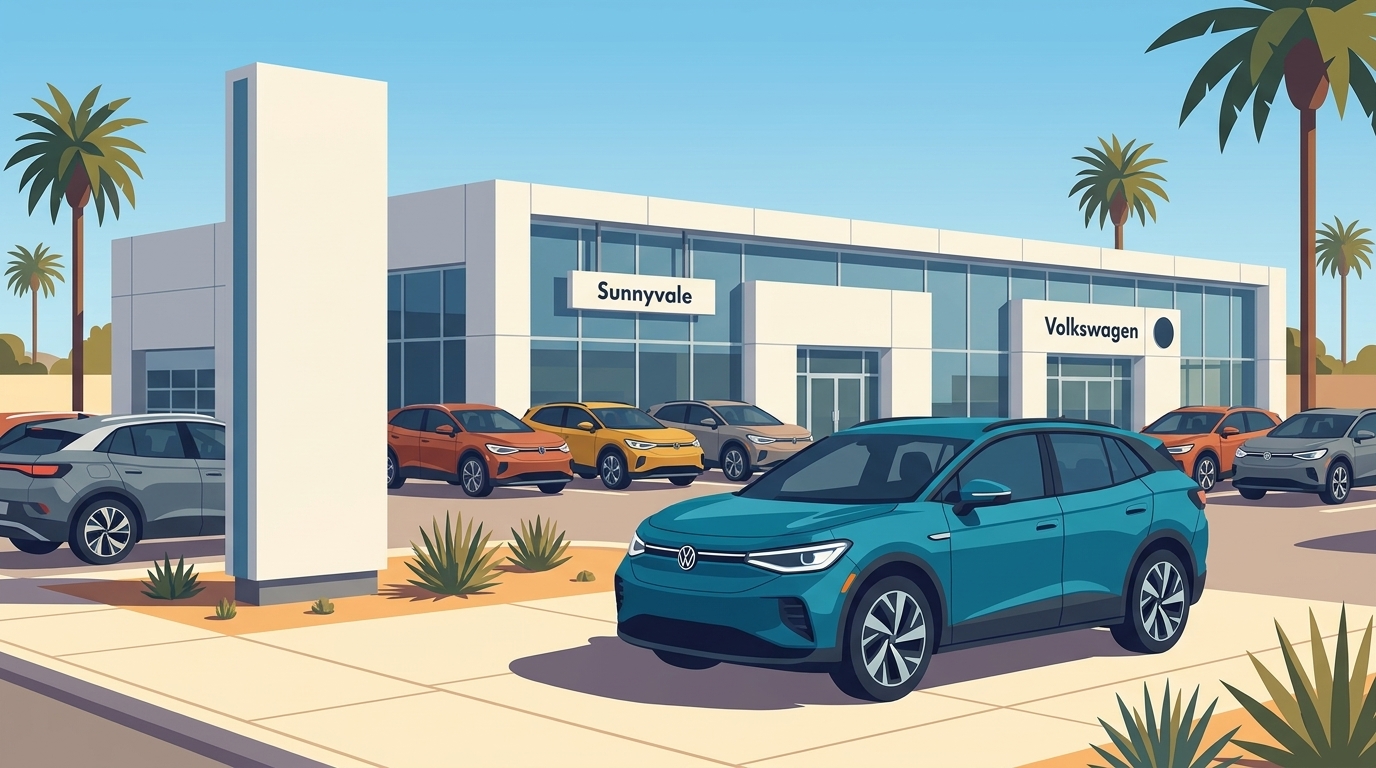
- CPO compact SUVs and EVs at Sunnyvale Volkswagen, including the VW ID.4: $28,000–$39,000.
- Premium and luxury used EVs (Audi e-tron, BMW i4, Porsche Taycan, Lucid, Rivian): $30,000–$65,000+.
- Salvage or auction EVs from platforms like AutoBidMaster and Copart, with yards in Hayward, Martinez, or San Martin: significantly below clean-title pricing, but battery damage risk is real.
Stevens Creek Subaru's pre-owned EV and hybrid inventory currently spans roughly $23,000 to $56,000, and Stevens Creek Porsche lists 25 pre-owned electric units, including nine Taycans and 16 electric Macans — a useful barometer for the luxury end of the market. Documentation fees at franchised dealers in this region typically run around $85.
The California Incentive That Changes the Math
California's point-of-sale rebate offers up to $1,750 for used EVs with a purchase price under $25,000, applied at participating dealers. Only full ZEVs qualify — plug-in hybrids are excluded — and buyers must be California residents, generally first-time ZEV owners. The price cap does not apply to vehicles from California-headquartered manufacturers like Rivian and Lucid.
One local wrinkle worth knowing: because the $25,000 cap creates a hard incentive boundary, some Bay Area sellers have been observed adjusting asking prices upward once vehicles fall near that threshold. An Audi e-tron reportedly moved from roughly $26,000 to $31,000 after the rebate program was announced. In practice, this means the sweet spot for the rebate is a vehicle priced clearly below $25,000, not one hovering at the cap.
Verify current funding availability and participating-dealer status through CARB, ElectricForAll.org, or the Driving Clean initiative before signing. Program details continue to evolve.
Electric Car Financing in the Silicon Valley Market
Financing a used EV in Santa Clara typically means working through franchised-dealer lender networks, credit unions, or captive-brand financing (VW Credit, Tesla Financial Services, Hyundai Capital). Franchised CPO programs generally offer the most competitive used-EV rates because the vehicles are pre-inspected and warranty-backed, which reduces lender risk.
California sales tax applies to the full purchase price of a used vehicle — the state does not offer a trade-in tax credit that reduces the taxable amount. Add district taxes, DMV title and registration fees, and the ~$85 dealer doc fee to arrive at true out-the-door pricing. EVs are exempt from California smog checks, so no emissions testing fee applies.
Multi-unit housing is common across Santa Clara — the neighborhoods around Rivermark, El Camino Real, and near Santa Clara University include significant apartment and condo stock — which affects home Level 2 charging feasibility. Buyers without dedicated parking should weigh vehicle range and public DC-fast-charging access (including Tesla Supercharger compatibility) more heavily than a homeowner in Cupertino or Los Gatos would.
Where to Shop Used EVs Near Santa Clara
Santa Clara itself has relatively few large franchised dealers, so most local buyers shop regionally across Sunnyvale, San Jose, and Mountain View. Hertz Car Sales operates directly in Santa Clara at 4401 Stevens Creek Blvd, offering Hertz Certified vehicles and a Rent2Buy program. Franchised CPO channels — including Sunnyvale Volkswagen for the ID.4 and other Volkswagen CPO EVs — bring warranty-backed inventory and disclosure protections that private-party listings do not. Serramonte Kia in San Jose covers Niro EV and EV6 shoppers, and Capitol Acura serves the broader used inventory market for Santa Clara, Sunnyvale, Cupertino, and Mountain View.
FAQs
Is a used EV cheaper to own than a used gas car in Santa Clara?
Generally yes, once fuel and maintenance are included, particularly given California gasoline prices. The gap narrows if the used EV needs an out-of-warranty battery repair, which reinforces the importance of warranty transfer and battery health verification at purchase.
Does California's used EV rebate work with dealer financing?
Yes, when applied at a participating dealer as a point-of-sale reduction. It effectively lowers the amount financed, which reduces monthly payments and total interest.
Should I consider a salvage-title EV to save money?
Only if the buyer is technically experienced and can independently assess battery condition. Battery pack damage on salvage EVs can cost more to repair than the vehicle is worth.
Do EV warranties transfer to used buyers?
Federal battery warranties (8 years/100,000 miles minimum) transfer with the vehicle, and California CPO rules require dealers to disclose transfer terms explicitly. Confirm the remaining coverage in writing before purchase.
The Bottom Line
For most Santa Clara buyers in 2026, a two-to-four-year-old used EV from a franchised CPO program offers the strongest value — depreciation is largely absorbed, warranty coverage remains meaningful, California's up-to-$1,750 rebate is available under $25,000, and disclosure rules protect the buyer. Shoppers focused on the Volkswagen ID.4 or other CPO Volkswagen EVs can start with Sunnyvale Volkswagen at https://www.sunnyvalevw.com/ to review current CPO inventory, warranty transfer terms, and out-the-door pricing for the Santa Clara market.