VW Electric SUV Dealer in Santa Clara, CA: ID.4 vs Field
Compare the 2026 VW ID.4 against the Chevy Equinox EV for Bay Area commuting — pricing, range, cargo, and charging analyzed for Santa Clara drivers.
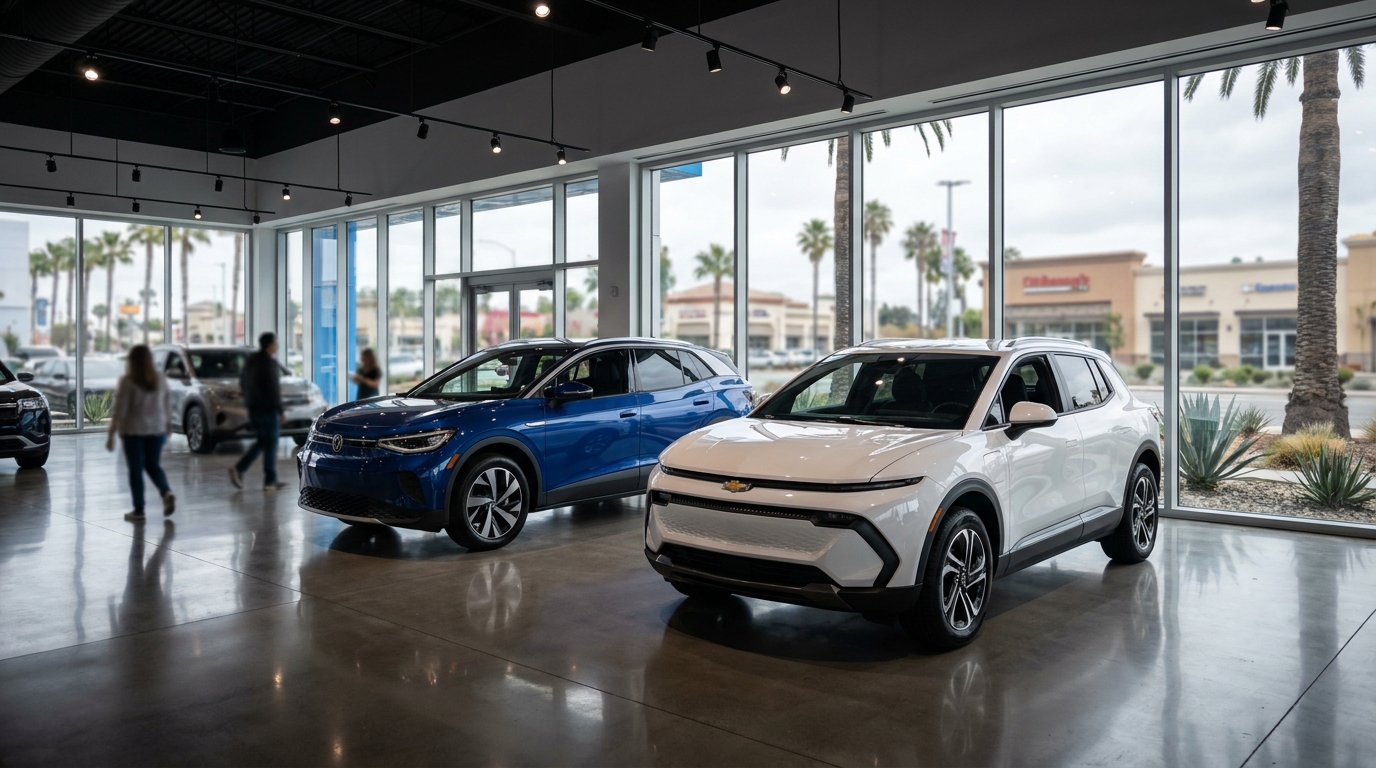
For Santa Clara commuters weighing a value-priced electric SUV, the 2026 Volkswagen ID.4 and the 2026 Chevrolet Equinox EV are the two most direct answers to the "best electric SUV under $50,000" question. The Equinox EV wins on starting price and headline range; the ID.4 wins on cargo capacity, horsepower, and warranty coverage. Which one is the better buy depends less on the spec sheet than on how you actually drive between Santa Clara, San Jose, and the rest of the Bay Area.
This comparison uses verified 2026 manufacturer and industry data to break down where each vehicle leads, and where the tradeoffs matter for a Silicon Valley driver.
The Short Answer for Santa Clara Buyers
The 2026 Chevrolet Equinox EV starts at $36,795 (LT 1 FWD, including destination), roughly $8,300 less than the 2026 Volkswagen ID.4's $45,095 base. The Equinox EV also delivers up to about 319 miles of EPA range versus up to 291 miles for the ID.4 RWD, and a 150 kW DC fast-charging peak versus 135 kW.
The ID.4 counters with 30.3 cubic feet of cargo behind the rear seats (64.2 cu ft with them folded) versus 26.4 / 57.2 for the Equinox EV, 282 hp RWD (335 hp AWD) versus 220 hp FWD (300 hp AWD), and a 4-year / 50,000-mile basic warranty versus 3 years / 36,000 miles. For Santa Clara buyers prioritizing cargo room, drivetrain feel, and coverage, the ID.4 justifies its premium. For those focused on sticker price and long-range road trips, the Equinox EV is the value pick.
Pricing: What You Actually Pay Under $50,000
Both SUVs land squarely in the under-$50K bracket that dominates Bay Area EV shopping. The Equinox EV LT 1 opens at $36,795 with destination included; Chevrolet's pre-destination MSRP is closer to $34,995. The ID.4 Pro RWD starts at $45,095 before its $1,475 destination charge, so an out-the-door base ID.4 sits meaningfully above a base Equinox EV.
The gap narrows on comparably equipped AWD trims but rarely closes entirely — expect an $8,000 to $10,000 spread at similar trim levels. In EV-dense California markets, actual transaction prices often run below MSRP, and Santa Clara dealers frequently discount inventory to move it., so buyers should verify current IRS eligibility rather than assume a credit applies.
Range and Efficiency for Bay Area Commutes
The Equinox EV holds the range advantage on paper: approximately 250–319 miles depending on trim, with FWD trims reaching the top of the band. The ID.4 delivers up to 291 miles in RWD form and up to 263 miles in AWD trim from its 82-kWh battery, versus the Equinox EV's 85-kWh pack.
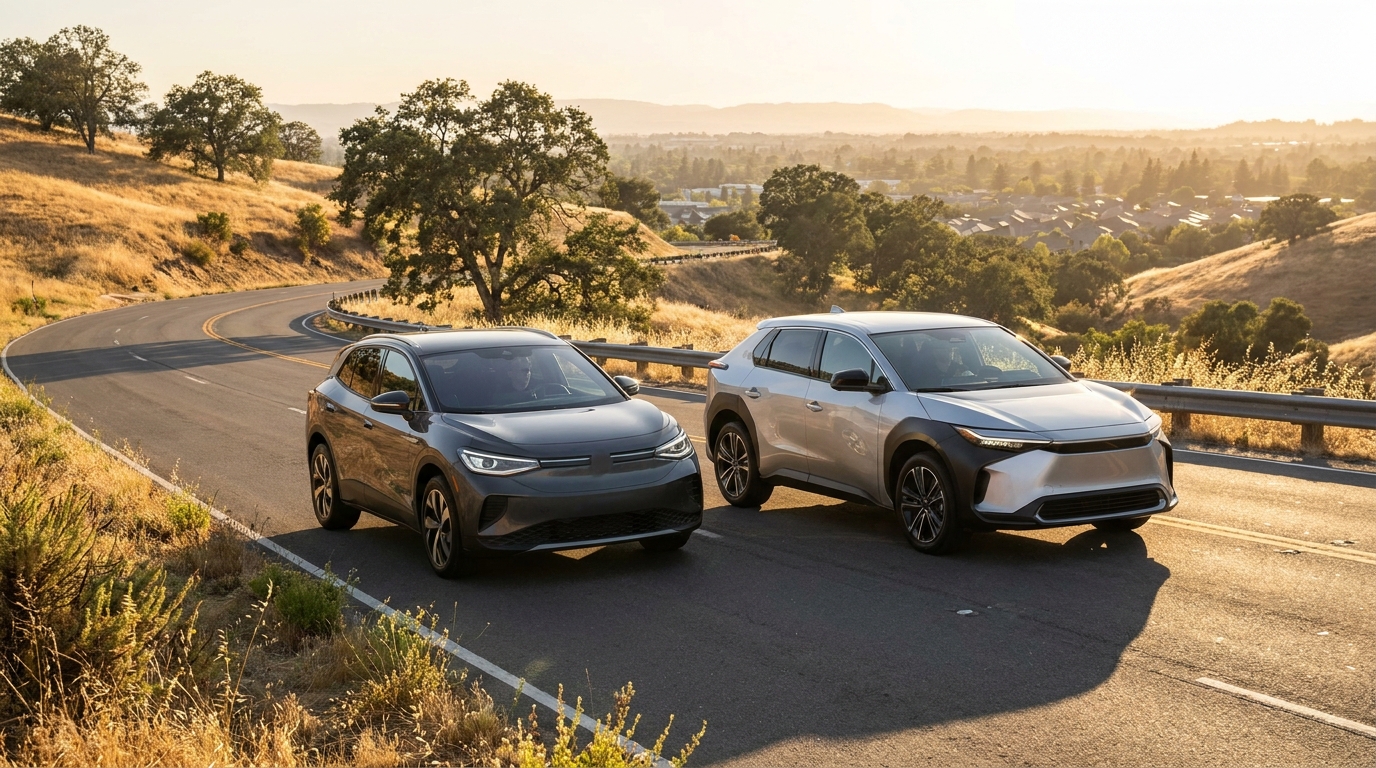
For a typical Santa Clara commuter running between home, an office in North San Jose or along the Great America corridor, and the occasional trip up to San Francisco, both vehicles will go days between charges. The range gap becomes relevant on longer trips — a run to Lake Tahoe or a Bay Area–to–Los Angeles drive down I-5 — where the Equinox EV's roughly 28 extra miles at the top of its range band can eliminate a charging stop.
On efficiency, the ID.4 RWD leads at 113 MPGe combined versus the Equinox EV FWD's 108 MPGe. AWD versions are essentially tied (102 MPGe for the ID.4, 103 MPGe for the Equinox EV), and the Equinox EV RS AWD dips to around 96 MPGe combined.
Charging: 135 kW vs 150 kW in a Charging-Rich Market
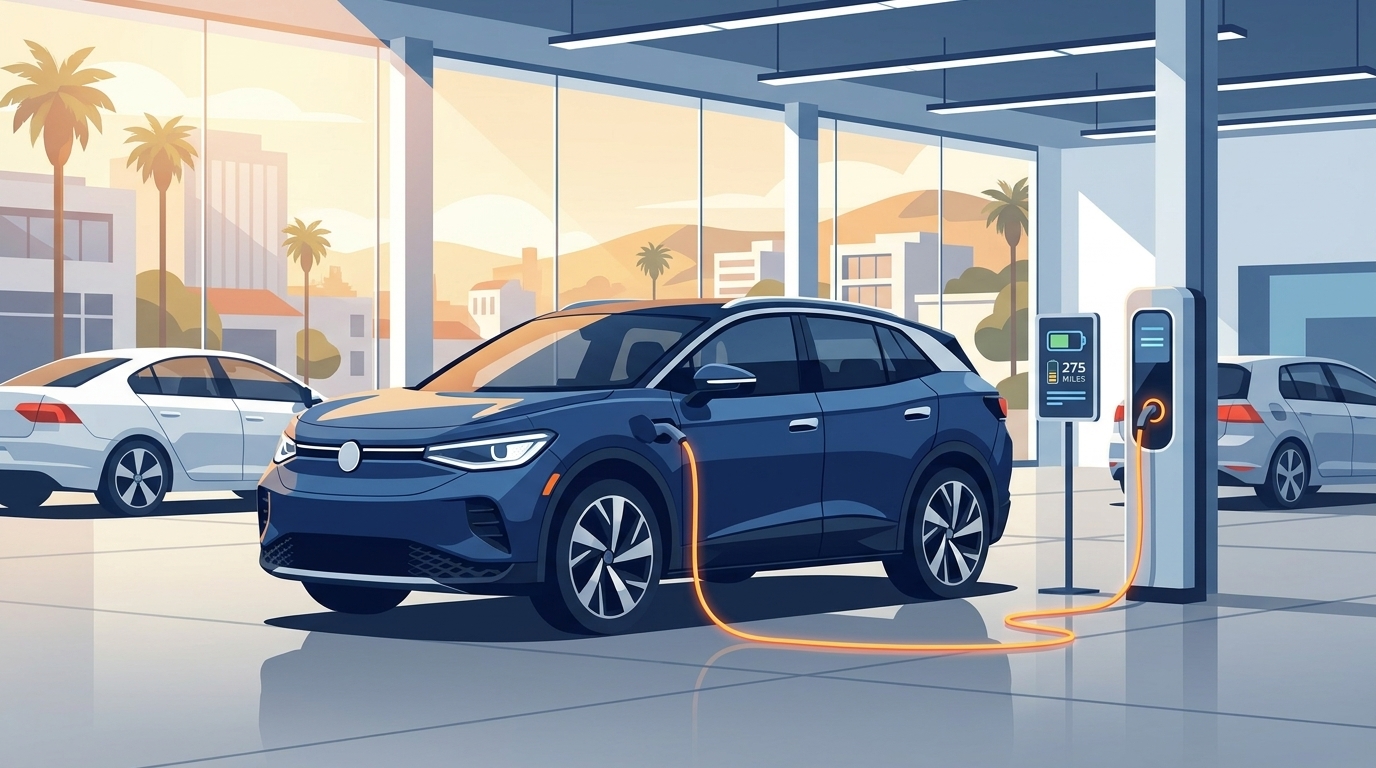
The Equinox EV peaks at 150 kW DC fast charging; the ID.4 peaks at 135 kW. That 15 kW difference translates to marginally faster stops at high-power stations — meaningful on a Central Valley road trip, largely irrelevant for daily Level 2 home or workplace charging.
Santa Clara sits inside one of the densest public charging networks in the country, with fast-charging stations clustered around Silicon Valley office parks, retail centers along El Camino Real, and freeway corridors on US-101, I-280, and I-880. Most owners of either vehicle will do the bulk of their charging at home overnight, where peak DC rates don't come into play. Buyers should confirm with a local Volkswagen dealer whether the ID.4 still includes complimentary Electrify America DC fast charging, a perk carried on earlier model years.
Cargo, Power, and Driving Character
The ID.4 is the more practical hauler and the more powerful driver. Its 30.3 cubic feet behind the rear seats and 64.2 cubic feet maximum beat the Equinox EV by roughly 4 and 7 cubic feet respectively — the difference between fitting a Costco run plus a stroller and having to Tetris it in.
On power, the ID.4 produces 282 hp in RWD trim and 335 hp in AWD, with AWD torque reaching up to 536 lb-ft. The Equinox EV delivers 220 hp / 243 lb-ft (FWD) and 300 hp / 355 lb-ft (AWD). Both are quick enough for freeway merges on 101, but the ID.4 AWD has a clear torque advantage for drivers who value acceleration feel.
Driver-Assist Tech: Where the Equinox EV Has a Real Edge
The Equinox EV's most significant technology advantage is availability of GM Super Cruise, the hands-free highway driving system that works on roughly 720,000 miles of mapped roads across North America. For a Santa Clara driver who spends real time on I-280, US-101, or I-5, that capability is a genuine daily-life differentiator.
The ID.4 offers adaptive cruise control and lane-keeping assist but does not offer a hands-free system comparable to Super Cruise. Buyers who prioritize the freeway experience should weigh this heavily; buyers who spend most miles on surface streets will notice the gap less.
Warranty and Long-Term Confidence
The ID.4 carries the stronger warranty package: 4 years / 50,000 miles basic, 4 years / 50,000 miles powertrain, 8 years / 100,000 miles on the battery, and 2 years / 20,000 miles of complimentary maintenance. The Equinox EV's basic warranty is 3 years / 36,000 miles, and full battery warranty terms for the 2026 model were not detailed in the sources reviewed.
Long-term reliability data on the Equinox EV's Ultium platform is also less mature than the ID.4's, which builds on Volkswagen's MEB architecture already in its second generation of U.S. market experience.
Head-to-Head Summary
- Starting MSRP: Equinox EV $36,795 vs ID.4 $45,095 — Equinox EV leads
- Max EPA range: Equinox EV ~319 mi vs ID.4 ~291 mi — Equinox EV leads
- DC fast-charge peak: Equinox EV 150 kW vs ID.4 135 kW — Equinox EV leads
- Horsepower (AWD): ID.4 335 hp vs Equinox EV 300 hp — ID.4 leads
- Cargo max: ID.4 64.2 cu ft vs Equinox EV 57.2 cu ft — ID.4 leads
- Basic warranty: ID.4 4 yr/50k vs Equinox EV 3 yr/36k — ID.4 leads
- Hands-free driving: Super Cruise available on Equinox EV; not on ID.4 — Equinox EV leads
Which Should a Santa Clara Buyer Choose?
Choose the Equinox EV if lowest entry price, maximum EPA range, and Super Cruise matter most. Choose the ID.4 if cargo capacity, drivetrain power, warranty coverage, and Volkswagen's driving character are higher on your list. Both are legitimate answers to "best electric SUV under $50,000" in the Santa Clara market — the question is which set of tradeoffs fits your driving.
Frequently Asked Questions
Is the VW ID.4 a good Tesla alternative in Santa Clara?
Yes. The 2026 ID.4 competes directly on price, range, and cargo in the sub-$50K electric SUV segment, with 291 miles of range (RWD), 30.3 / 64.2 cubic feet of cargo, and a 4-year / 50,000-mile basic warranty plus 8-year / 100,000-mile battery coverage. Buyers who want a mainstream-branded EV with dealer service in the Bay Area often shortlist the ID.4 for these reasons.
What's the real range difference on a Bay Area road trip?
The Equinox EV tops out around 319 miles of EPA range versus 291 miles for the ID.4 RWD, a roughly 28-mile difference. On a Santa Clara-to-Tahoe or Santa Clara-to-LA run, that can be the difference between one and two fast-charging stops depending on speed, elevation, and climate load.
Does either qualify for the federal EV tax credit?
. Buyers should confirm current IRS eligibility and any California state or utility incentives directly before purchase, as rules change and eligibility can depend on trim, battery sourcing, and buyer income.
Where to Go From Here
Santa Clara drivers who want to compare a 2026 Volkswagen ID.4 in person — including a test drive against the Equinox EV benchmark laid out above — can reach Sunnyvale Volkswagen at sunnyvalevw.com for current inventory, trim-specific pricing, and confirmation of any remaining charging or maintenance perks tied to the 2026 model year. The right EV under $50,000 is the one that fits your commute, your cargo, and your charging routine — and that's a decision best made behind the wheel, not on a spec sheet.