Complete Volkswagen Maintenance Schedule and Cost Guide
A practical 2026 guide to Volkswagen maintenance schedules, service intervals, and costs — plus what Sunnyvale, CA drivers should plan for.

If you've just driven a new Jetta, Tiguan, or ID.4 off the lot — or you're trying to stretch the life of a VW that's already racked up some Bay Area miles — the same question tends to surface: what does keeping this car running actually cost, and when does each service really need to happen? Volkswagen's maintenance plan is more structured than most owners realize, and understanding it can save you both money and unexpected trips to the shop.
This guide breaks down the VW service intervals you should plan around, realistic Volkswagen maintenance costs in 2026, and how the VW Care maintenance plan fits in if you're buying new. We'll also touch on a few things specific to driving a VW in Sunnyvale and the broader South Bay.
How Volkswagen Maintenance Schedules Work
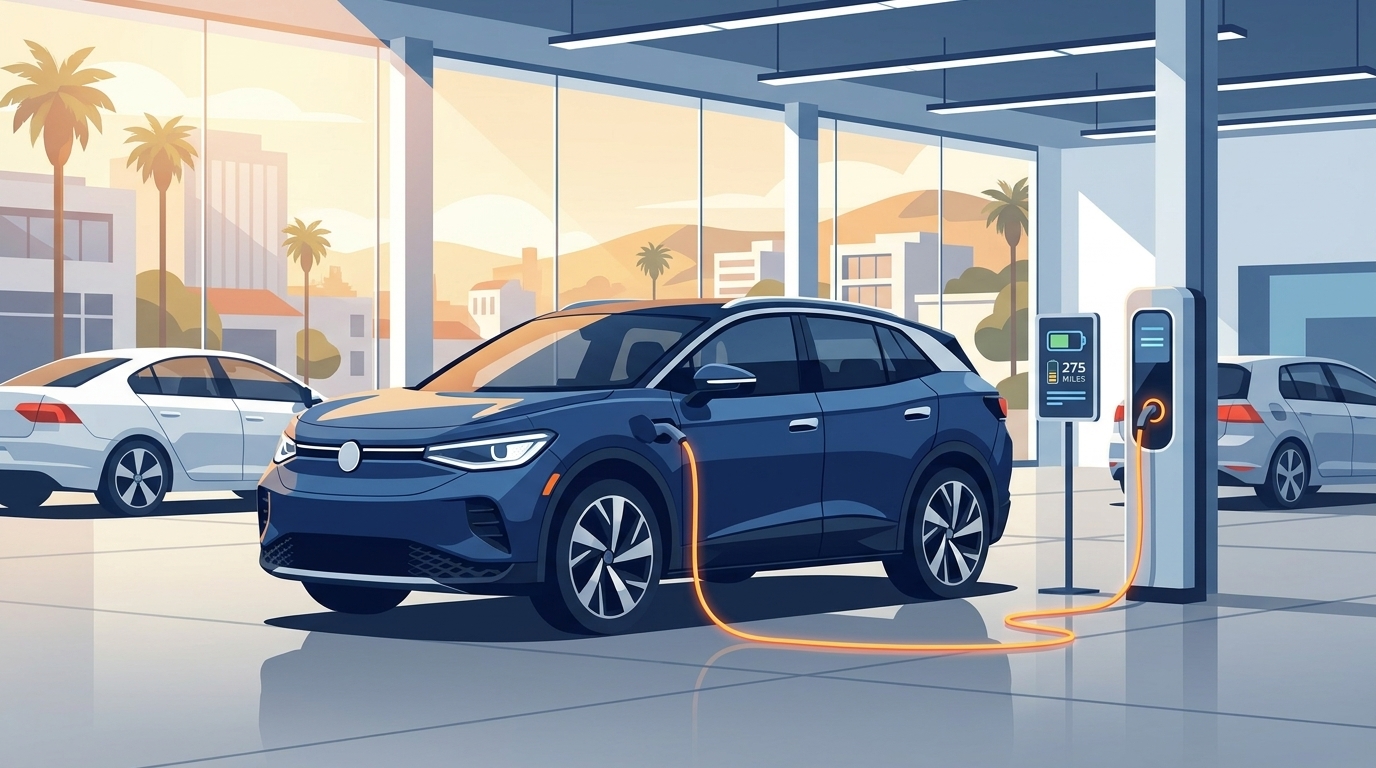
Volkswagen organizes service into mileage-based intervals, with the first major touchpoint at 10,000 miles and recurring services every 10,000 or 20,000 miles after that. Most modern VW gas models — Jetta, Tiguan, Atlas, Taos — follow this cadence. The all-electric ID.4 has a simpler schedule since there's no oil, spark plugs, or traditional transmission fluid to worry about.
If you drive an average amount in Sunnyvale — say commuting from the Heritage District out to Mountain View or up the 101 to San Francisco — you'll likely hit 10,000 miles roughly once a year. Stop-and-go traffic on El Camino Real and short trips around downtown Sunnyvale do count as more demanding use, which is worth keeping in mind when deciding whether to follow the standard or severe-duty schedule.
The Core VW Service Intervals
- 10,000 miles: Oil and filter change, tire rotation, multi-point inspection, and a check of fluids, brakes, wipers, and lights.
- 20,000 miles: Everything in the 10K service plus cabin air filter replacement and a more thorough brake inspection.
- 30,000 miles: 10K service items plus brake fluid flush (typically every 2 years regardless of mileage) and additional inspections.
- 40,000 miles: Includes the 20K items plus engine air filter replacement on most models.
- 60,000 miles: Major service — spark plugs on most gas engines, Haldex fluid on 4Motion all-wheel-drive models, and a full inspection.
- 80,000 miles: DSG transmission service on dual-clutch models (a critical one — don't skip this).
- 120,000 miles: Timing components inspection, additional spark plug service on some models, and coolant evaluation.
EV owners with the ID.4 follow a much lighter schedule: tire rotations every 10,000 miles, brake fluid every 2 years, and a high-voltage battery and coolant inspection at longer intervals. The savings on routine maintenance are one of the genuine perks of going electric in the South Bay.
Volkswagen Maintenance Cost in 2026
Here's what you can reasonably expect to pay for scheduled VW maintenance at a certified dealer in the Sunnyvale area in 2026. Independent shops can sometimes come in lower, but pricing at VW-trained service centers has stayed relatively consistent, and the gap is narrower than many owners assume once you factor in OEM parts and warranty considerations.
- 10,000-mile service: roughly $130–$190
- 20,000-mile service: roughly $200–$280
- 30,000-mile service: roughly $280–$400 (brake fluid flush included)
- 40,000-mile service: roughly $300–$420
- 60,000-mile service: roughly $500–$800 (spark plugs and Haldex add cost)
- 80,000-mile DSG service: roughly $400–$600
- Brake pad replacement (per axle): roughly $300–$500
- Tires (set of four, installed): roughly $800–$1,400 depending on model
Across a typical five-year ownership window, plan on $2,500–$3,500 in scheduled maintenance for a gas VW driven normally. ID.4 owners typically come in 30–40% lower over the same period, since EVs skip oil changes, spark plugs, and transmission fluid entirely.
What Drives Cost Up or Down in Sunnyvale
A few local factors shape what you'll actually spend. California's emissions standards require biennial smog inspections for most gas vehicles older than eight model years — VWs generally pass without issue, but if a check engine light is on, you'll need to resolve it before renewing registration with the DMV. That can turn a $0 inspection into a diagnostic visit.
South Bay traffic also wears brakes faster than highway-heavy regions. If your commute involves the 101, 237, or Lawrence Expressway during rush hour, expect to replace brake pads closer to the 35,000–45,000 mile mark rather than the 50,000+ many owners' manuals suggest. Tires likewise wear faster in stop-and-go conditions and on the warmer pavement we see from late spring through October.
The VW Care Maintenance Plan: Is It Worth It?
VW Care is Volkswagen's prepaid maintenance plan, available when you purchase or lease a new vehicle. It bundles your first two scheduled services (10K and 20K miles) into one upfront price, and there's a VW Care Plus version that extends coverage to 30K and 40K services.
The math usually works in the buyer's favor — VW Care typically prices in at less than what you'd pay for those same services à la carte, and it's transferable if you sell the car. It also locks in pricing against inflation, which has been a real factor in parts and labor costs over the past few years. For lease customers planning to turn the car in at 36 months, VW Care alone often covers everything you'll need during the lease term.
Where it makes less sense: if you plan to do basic maintenance yourself, or if you've already passed the 20,000-mile mark and weren't offered the plan at purchase. The plan must generally be purchased at or near the time of vehicle delivery to qualify.
Choosing Where to Service Your VW
You have options — independent European specialists, general repair shops, and certified VW dealers. Each has tradeoffs. Independents can be cost-competitive on basic services. General shops are convenient but may not have VW-specific diagnostic tools (VCDS/ODIS), which matters more than it used to as VWs have grown more software-driven.
Certified VW service centers use OEM parts, factory-trained technicians, and the diagnostic equipment built for the brand. They also maintain your service history in VW's system, which matters at trade-in or resale time and is sometimes required to honor extended warranty claims. Sunnyvale Volkswagen's service department handles everything from routine 10K visits to DSG fluid services and EV-specific maintenance for the ID.4. Customers have noted the department's transparency on pricing and the smoother end-to-end experience — one recent reviewer described the overall process as "stress free" with "no hidden fees," which tracks with what you'd want from a routine service relationship over many years.
Frequently Asked Questions
How often does a Volkswagen really need an oil change?
Every 10,000 miles or once a year, whichever comes first, using the VW-approved 0W-20 or 5W-40 synthetic oil specified for your engine. Severe driving conditions — lots of short trips, heavy traffic, extreme heat — may justify a 7,500-mile interval.
Are Volkswagens expensive to maintain compared to other brands?
VWs sit in the middle of the cost spectrum — generally less than German luxury brands but somewhat above mainstream Japanese competitors. The 60,000-mile and 80,000-mile services are the most significant scheduled expenses on gas models.
Does the ID.4 need any scheduled maintenance?
Yes, but much less. Tire rotations, brake fluid every two years, cabin filter changes, and periodic battery and coolant system checks. No oil, no spark plugs, no transmission fluid.
What happens if I skip a scheduled service?
You risk voiding portions of your warranty, accelerating wear on components, and potentially missing problems caught during inspections. For leased vehicles, missed services can also affect lease-end inspections.
Planning Your Next Service
The honest version of Volkswagen ownership is that it rewards owners who stay on schedule. The intervals are reasonable, the costs are predictable, and the VW Care plan exists specifically to make the first few years easier to budget. If you drive in and around Sunnyvale, factoring in the city's stop-and-go reality — and California's smog and registration timelines — will help you plan better than just following the owner's manual to the letter.
For VW drivers in Sunnyvale, CA who want their service handled by factory-trained technicians using OEM parts, Sunnyvale Volkswagen offers scheduled maintenance, VW Care plans, and EV service for the ID.4 — you can review services or schedule an appointment at https://www.sunnyvalevw.com/.