Electric Vehicle Maintenance Schedule: Santa Clara Dealer Recommendations
A practical EV maintenance guide for Santa Clara drivers — service intervals, costs, and what your electric vehicle actually needs to stay reliable in 2026.
If you've recently switched to an electric vehicle, one of the first questions you probably asked is: what exactly does this thing need from me? No oil changes, no spark plugs, no timing belts — so what's left? The short answer is that EVs need less maintenance than gas cars, but the maintenance they do need is different, and in a market like Santa Clara, the climate and driving patterns shape the schedule in ways worth understanding.
This guide walks through the realistic maintenance schedule for an EV owned and driven in Santa Clara, what each service costs in rough 2026 terms, and where Silicon Valley driving habits — short commutes, freeway stretches on the 101, summer heat in the inland valleys — affect the timing.
Why EV Maintenance Looks So Different
Electric vehicles have roughly 20 moving parts in the drivetrain compared to roughly 2,000 in an internal combustion vehicle. There's no engine oil, no transmission fluid in most designs, no exhaust system, no fuel filters, and no spark plugs. That eliminates a huge category of routine work.
What remains is mostly preventive: tires, brakes (which last far longer thanks to regenerative braking), cabin filters, coolant for the battery thermal management system, and the high-voltage battery itself. The cadence is slower, but skipping these items is how people end up with expensive surprises five years in.
Your EV Maintenance Schedule by Mileage
Below is a practical service interval guide we use with EV owners across the South Bay. Specific Volkswagen ID.4 and other manufacturer schedules vary slightly, but this captures the general rhythm.
Every 7,500–10,000 Miles (or Annually)
- Tire rotation. EVs are heavy — battery packs add 800–1,200 pounds — and that weight chews through tires faster than a comparable gas car. Rotating every 7,500 miles is non-negotiable if you want to get the rated mileage out of a set.
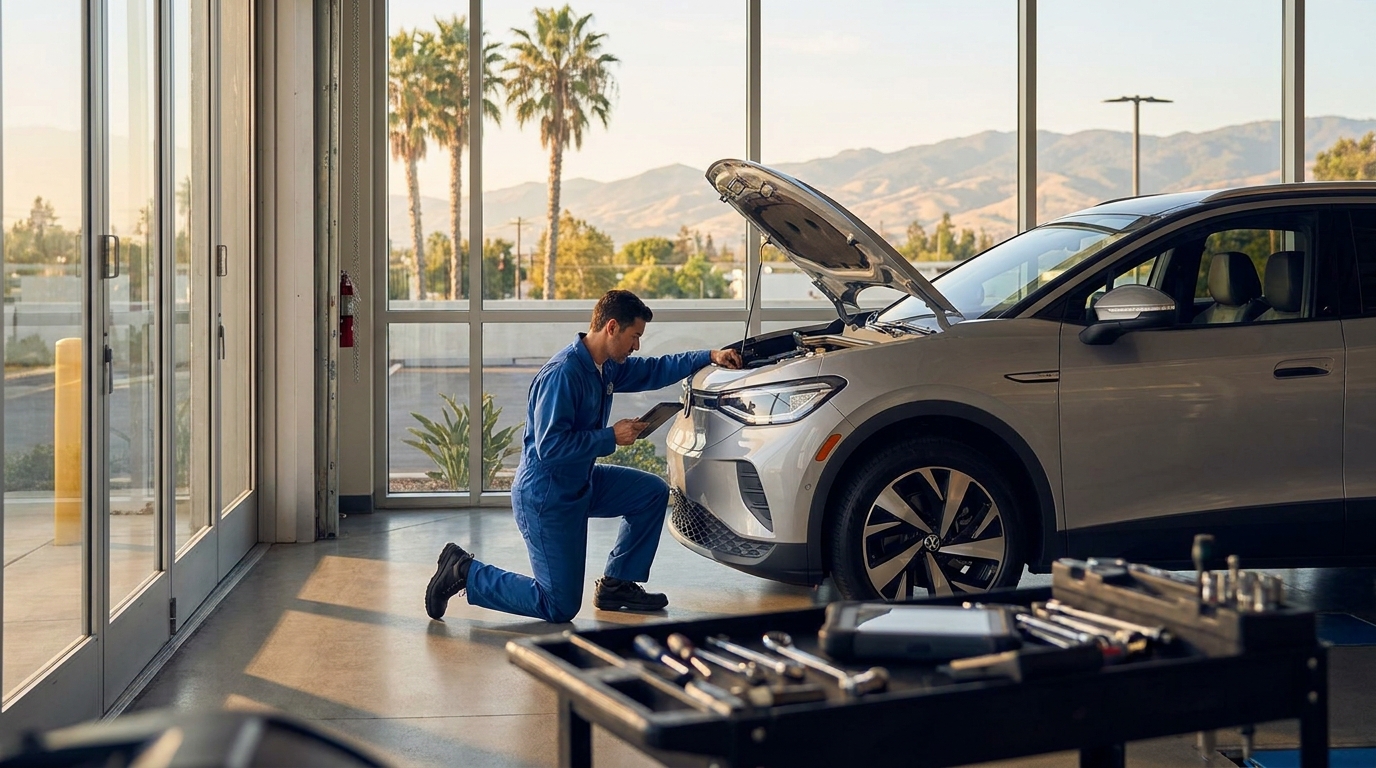
- Multi-point inspection. Suspension components, brake pads, drive unit, charge port, and 12-volt auxiliary battery check.
- Software updates. Most modern EVs receive over-the-air updates, but dealer-side updates to battery management firmware and infotainment still happen at service visits.
Every 20,000 Miles
- Cabin air filter replacement. Santa Clara's air quality is generally good, but wildfire smoke events over the past several summers have made cabin filters a more frequent ask. If you were driving during a heavy smoke week, consider replacing it sooner.
- Brake fluid inspection. Even though you barely use the friction brakes, brake fluid still absorbs moisture over time.
- Tire tread depth and alignment check.
Every 40,000 Miles
- Brake fluid flush. Typically every 2–3 years regardless of mileage.
- Battery coolant inspection. The high-voltage battery has its own thermal management loop with its own coolant. Levels and condition should be verified.
- Reduction gearbox fluid check. The single-speed gear reduction unit has fluid that lasts a long time but isn't infinite.
Every 60,000–100,000 Miles
- Battery coolant replacement on most EV platforms.
- Brake pad replacement if needed — many EV owners reach 100,000 miles on original pads thanks to regen.
- 12-volt battery replacement. The small auxiliary battery typically lasts 4–6 years.
- Reduction gearbox fluid replacement.
What EV Maintenance Actually Costs
The general consensus from owners and from our service department is that EVs cost roughly 30–40% less to maintain than equivalent gas vehicles over the first five years. Here's a rough Santa Clara market picture for 2026:
- Tire rotation and inspection: $50–$100 per visit
- Cabin filter replacement: $60–$120
- Brake fluid flush: $150–$220
- Battery coolant service: $250–$450 depending on platform
- Set of EV-rated tires: $900–$1,600 installed
- 12-volt battery: $250–$400
The big variable is tires. Because of the instant torque and curb weight, EV-specific tires with reinforced sidewalls and lower rolling resistance are worth the premium — economy tires wear out fast and hurt your range.
How Santa Clara Driving Affects Your Schedule
A few local factors actually matter here. Santa Clara County has some of the densest EV adoption in the country, and the driving patterns reflect Silicon Valley life: a lot of short commutes from neighborhoods like Rivermark and Old Quad over to North San Jose or Sunnyvale tech campuses, mixed with longer freeway runs on the 101 and 237.
Short trips are easy on an EV battery but harder on tires due to frequent stop-and-go. Summer heat in the inland valley — we regularly see stretches in the 90s from June through September — puts more strain on battery thermal management, which makes verifying coolant condition more important than it might be in a coastal climate.
California also requires biennial smog checks for gas vehicles, but pure battery electric vehicles are exempt from smog inspection. You still need to handle DMV registration renewal, and California's Clean Air Vehicle decal program for HOV access has its own application process through the DMV — that's separate from any maintenance schedule but worth knowing if you commute solo on the 237 express lanes.
The Maintenance Most EV Owners Underestimate
Charging Hardware
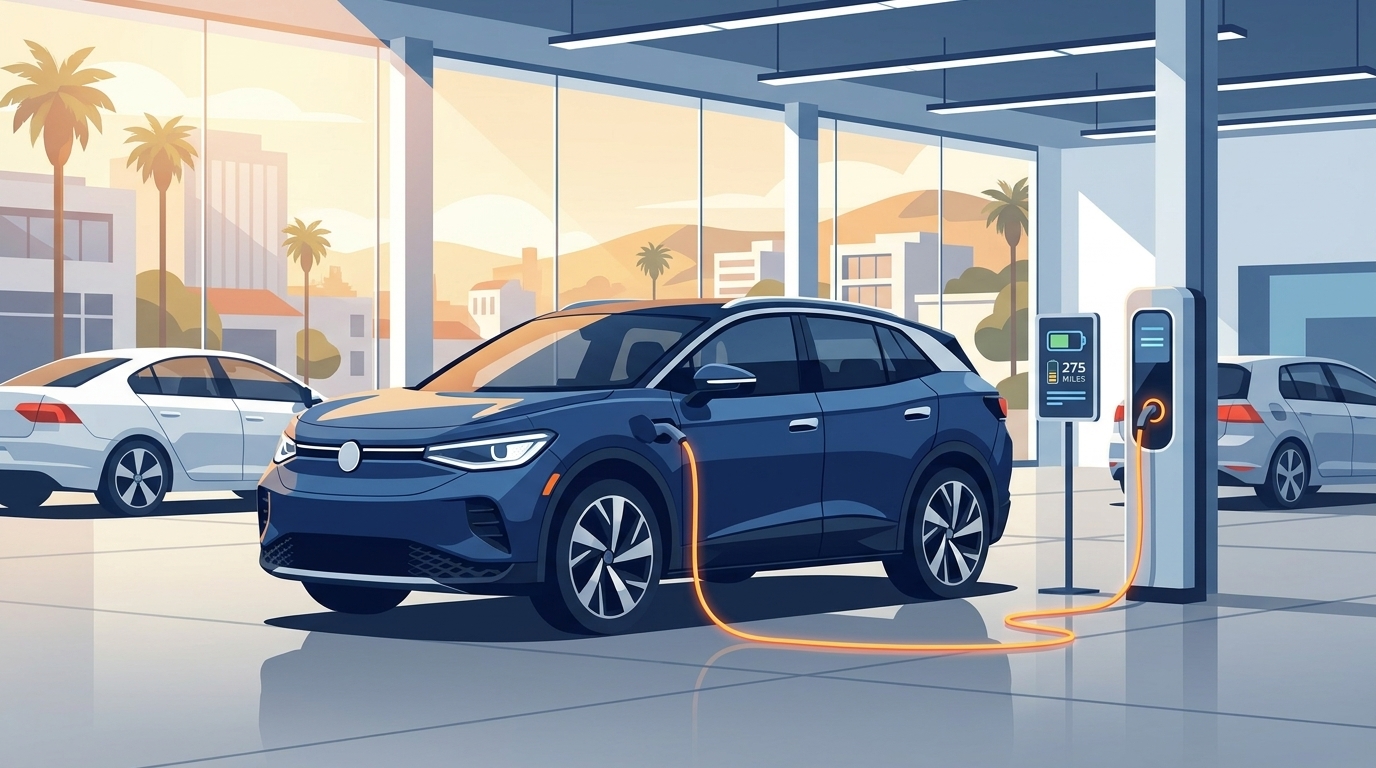
Your home Level 2 charger is part of the maintenance picture. Inspect the connector for wear and the cable for damage annually. If you charge at public DC fast chargers frequently — which is common for Santa Clara renters who don't have garage access — schedule a battery health check every 20,000 miles. Frequent DC fast charging accelerates battery degradation more than Level 2 home charging.
The 12-Volt Battery
This catches people off guard. Yes, your EV has a regular 12-volt battery powering accessories and the computer that wakes up the high-voltage system. When it dies, your EV won't start — even with a full traction battery. Replacement is straightforward but unexpected.
Suspension Components
The extra weight of a battery pack means bushings, control arm components, and shocks see more load. Have suspension inspected annually, especially if you regularly drive the rougher stretches of Lawrence Expressway or El Camino.
FAQ: Electric Vehicle Maintenance in Santa Clara
Do I need to service my EV at the dealer to keep the warranty?
No — California law (and federal Magnuson-Moss) prevents manufacturers from voiding warranty for service performed elsewhere, as long as the work meets manufacturer specifications. That said, high-voltage battery and drive unit work generally requires dealer-level diagnostic tools and trained technicians.
How often should I get my EV battery checked?
An annual battery state-of-health scan is reasonable for most owners. If you fast-charge frequently or notice range dropping faster than expected, sooner is better.
Will skipping tire rotations really matter on an EV?
Yes — more than on a gas car. The torque distribution and weight cause uneven wear quickly. Skipping rotations can cut tire life nearly in half.
What about brake service if I rarely use the brakes?
Regenerative braking does most of the work, which is great for pad life but can let rotors develop surface rust, especially during cooler winter months when you're not generating heat through friction braking. Periodic firm brake applications and an annual inspection handle this.
Building a Long-Term Service Relationship
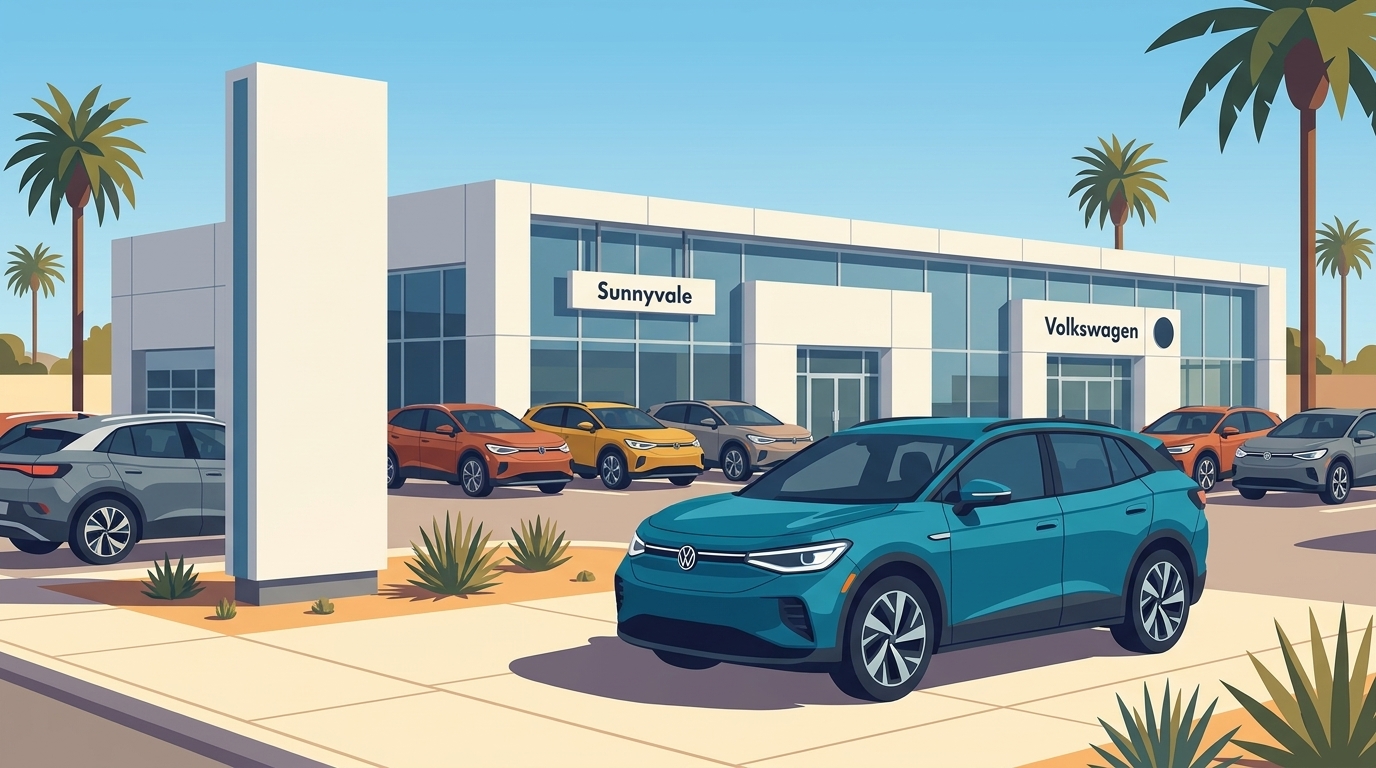
EVs reward consistency. A single shop that knows your vehicle's history, has the diagnostic equipment for high-voltage systems, and can verify software status will catch small issues before they become expensive. Sunnyvale Volkswagen's service department works with ID.4 owners and other EV drivers across Santa Clara, Sunnyvale, Cupertino, and the surrounding South Bay — and the dealership's 4.4★ rating across more than 1,400 Google reviews reflects an emphasis on transparency that EV owners specifically tend to value, given how new much of this technology still is.
If you'd like to map out a maintenance schedule for your specific EV, or want a battery health check before your next road trip, the team at Sunnyvale Volkswagen can help. You can reach them at https://www.sunnyvalevw.com/ to schedule service or ask questions about what your vehicle actually needs. The goal isn't more service visits — it's the right ones, at the right intervals, so your EV stays reliable for the long haul.