Hidden Costs of Car Ownership: What Santa Clara Dealerships Don't Tell You About Total Expenses
Beyond the sticker price: a Santa Clara guide to the real costs of owning a car in 2026, from registration fees to maintenance and Bay Area insurance.
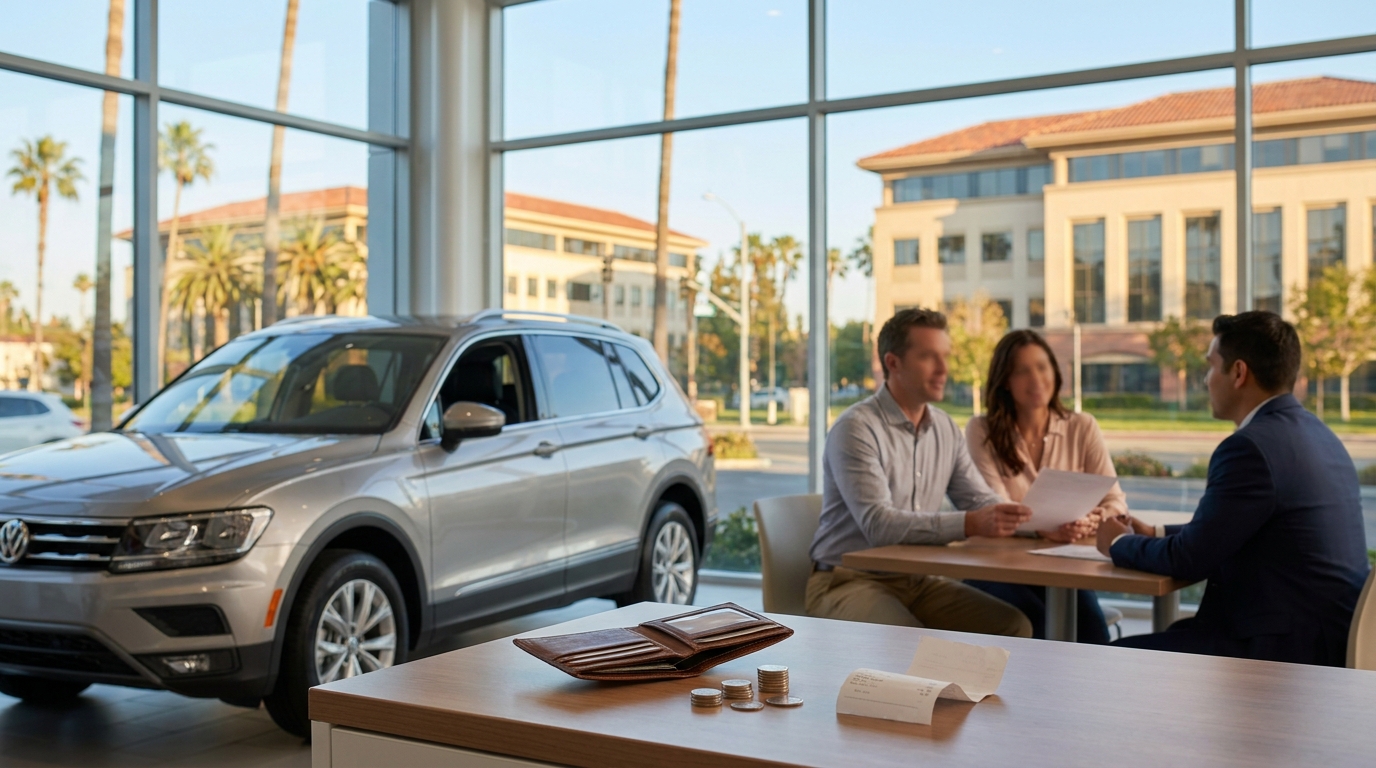
When you're standing on a Santa Clara dealership lot looking at a sticker price, that number is just the opening line of a much longer story. The monthly payment matters, of course, but the true cost of owning a vehicle in the Bay Area in 2026 includes a long tail of expenses that rarely come up during the test drive. Some of these costs are predictable. Others surprise even experienced buyers.
This guide walks through what you should actually budget for when you buy a used car or a new one in Santa Clara, why those numbers run higher here than in most of the country, and where buyers most often get caught off guard.
The Sticker Price Is Just the Start
In Santa Clara County, the all-in cost of a vehicle includes the negotiated price, sales tax, registration, title, documentation fees, and any add-ons you accept at the finance desk. California's sales tax treatment is one of the first surprises for buyers relocating from other states. In California, sales tax is calculated on the full purchase price of the vehicle — trading in your old car does not reduce the taxable amount the way it does in many other states. If you're trading in a $15,000 vehicle toward a $35,000 purchase, you still pay California sales tax on the full $35,000.
Santa Clara County's combined sales tax rate sits at 9.125% as of 2026, which means tax alone on a $30,000 vehicle runs roughly $2,737. That's before registration, title, and DMV fees enter the picture.
Registration and DMV Fees in California
California vehicle registration is among the more expensive in the country, largely because of the Vehicle License Fee (VLF) — a value-based component that scales with what your car is worth. Newer and more expensive vehicles cost noticeably more to register each year, and that cost continues for as long as you own the car. Plan for several hundred dollars annually, with first-year registration on a new vehicle often running into four figures.
Insurance: Bay Area Premiums Run High
Auto insurance in Santa Clara is meaningfully more expensive than the national average. Dense traffic on 101, 280, and Lawrence Expressway, the high cost of vehicle repairs in the region, and elevated rates of catalytic converter theft all push premiums up. If you're moving from a lower-cost state, expect your premium to climb when you update your address with your insurer.
A few factors that hit Santa Clara drivers harder than most:
- Commute mileage — if you're driving to jobs in Mountain View, Palo Alto, or San Jose, insurers price that in
- Comprehensive coverage costs, which reflect local theft and vandalism rates
- Higher minimum liability limits effective under California's updated coverage requirements
Fuel, Charging, and California's Energy Costs
California consistently has some of the highest gasoline prices in the country, and 2026 is no exception. If you're commuting from Santa Clara to a job site elsewhere in the South Bay or up the Peninsula, even a modest fuel-economy difference between two vehicles translates into hundreds of dollars a year.
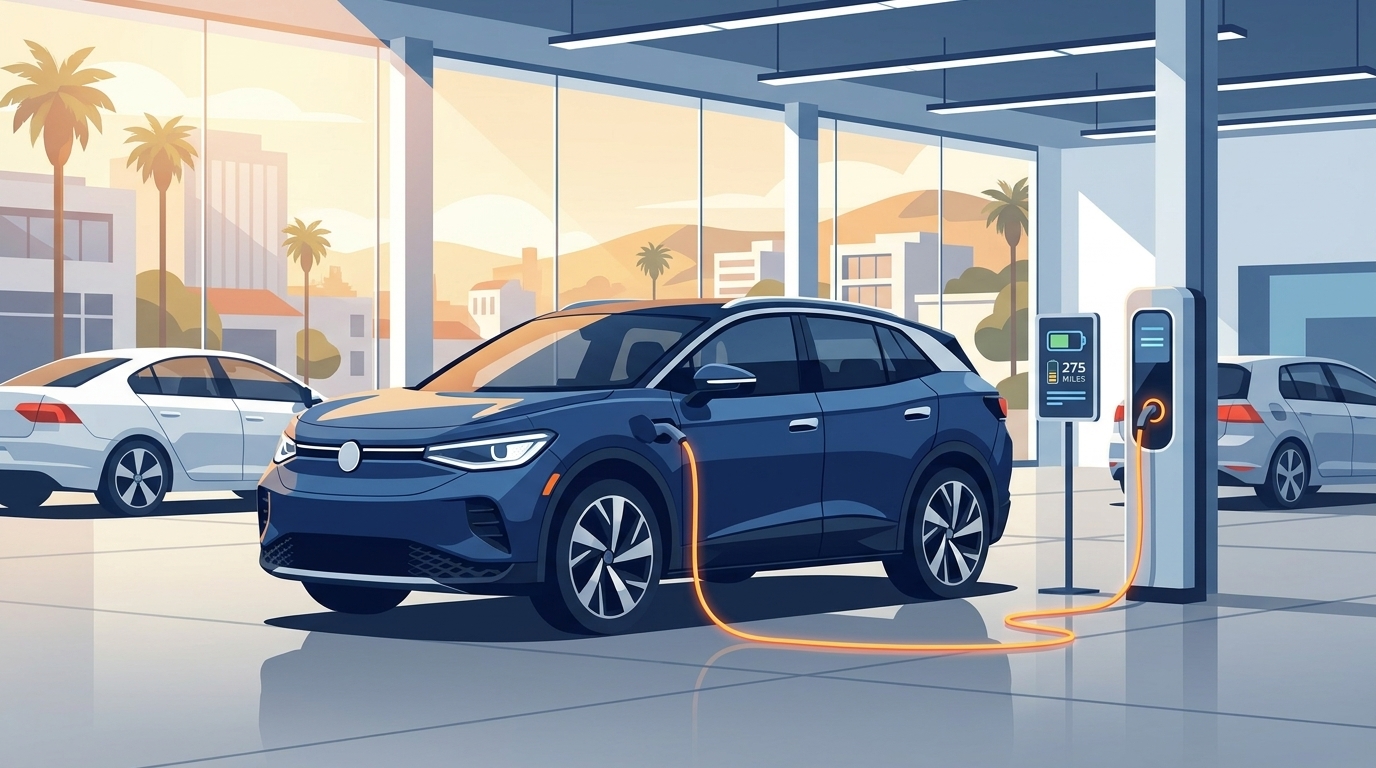
EV buyers face their own math. PG&E's residential electricity rates are among the highest in the nation, which narrows the operating-cost gap between EVs and efficient hybrids more than you'd expect. Time-of-use rates and EV-specific plans help, but they require deliberate charging habits. If you're considering a Volkswagen ID.4 or another EV, ask about local charging infrastructure and home-charging setup costs before you commit — the savings are real, but smaller than national averages suggest.
Maintenance: The Cost Most Buyers Underestimate
Routine maintenance is where the gap between expectation and reality tends to be widest, especially for buyers stepping into a German vehicle for the first time. A Volkswagen maintenance schedule is straightforward and predictable, but it does require attention. Skipping it doesn't save money — it shifts the cost to a larger repair later.
What a Typical Volkswagen Maintenance Schedule Includes
- Every 10,000 miles: oil and filter change, tire rotation, multi-point inspection
- Every 20,000 miles: cabin air filter, brake fluid check, more thorough inspection
- Every 40,000 miles: engine air filter, spark plugs on certain engines, transmission fluid checks
- Every 60,000–80,000 miles: larger service items including coolant, brake components, and timing-related inspections depending on the model
For Santa Clara drivers, climate is on your side — no road salt, no extreme freezes, and mild year-round temperatures mean brake lines, undercarriages, and rubber components last longer here than in colder regions. The flip side is that Bay Area stop-and-go traffic accelerates brake wear and transmission stress, so high-mileage commuters should expect more frequent brake service even if the calendar says otherwise.
Buying Used: Where the Math Gets Interesting
Choosing to buy a used car in Santa Clara can dramatically change the ownership-cost equation, but only if you're honest about what you're inheriting. A three-year-old vehicle has already absorbed the steepest depreciation, which is a clear win. It may also be approaching its first major service interval, which is a real cost you should budget for before you sign.
When you work with a used car dealer, the questions worth asking go beyond price:
- What maintenance has been documented, and what's coming due in the next 10,000 miles?
- Has the vehicle passed California smog certification, and when is the next test due?
- Are there any open recalls, and have prior recalls been addressed?
- What's the remaining factory or certified pre-owned warranty coverage?
A reputable used car dealer should answer these without hesitation. At Sunnyvale Volkswagen, the service history and inspection records on used inventory are part of the conversation rather than something you have to pry loose — a point that recurs in customer feedback about transparency and the absence of hidden fees.
Smog, Safety, and California-Specific Compliance
California requires a smog check every two years for most gasoline vehicles eight model years and older, and at change of ownership for qualifying vehicles. If you buy a used car privately, smog certification is the seller's responsibility — but verifying that the certificate is current and the vehicle actually passes is a step worth taking before money changes hands. Dealers in Santa Clara handle this as part of the sale, which removes a meaningful piece of friction.
Depreciation: The Largest Hidden Cost
Depreciation rarely shows up on a monthly statement, but over a five-year ownership window it's typically the single largest cost of owning a new vehicle — often more than fuel, insurance, and maintenance combined. Buyers who plan to keep a car for a decade can largely ignore it. Buyers who trade every three or four years cannot.
This is one reason the used market deserves a serious look, particularly for models with strong resale histories. Volkswagen's lineup — particularly the Jetta, Tiguan, and ID.4 — tends to hold value reasonably well in the California market, where demand for fuel-efficient and electric vehicles is consistent.
Frequently Asked Questions
How much should I budget annually for car ownership in Santa Clara?
Beyond your loan payment, a reasonable annual budget for insurance, registration, fuel or charging, and routine maintenance on a mainstream vehicle in Santa Clara typically lands in the mid-four-figure range. Luxury and performance vehicles run noticeably higher, primarily through insurance and registration.
Is it cheaper to buy used or new in California right now?It depends on the model and your time horizon. Used vehicles avoid the steepest depreciation but may need maintenance sooner. New vehicles carry full warranty coverage and current safety technology but lose value fastest in years one through three.Does California offer any incentives that reduce ownership costs?
California offers a range of programs tied to clean-vehicle adoption, including rebates and HOV-lane access for qualifying EVs and plug-in hybrids. Eligibility and funding levels change, so confirm current availability before assuming a specific incentive applies to your purchase.
The Bottom Line for Santa Clara Buyers
The dealership price tag is the most visible number in the car-buying process, but it's rarely the most important one. Santa Clara buyers who account for California's tax treatment, Bay Area insurance premiums, energy costs, and a realistic maintenance schedule end up with budgets that hold together over the long run — and far fewer surprises in year two.
If you'd like to walk through these numbers on a specific vehicle, the team at Sunnyvale Volkswagen can break down the full cost of ownership on new and used inventory, including service intervals, warranty coverage, and what to expect from California registration and smog requirements. You can reach them at https://www.sunnyvalevw.com/.