Complete Santa Clara Volkswagen Electric Vehicle Buyer's Checklist
A practical Santa Clara VW EV buying guide covering incentives, charging, test drives, and what to verify before signing. Built for 2026 buyers.
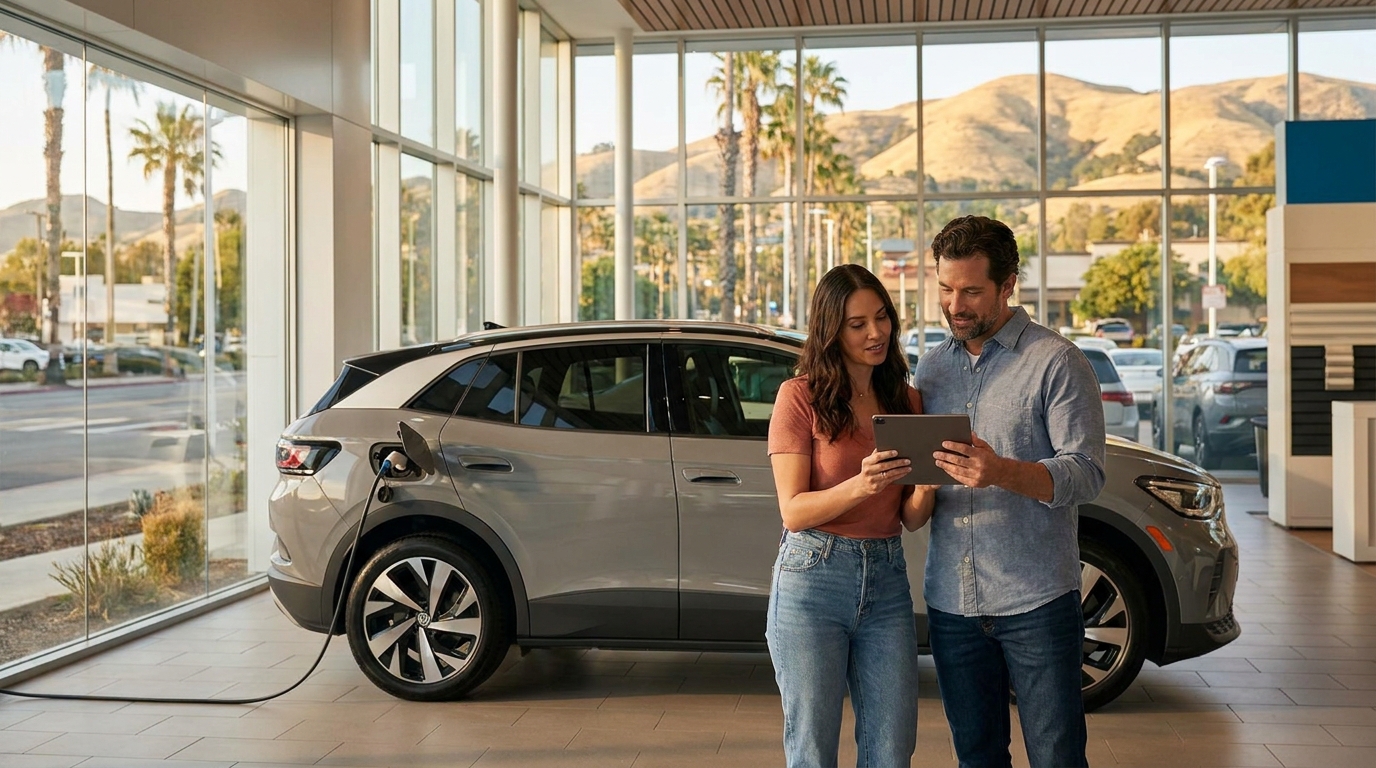
If you're shopping for a Volkswagen electric vehicle in Santa Clara, you're entering one of the most EV-saturated markets in the country — which is both good news and a reason to slow down. Good news because California's incentive structure, charging infrastructure, and inventory depth give Silicon Valley buyers more leverage than almost anywhere else. A reason to slow down because the volume of options, rebates, tax mechanics, and dealer-by-dealer practices means a hurried purchase can cost you real money.
This checklist walks you through what to verify, in order, before you drive home a Volkswagen ID.4 or any other VW EV from a Santa Clara-area dealer. It's organized the way we'd actually walk a buyer through the process — not the way a brochure would.
Before You Visit a Dealership
1. Confirm Your Charging Setup
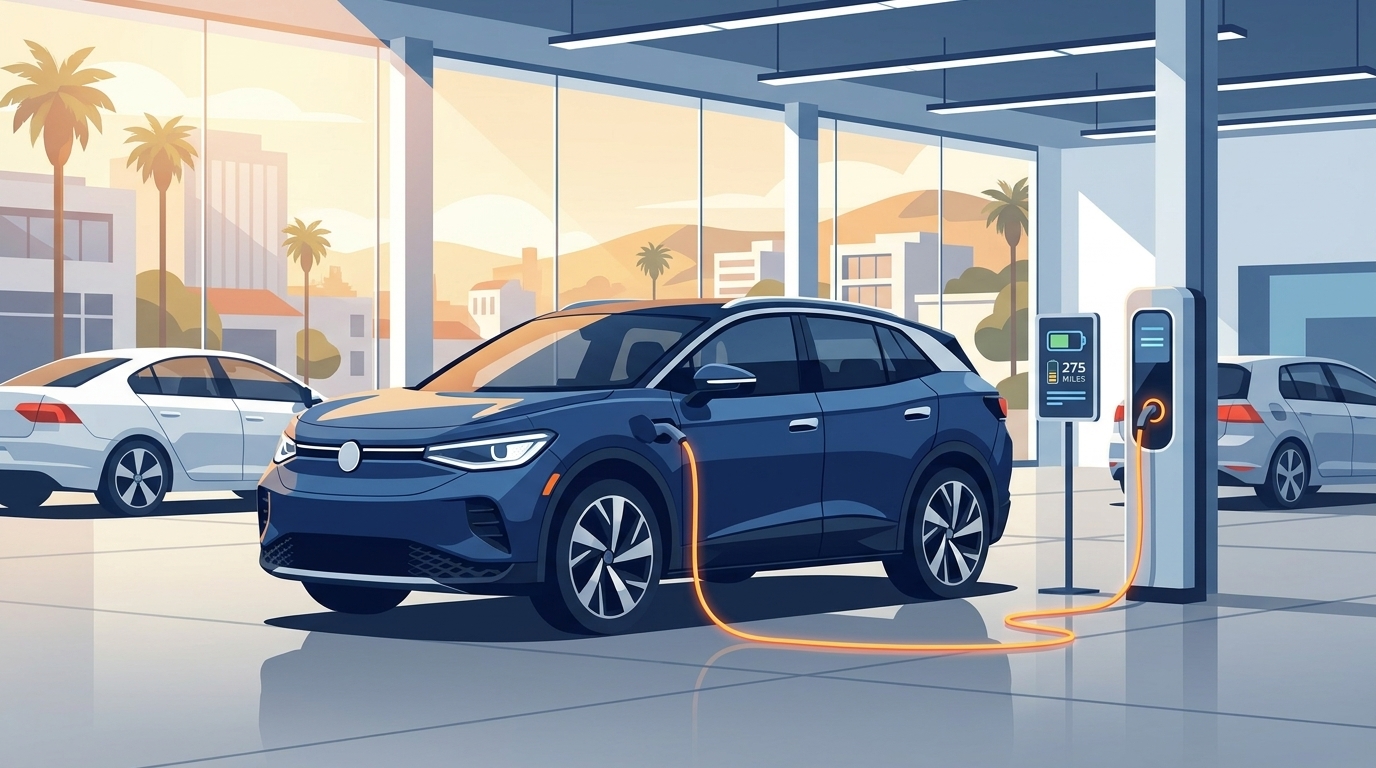
This is the single most-skipped step and the one that creates the most regret. Before you commit to an EV, know where it will charge overnight.
- Single-family home in areas like Old Quad, Rivermark, or near Santa Clara University: You'll likely want a Level 2 charger (240V) installed in your garage. Get an electrician's quote before you buy the car — panel upgrades in older Santa Clara homes can range widely.
- Apartment or condo dweller (common near Lawrence Expressway and the Tasman corridor): Confirm with your building whether EV charging is available or being installed. Silicon Valley Power, Santa Clara's municipal utility, offers rebates for EV charger installations that you should factor in.
- Workplace charging: Many Santa Clara employers — particularly the larger tech campuses near Great America — offer free or subsidized workplace charging. Verify before you assume.
2. Understand California-Specific Tax and Incentive Rules
EV incentives are jurisdictional, and California has its own layer on top of federal rules. Two things Santa Clara buyers should verify directly with the dealer and a tax professional:
- California sales tax on EVs: Unlike some states, California does not exempt EVs from sales tax. Santa Clara County's combined sales tax rate applies to the full purchase price.
- Trade-in tax treatment: California taxes the full purchase price of the new vehicle, not the post-trade-in difference. This matters when you're comparing total out-the-door cost.
- Federal EV tax credit: Eligibility depends on the specific VW model, battery sourcing, your income, and whether you take the credit at point of sale or at tax filing. Ask the dealer to confirm current eligibility for the exact VIN you're considering.
- Silicon Valley Power rebates: Santa Clara residents served by SVP (rather than PG&E) have access to municipal EV and charger incentives that suburban buyers in San Jose or Cupertino don't get. Confirm your utility provider by address before assuming.
At the Dealership: Your VW EV Buying Guide
3. Match the Model to Your Actual Use
Volkswagen's current EV lineup in the U.S. is anchored by the ID.4, with the ID. Buzz expanding the family. Before you test drive, be honest about:
- Daily commute distance: A round trip from Santa Clara to San Francisco is roughly 100 miles. Factor in HOV lane use, climate control draw, and battery degradation buffer.
- Cargo and passenger needs: The ID.4 is a compact SUV; the ID. Buzz is a larger three-row option. Don't oversize.
- RWD vs. AWD: Most Santa Clara driving doesn't require AWD, but if you're regularly heading to Tahoe or the coast, it's worth the efficiency tradeoff.
4. Test Drive With Intention
A 10-minute loop around the dealership won't tell you what you need to know. Ask to drive routes that mirror your real life — surface streets, freeway entry, regenerative braking in stop-and-go traffic. The 101 corridor through Santa Clara is a useful proving ground for highway behavior.
5. Verify the Out-the-Door Price in Writing
This is non-negotiable. Ask for a written breakdown that includes:
- MSRP and any dealer adjustments
- Documentation fees (capped by California law)
- Sales tax (Santa Clara County rate)
- DMV registration and title fees
- Any add-ons (and whether they're optional)
- Applicable rebates and credits, with timing clearly stated
One pattern customers consistently highlight at Sunnyvale Volkswagen is transparency on this front — one recent reviewer noted there were "no hidden fees" in their experience, which is the standard you should hold any Santa Clara dealer to.
6. Review the Battery Warranty and Service Plan
VW's EV battery warranty covers a defined period and mileage threshold — confirm the exact terms for the model year you're buying. Also ask about:
- Included maintenance for the first ownership period
- Loaner vehicle policies during service
- Software update procedures (over-the-air vs. dealer-required)
After You Sign: The Often-Skipped Steps
7. Register for HOV Lane Access
California's Clean Air Vehicle decal program lets qualifying EV drivers use HOV lanes solo. For a Santa Clara commuter heading up the 101 or 237 during peak hours, this is a meaningful daily benefit. Apply through the DMV — your dealer should be able to walk you through eligibility for the specific VW model you purchased.
8. Set Up Charging Network Accounts
Electrify America, EVgo, ChargePoint, and Tesla's Supercharger network (now accessible to many non-Tesla EVs with the right adapter) all require accounts. Set them up before your first road trip, not at the charger.
9. Schedule Your First Service Touchpoint
EVs need less routine maintenance than gas vehicles, but tire rotation, brake fluid, cabin filters, and software updates still matter. Establish a relationship with a VW service department early — it's much easier than trying to find one when something unexpected comes up.
FAQ: Volkswagen EV Buying in Santa Clara
Do I qualify for the federal EV tax credit on a VW ID.4?
Eligibility depends on the specific build, battery sourcing, your household income, and whether you're buying or leasing. The point-of-sale credit option, when available, lets you apply the credit as a down payment rather than waiting until you file taxes. Ask the dealer to confirm eligibility for the exact VIN.
Is it better to lease or buy a VW EV?
Leasing has historically offered a workaround for buyers who don't qualify for the purchase tax credit, because leasing companies can sometimes pass through the commercial EV credit. Whether that math works for you depends on current incentives and how long you plan to keep the vehicle.
How long does the actual purchase process take?
At a well-run Santa Clara dealership, a prepared buyer can be in and out in two to three hours. Buyers at Sunnyvale Volkswagen have described having paperwork ready in advance and completing the process in under two hours — that's a reasonable benchmark to expect.
What's the most common mistake Santa Clara EV buyers make?
Underestimating charging logistics. Range anxiety is real, but charging-access anxiety is worse. Solve your home or workplace charging plan before you sign.
Closing Thoughts
The Santa Clara EV market rewards prepared buyers. The dealers who do this well are the ones who treat the purchase as a long-term relationship — honest pricing, clear answers about incentives, and a service department you'll actually want to return to. Sunnyvale Volkswagen's 4.4★ rating across more than 1,400 Google reviews reflects a customer base that values that kind of straightforward process, and it's a reasonable starting point for Santa Clara buyers who want a VW EV without the friction.
Buyers in Santa Clara who'd like to walk through this checklist in person — including specific ID.4 or ID. Buzz availability, current incentives, and out-the-door pricing — can reach Sunnyvale Volkswagen at https://www.sunnyvalevw.com/.