Santa Clara Electric Vehicle Dealer: Complete Pre-Purchase Inspection Guide
A practical EV pre-purchase inspection checklist for Santa Clara buyers — battery health, charging, software, and what to verify before signing.
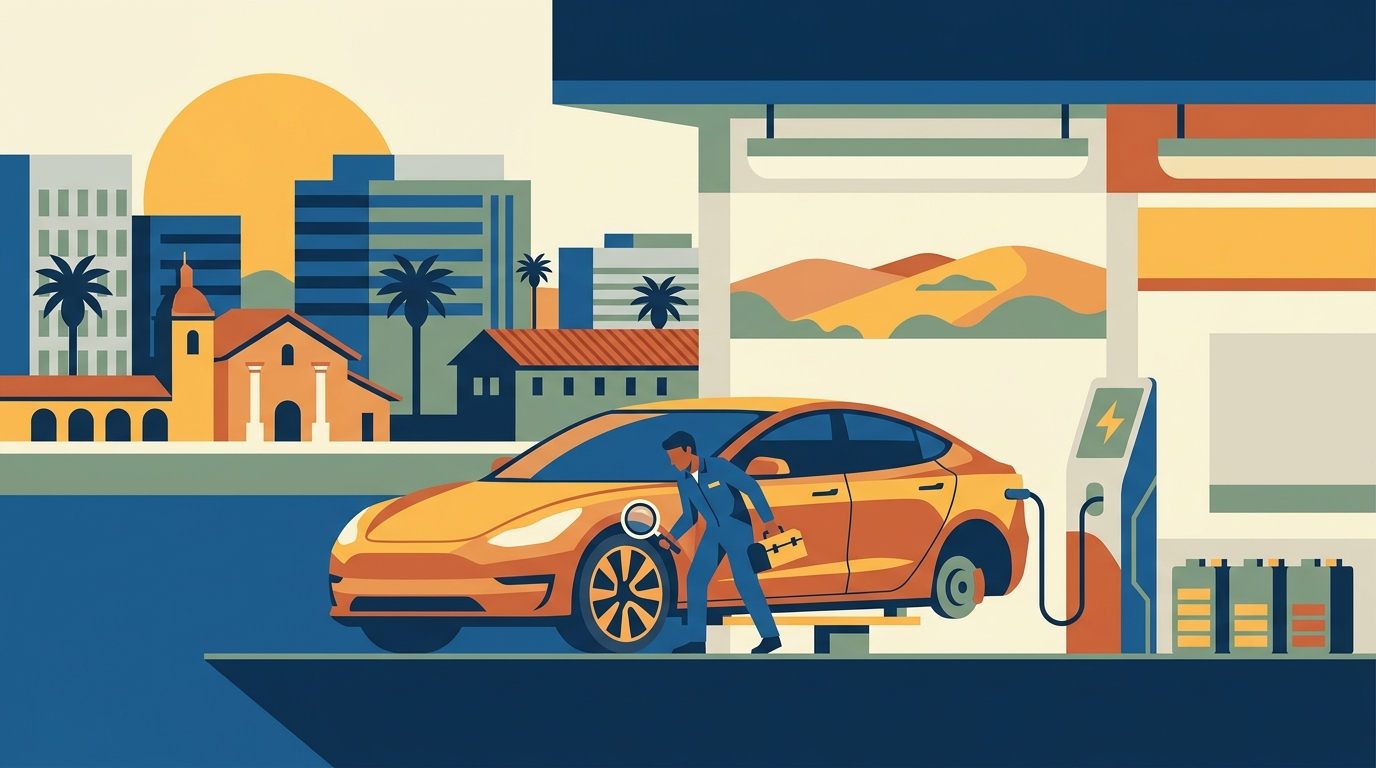
You've narrowed down your search to an electric vehicle, lined up a test drive, and you're ready to make it official. Before you sign anything, though, there's one step that separates a great EV purchase from an expensive headache: a thorough pre-purchase inspection. EVs share a lot of DNA with traditional cars, but they also have systems — battery packs, onboard chargers, regenerative braking, software ecosystems — that demand a different inspection lens.
If you're shopping in Santa Clara, the local context matters. Silicon Valley's high EV adoption rate means there's a healthy used market, plenty of charging infrastructure along the El Camino Real corridor and near Santa Clara University, and a buyer pool that tends to be technically savvy. That's good news for transparency — but it also means the best vehicles move fast, and rushing past a proper inspection is a common regret.
Here's the complete electric vehicle pre-purchase inspection checklist we recommend for Santa Clara buyers, whether you're looking at a new model or a used EV with a few years on the odometer.
Why EV Inspections Differ from Gas-Car Inspections
A traditional pre-purchase inspection focuses on the engine, transmission, exhaust, and fluids. None of that applies to a battery electric vehicle. Instead, an EV inspection checklist needs to evaluate the high-voltage battery, electric motor(s), power electronics, thermal management system, charging hardware, and the software that ties everything together.
The battery alone often represents 30–40% of an EV's value. A car that looks pristine but has a degraded pack is dramatically less valuable than a slightly scuffed example with a healthy battery. This is the single biggest reason buyers ask us about used EV inspection priorities — and it should be the first thing you verify.
The Complete EV Pre-Purchase Inspection Checklist
1. Battery State of Health (SoH)
State of Health measures the current usable capacity of the battery pack against its original capacity. A three-year-old EV with 92% SoH is in excellent shape; one at 78% is showing meaningful degradation.
- Request a battery health report directly from the manufacturer's diagnostic tool when possible
- Compare current range on a full charge against the original EPA-rated range
- Ask whether the battery has ever been replaced or had modules serviced
- Confirm remaining battery warranty coverage (most manufacturers cover the high-voltage battery for 8 years or 100,000 miles)
2. Charging System Verification
Santa Clara drivers rely heavily on a mix of home Level 2 charging and public DC fast charging, so both need to work flawlessly.
- Test the charge port for clean contacts, no corrosion, and a solid latch
- Verify the vehicle accepts a Level 1 (120V) charge
- Plug into a Level 2 station and confirm full charging speed
- If possible, run a DC fast charging session and watch the kW rate — slow fast-charging can indicate battery or thermal-system issues
- Inspect the included mobile charging cable for damage
3. Thermal Management
Battery thermal systems are critical, especially during Bay Area heat waves that push inland temperatures into the 90s. Listen for the coolant pump cycling normally, check for any leaks under the vehicle, and confirm that climate preconditioning works through the manufacturer's app.
4. Motor, Drivetrain, and Regenerative Braking
- Test acceleration in a safe area — no hesitation, no unusual whine beyond normal EV motor sounds
- Confirm regenerative braking engages smoothly at multiple intensity settings
- Check that the friction brakes still bite firmly (under-used brakes on EVs can develop surface rust, particularly in coastal humidity)
- Listen for clunks from the reduction gear during low-speed direction changes
5. Software and Infotainment
An EV is essentially a computer on wheels. Software issues can be expensive and frustrating.
- Confirm the vehicle is on the latest software version
- Verify all driver-assist features activate correctly (adaptive cruise, lane keeping, blind spot)
- Test the manufacturer's mobile app pairing — remote start, charging schedule, location
- For used EVs, confirm the previous owner has been removed from the account
6. Tires, Suspension, and Body
EVs are heavy, and that weight accelerates tire wear. Check tread depth across all four corners, and look for cupping or uneven wear that suggests alignment issues. Inspect suspension components for premature wear, and examine the underbody for impact damage to the battery enclosure — a critical item often missed.
7. HVAC and Heat Pump
Many newer EVs use a heat pump for cabin heating because it preserves driving range. Confirm both heat and AC operate quickly, and check that defrosters work front and rear.
8. Title, History, and Incentive Eligibility
- Pull a full vehicle history report
- Confirm California title status and that no salvage or flood branding is present
- For used EVs, check eligibility for California's Clean Vehicle Rebate Project and any current federal used EV tax credit rules
- Verify the VIN matches across the title, dash, door jamb, and registration
Local Considerations for Santa Clara EV Buyers
Santa Clara's mild climate is generally kind to EV batteries — we don't see the extreme cold that hammers range in other markets, and severe heat is occasional rather than constant. That said, vehicles that have spent time in the Central Valley or southern California desert may show more battery degradation than the odometer suggests. Ask where the car has lived.
California also has specific rules worth knowing. Sales tax applies to the full purchase price of a vehicle in California — trade-in value does not reduce the taxable amount the way it does in some other states. Factor that into your budget. Registration fees in Santa Clara County include a vehicle license fee based on value, plus EV-specific road improvement fees that offset the gas tax EVs don't pay.
If you live in an older home in neighborhoods like Old Quad near Santa Clara University or parts of central Santa Clara, confirm your electrical panel can support a Level 2 home charger before committing to an EV with a large battery. PG&E offers EV-specific rate plans that can dramatically lower your charging costs if you charge overnight.
Frequently Asked Questions
How much should an EV pre-purchase inspection cost?
Independent EV-capable inspections in the Bay Area typically run higher than standard PPIs because they require diagnostic equipment many shops don't have. When you purchase from a franchised dealer, a comprehensive inspection is typically included as part of the certified pre-owned process.
What battery state of health is acceptable on a used EV?
For a vehicle three to five years old, look for 85% SoH or better. Below 80% on a relatively young vehicle is a red flag worth investigating — or negotiating against.
Should I buy a used EV that's out of battery warranty?
It can still be a good value, but the inspection becomes even more critical. Without warranty backstop, a future battery issue is fully your expense. A documented battery health report becomes non-negotiable.
Do EVs need the same maintenance inspections as gas cars?
Many items overlap — tires, brakes, suspension, cabin filters, 12V battery, washer fluid. EVs skip oil changes, spark plugs, transmission service, and exhaust work, but add coolant service for the battery thermal loop and software updates.
Bringing It Together
A proper electric vehicle pre-purchase inspection in Santa Clara comes down to verifying three things: the battery is healthy, the charging system works end-to-end, and the software ecosystem is current and properly transferred. Get those right and you've eliminated the vast majority of expensive surprises.
Santa Clara buyers who want a dealer-led inspection on a Volkswagen ID.4 or other EV — or a second look at a vehicle they're considering — can reach Sunnyvale Volkswagen at https://www.sunnyvalevw.com/. The team's approach reflects the experience many buyers describe in reviews: transparent pricing, no pressure, and the time to walk through every detail. That's the kind of inspection process worth asking for, wherever you ultimately buy.