How to Trade In Your Car: Maximizing Your Vehicle's Value
Learn how to trade in your car and maximize your vehicle's value with expert tips on timing, preparation, and negotiation strategies for Sunnyvale drivers.

How to Trade In Your Car: Maximizing Your Vehicle's Value
Trading in a vehicle is one of the most financially significant decisions a car owner makes — and one of the most commonly mishandled. Many drivers leave hundreds, sometimes thousands, of dollars on the table simply because they walk into a dealership unprepared. Understanding how the trade-in process works, and what actually drives car trade-in value, puts sellers in a far stronger position before a single negotiation begins.
This guide covers the trade-in process from start to finish, with actionable steps to help Sunnyvale drivers get the most from their current vehicle before moving into their next one.
Understanding How Car Trade-In Value Is Determined
Dealerships assess trade-in value using a combination of factors: the vehicle's year, make, model, trim level, mileage, mechanical condition, exterior and interior condition, accident history, and current market demand. Tools like Kelley Blue Book, Edmunds, and dealer auction data all inform the appraisal process. As of 2026, the used vehicle market remains sensitive to inventory levels and interest rate conditions, which directly affect what dealers are willing to offer.
It is important to distinguish between trade-in value and private-party value. Private sales typically yield higher returns, but they also require more time, effort, and risk. Trade-ins offer convenience and speed — and in many states, including California, the trade-in reduces the taxable purchase price of the new vehicle, creating a meaningful financial offset that many sellers overlook when comparing the two options.
Step 1 — Research Your Vehicle's Worth Before You Visit
The single most effective thing a seller can do before entering the trade-in process is to arrive with a clear, researched sense of what the vehicle is worth. Using at least two valuation tools — such as Kelley Blue Book and Edmunds — provides a realistic range. Sellers should gather the vehicle identification number (VIN), current mileage, service history, and any recent repairs or upgrades before running these estimates.
Regional demand matters too. In the Sunnyvale area, fuel-efficient vehicles, electric vehicles, and compact SUVs tend to hold stronger trade-in value than they might in less urban markets. Understanding local demand gives sellers a more accurate baseline than national averages alone.
Step 2 — Prepare the Vehicle to Maximize Its Appeal
Dealers appraise vehicles quickly, and first impressions carry real weight. A car that arrives clean, organized, and well-documented signals that it has been cared for — and appraisers respond to that signal. Sellers should invest in a professional detail, address minor cosmetic issues like small scratches or worn floor mats, and ensure the vehicle is mechanically sound before the appraisal.
Gathering the full service history is equally important. Documented oil changes, scheduled maintenance, and repair records demonstrate responsible ownership and reduce a dealer's uncertainty about the vehicle's condition — uncertainty that typically gets priced into a lower offer. If the vehicle has new tires or a recent brake job, those records are worth presenting.
Step 3 — Get Multiple Appraisals
One of the most effective tactics for maximizing trade-in value is obtaining competitive appraisals from more than one source. Online instant offer platforms, competing dealerships, and the dealership where the new vehicle will be purchased all represent valid starting points. Having a documented offer in hand — even from an online service — gives the seller a concrete floor to negotiate from.
Dealers are generally willing to match or beat a legitimate competing appraisal, particularly when the seller is also purchasing a vehicle. The trade-in and the purchase are often negotiated together, which is why experienced sellers treat them as two separate transactions within the same conversation. Mixing them without awareness of that structure can lead to gains on one side that quietly offset losses on the other.
Step 4 — Time the Trade-In Strategically
Market timing is an underutilized lever in the trade-in process. Convertibles and sports cars fetch stronger offers in spring and early summer. Trucks and four-wheel-drive vehicles often command higher appraisals in late fall. Sellers who have flexibility in their timeline should monitor market conditions and aim to trade in during periods of elevated demand for their specific vehicle type.
Mileage thresholds also matter. Vehicles approaching round-number milestones — 50,000, 75,000, or 100,000 miles — tend to see sharper depreciation at those points. Trading in a vehicle at 47,000 miles typically yields a better return than waiting until it crosses 50,000, all else being equal.
Step 5 — Negotiate the Trade-In and Purchase Separately
Dealership finance offices are structured to manage multiple numbers simultaneously — purchase price, trade-in value, financing rate, and monthly payment. Sellers who allow these figures to be bundled into a single monthly payment conversation lose visibility into whether the trade-in is being valued fairly or subsidizing discounts elsewhere in the deal.
The cleaner approach is to negotiate the trade-in value first, agree on that number in writing, and then begin the discussion about the new vehicle's purchase price. This sequencing keeps each element transparent and reduces the risk of value shifting invisibly between line items.
Understanding Tax Benefits of Trading In California
California's sales tax structure offers a meaningful incentive for trade-ins. When a vehicle is traded in at the point of purchase, the trade-in value is subtracted from the new vehicle's purchase price before sales tax is calculated. On a $35,000 vehicle with a $10,000 trade-in, tax is assessed on $25,000 rather than the full amount — a savings that can reach several hundred dollars depending on the county tax rate. This calculation is easy to overlook but should factor into any comparison between trading in and selling privately.
What Dealers Look for During the Appraisal
During the appraisal, a trained appraiser will physically inspect the vehicle and run a vehicle history report. Key factors include frame damage history, number of previous owners, odometer accuracy, mechanical condition (including a brief test drive), and the state of high-wear components like tires, brakes, and the transmission. Vehicles with clean titles and single-owner histories consistently receive stronger offers than comparable vehicles with more complex ownership records.
Interior condition is often underestimated by sellers. Stained upholstery, broken interior trim, or a damaged infotainment screen can meaningfully reduce an offer — and these are often issues sellers have stopped noticing because they live with them daily.
Working With a Dealership That Prioritizes Transparency
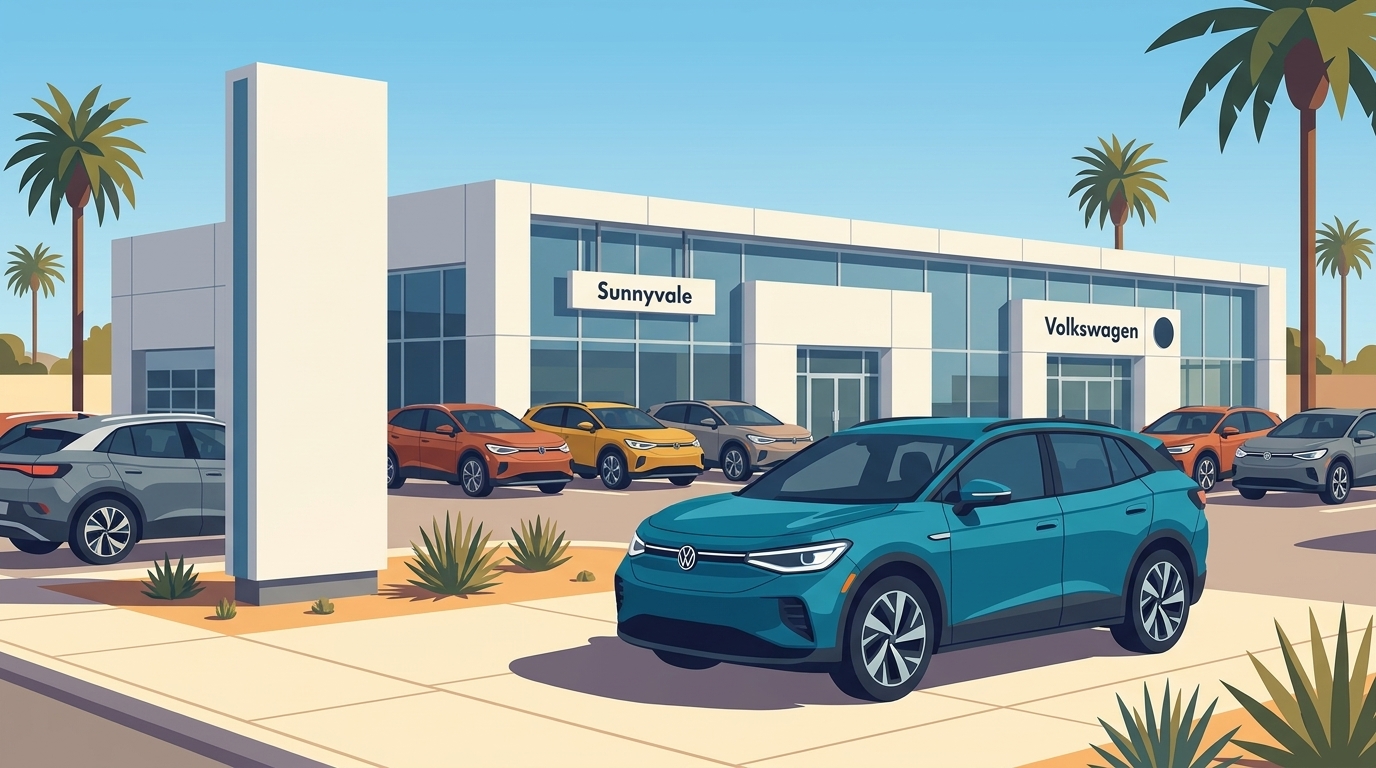
The trade-in experience varies significantly depending on the dealership. Sellers should look for dealerships that walk through the appraisal reasoning openly, present trade-in values as a distinct line item in the deal, and allow negotiation without pressure tactics. One recent reviewer of Sunnyvale Volkswagen noted that there were "no hidden fees" — a detail that speaks to the kind of transparent transaction environment that makes a trade-in process feel fair rather than adversarial.
Sunnyvale Volkswagen's 4.4-star rating across more than 1,400 Google reviews reflects consistent customer feedback around pricing transparency and a low-pressure sales environment. For Sunnyvale residents navigating a trade-in alongside a new vehicle purchase, that kind of track record matters when choosing where to bring the transaction.
Frequently Asked Questions: Trading In a Car
Should the trade-in be paid off before trading it in?
Not necessarily. Most dealerships will accept vehicles with existing loan balances and will handle the payoff directly. If the loan balance exceeds the trade-in value — a situation called being "underwater" or having negative equity — that balance is typically rolled into the new vehicle's financing. Sellers should understand this distinction before proceeding, as it affects the total cost of the new purchase.
Does the vehicle need to be inspected before a trade-in appraisal?
A pre-sale inspection from a third-party mechanic is not required but can be useful. It gives the seller an accurate picture of the vehicle's mechanical condition and helps avoid surprises during the dealer's appraisal. It also provides documentation that can support a higher offer if the inspection results are favorable.
How long does a trade-in appraisal typically take?
At most dealerships, a trade-in appraisal takes between 20 and 45 minutes, depending on the vehicle and the dealership's process. Having documentation ready — title, service records, registration, and a government-issued ID — helps streamline the process.
Is it better to trade in or sell privately in Sunnyvale?
Private sales in the Sunnyvale area can yield 10–15% more than a dealer trade-in for vehicles in strong condition. However, private sales involve listing the vehicle, vetting buyers, handling test drives, and managing title transfer — a process that can take weeks. The convenience of a trade-in, combined with California's tax offset benefit, closes that gap considerably for most sellers.
Can the trade-in value be negotiated?
Yes. Trade-in values are opening offers, not fixed prices. Sellers who present competing appraisals, documented service history, and recent maintenance records have a reasonable basis for negotiation. Dealers have room to move on trade-in value, particularly when a new vehicle purchase is part of the same transaction.
Conclusion: Arriving Prepared Makes the Difference
The trade-in process rewards preparation. Sellers who research their car trade-in value in advance, present the vehicle well, gather competitive appraisals, and negotiate the trade-in as a separate line item consistently do better than those who treat it as an afterthought. The mechanics of the trade-in process are straightforward — the challenge is executing each step with enough awareness to protect the transaction from unnecessary value loss.
Sunnyvale residents who want to trade in a vehicle as part of a new purchase can start with an online valuation and then schedule an in-person appraisal at Sunnyvale Volkswagen (sunnyvalevw.com). The dealership's appraisal process is transparent by design, and the trade-in value is presented as a clear line item — making it easier for sellers to evaluate the full deal on its merits.