Certified Pre-Owned vs Regular Used Cars: Value Analysis
Compare certified pre-owned vs used cars on cost, warranty, and peace of mind. A thorough value analysis for quality-conscious buyers in Sunnyvale.
Certified Pre-Owned vs Regular Used Cars: Value Analysis
For buyers weighing their options in Sunnyvale's competitive automotive market, the choice between a certified pre-owned (CPO) vehicle and a standard used car is rarely straightforward. Both paths offer meaningful savings over buying new, but they come with different risk profiles, warranty structures, and long-term cost implications. Understanding those differences — not just the sticker price — is what separates a smart purchase from an expensive regret.
This analysis breaks down what CPO certification actually means, where standard used cars hold genuine advantages, and how buyers should think about value across the full ownership period.
What Does Certified Pre-Owned Actually Mean?
The term "certified pre-owned" is not a marketing label any dealer can apply freely. Manufacturer-backed CPO programs require vehicles to meet specific age and mileage thresholds — typically under six years old and fewer than 80,000 miles, though requirements vary by brand — and to pass a rigorous multi-point inspection, often covering 100 to 150 individual components. Vehicles that fail inspection must either be repaired to standard or removed from the program entirely.
Volkswagen's CPO program, for example, includes vehicles that have undergone a 112-point inspection, come with a limited warranty, and are backed by roadside assistance. That framework is meaningfully different from a dealer "certification" that amounts to little more than a wash and a safety check. Buyers evaluating CPO cars should confirm whether the certification is manufacturer-backed or dealer-issued — the distinction carries real financial weight.
The Core Cost Comparison: CPO vs Used
Purchase Price
Standard used cars carry a lower average purchase price than their CPO equivalents. As of 2026, the CPO premium typically runs between $1,500 and $3,500 above a comparable non-certified used vehicle, depending on the make, model, and mileage. For budget-constrained buyers, that gap is not trivial. However, analyzing purchase price in isolation misrepresents the true cost equation.
CPO vehicles often qualify for manufacturer-subsidized financing rates that are unavailable on standard used inventory. A lower interest rate over a 48- or 60-month loan term can partially or fully offset the upfront price premium — a calculation worth running before dismissing CPO options on sticker price alone.
Warranty Coverage
This is where CPO programs deliver their most tangible value. Standard used cars are typically sold as-is or with limited dealer warranties that may cover only 30 to 90 days. A manufacturer CPO warranty, by contrast, can extend coverage for an additional two to five years beyond the original factory warranty, covering powertrain components and, in many cases, a broader suite of mechanical systems.
For a buyer purchasing a vehicle with 40,000 miles and a two-year CPO warranty extension, that coverage represents protection during a period when wear-related repairs become statistically more likely. The expected repair cost avoidance — not just the warranty's face value — is the more useful metric for comparison purposes.
Inspection Transparency and Vehicle History
CPO vehicles come with documented inspection records and, in most cases, a clean vehicle history report as a program requirement. Standard used car purchases vary widely on this dimension. Some dealerships provide Carfax or AutoCheck reports as a matter of course; others do not. Private-party sales rarely include inspection documentation at all.
Buyers who skip independent pre-purchase inspections on standard used vehicles face meaningful information asymmetry. A certified pre-owned program addresses that gap structurally — the inspection has already been completed, documented, and warranted by the manufacturer's standards.
Where Standard Used Cars Make Sense
For all their advantages, CPO programs are not the right fit for every buyer or every vehicle segment. Standard used cars offer genuine value in specific scenarios that quality-conscious buyers should recognize rather than dismiss.
Buyers purchasing older vehicles — typically those exceeding CPO age or mileage thresholds — have no CPO option available, making the comparison moot. In that segment, a well-documented used car from a reputable dealership, paired with an independent inspection and an aftermarket extended warranty, can approximate CPO-level protection at a lower cost. Similarly, buyers with mechanical expertise or access to trusted independent mechanics may reasonably accept the lower price of a non-certified vehicle and manage risk through their own due diligence.
CPO programs also concentrate heavily in popular model lines. Buyers seeking less common configurations or colors may find CPO inventory limited in Sunnyvale, making standard used stock the practical path regardless of preference.
Total Cost of Ownership: The More Useful Framework
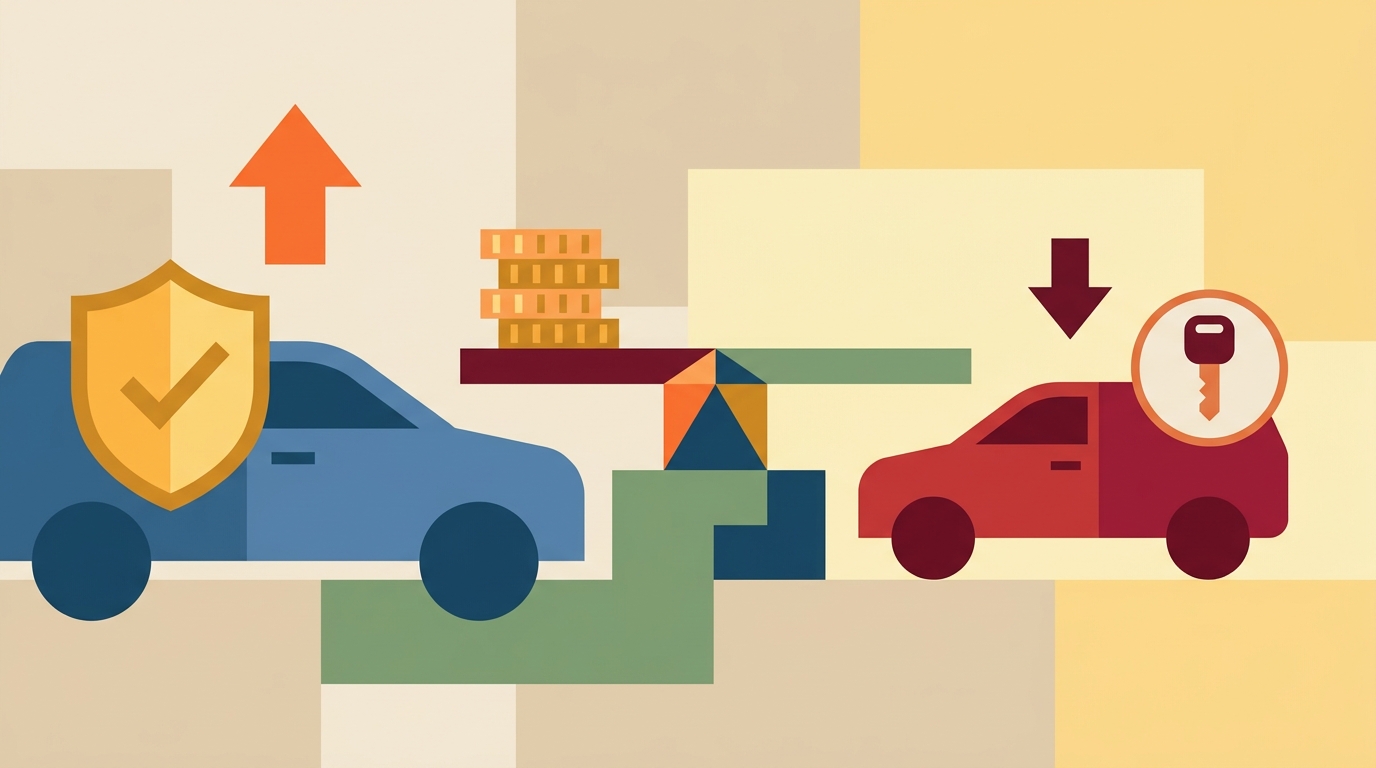
Purchase price is the entry point of a cost analysis, not the conclusion. Total cost of ownership over a three- to five-year horizon should account for expected repair costs, warranty coverage value, financing rates, insurance premiums, and depreciation trajectory. By that fuller measure, the CPO premium frequently narrows or disappears.
A standard used vehicle purchased $2,500 below its CPO equivalent that requires a $1,800 transmission repair in year two — a repair covered under a CPO warranty — has effectively erased its price advantage and then some. Buyers who anchor too heavily on purchase price without modeling likely repair scenarios are applying an incomplete framework to a significant financial decision.
Depreciation is a secondary but relevant factor. CPO vehicles, particularly those backed by well-regarded manufacturer programs, tend to retain residual value more reliably than comparable non-certified used cars. For buyers who plan to trade or sell within three to four years, that retained value affects the net cost of ownership in ways that upfront price comparisons do not capture.
What to Look for in a CPO Program
Not all CPO programs are structurally equivalent. Buyers evaluating certified used cars should confirm the following before purchase:
- Manufacturer vs. dealer certification: Manufacturer-backed programs carry more rigorous inspection standards and are underwritten by the automaker, not the selling dealer.
- Inspection point count and documentation: A 100-plus-point inspection with a detailed checklist is meaningfully more comprehensive than a cursory safety review.
- Warranty duration and transferability: Confirm how long the CPO warranty extends, what it covers, and whether it transfers to a subsequent buyer — which affects resale value.
- Roadside assistance and additional benefits: Many manufacturer CPO programs include trip interruption coverage, rental car reimbursement, and 24-hour roadside assistance as standard inclusions.
- Financing eligibility: Ask specifically whether CPO inventory qualifies for manufacturer financing promotions, which can shift the economics substantially.
Reputable dealerships like Sunnyvale Volkswagen walk buyers through each of these elements as part of the purchase conversation — not as an afterthought. Customers have noted that the purchasing process there is notably transparent on pricing and program details; as one recent reviewer wrote, "there were no hidden fees," which matters when evaluating a program as documentation-dependent as CPO certification.
The Sunnyvale Market Context
Sunnyvale's used car market reflects broader Bay Area dynamics: strong demand, relatively compressed inventory, and buyers who tend to be analytically rigorous about purchases. In that environment, the CPO premium is easier to justify than in markets where used car supply is abundant and prices are softer. Competition for quality used vehicles in the area means that non-certified inventory at aggressive price points moves quickly, often leaving buyers with fewer alternatives than they expected.
For buyers in Sunnyvale who prioritize reliability and want protection against the most common financial risks of used car ownership — unexpected repairs, undisclosed history, financing limitations — the CPO path represents a structurally sound choice. Sunnyvale Volkswagen's CPO inventory reflects the manufacturer's program standards, and the dealership's 4.4-star rating across more than 1,400 Google reviews suggests the buying experience holds up in practice. One customer drove two hours from Sacramento specifically to purchase there after a poor experience elsewhere, which speaks to the value buyers place on process transparency when the stakes are significant.
Frequently Asked Questions
Is a certified pre-owned car worth the extra cost?
For most buyers who plan to own the vehicle for three or more years and are not mechanical experts, yes. The warranty coverage, documented inspection, and financing advantages typically offset the price premium when evaluated over the full ownership period rather than at the point of purchase.
What is the difference between CPO and used cars?
A standard used car is sold based on its current condition with limited or no warranty. A certified pre-owned car has passed a manufacturer-specified multi-point inspection, meets age and mileage requirements, and comes with an extended warranty backed by the automaker — not just the selling dealer.
Do CPO cars have lower interest rates?
Often, yes. Manufacturer CPO programs frequently include access to subsidized financing rates that are not available on standard used inventory. Buyers should ask specifically about CPO financing promotions at the time of purchase, as these rates can meaningfully affect the total cost comparison.
Can you negotiate the price of a CPO car?
Yes. CPO certification sets a quality and warranty floor, not a fixed price. Negotiation on CPO vehicles follows the same general principles as any used car transaction. The certification itself — and the warranty it carries — remains intact regardless of the negotiated sale price.
Are CPO cars inspected before sale?
Under manufacturer-backed programs, yes — and the inspection documentation should be available to the buyer. The inspection covers a defined checklist of mechanical, safety, and cosmetic components. Buyers should request the actual inspection report, not just a summary, before finalizing a CPO purchase.
Conclusion
The certified pre-owned vs. used car decision is ultimately a risk management question framed as a car purchase. For buyers who want a documented vehicle history, meaningful warranty protection, and access to manufacturer financing, CPO programs offer a coherent value proposition that a lower sticker price on a standard used car does not automatically defeat. For buyers with flexibility on model and mechanical confidence in their own assessment, standard used inventory remains a viable path — provided they approach it with appropriate diligence.
Buyers in Sunnyvale who want to explore Volkswagen's certified pre-owned inventory or compare specific vehicles side by side can find current CPO listings and program details at Sunnyvale Volkswagen's website. The sales team there has a documented track record of working through vehicle options without pressure, which is a meaningful asset when making a decision this size.