Electric vs Gas Cars: Total Cost of Ownership Analysis
A detailed 2026 comparison of electric vs gas car total cost of ownership — covering purchase price, fuel, maintenance, insurance, and resale value.

Electric vs Gas Cars: Total Cost of Ownership Analysis
The sticker price is the number most buyers fixate on, but it rarely tells the full story. When comparing an electric vehicle to a gas-powered car, the more meaningful question is what the vehicle will actually cost over five to ten years of ownership — fuel, maintenance, insurance, depreciation, and financing all included. As of 2026, that calculation has become more competitive than ever, and the answer depends heavily on where and how a driver uses their vehicle.
For drivers in Sunnyvale, where electricity rates, commuting patterns, and local incentive programs all shape the math, a careful total cost of ownership (TCO) analysis is worth the effort before signing any purchase agreement.
Breaking Down the Purchase Price Gap
The most visible difference between electric and gas vehicles remains the upfront purchase price. As of 2026, the average new electric vehicle in the United States carries a transaction price roughly $5,000 to $10,000 higher than a comparable gas-powered model in the same segment. However, federal tax credits — up to $7,500 for qualifying new EVs under current legislation — can substantially close that gap for eligible buyers.
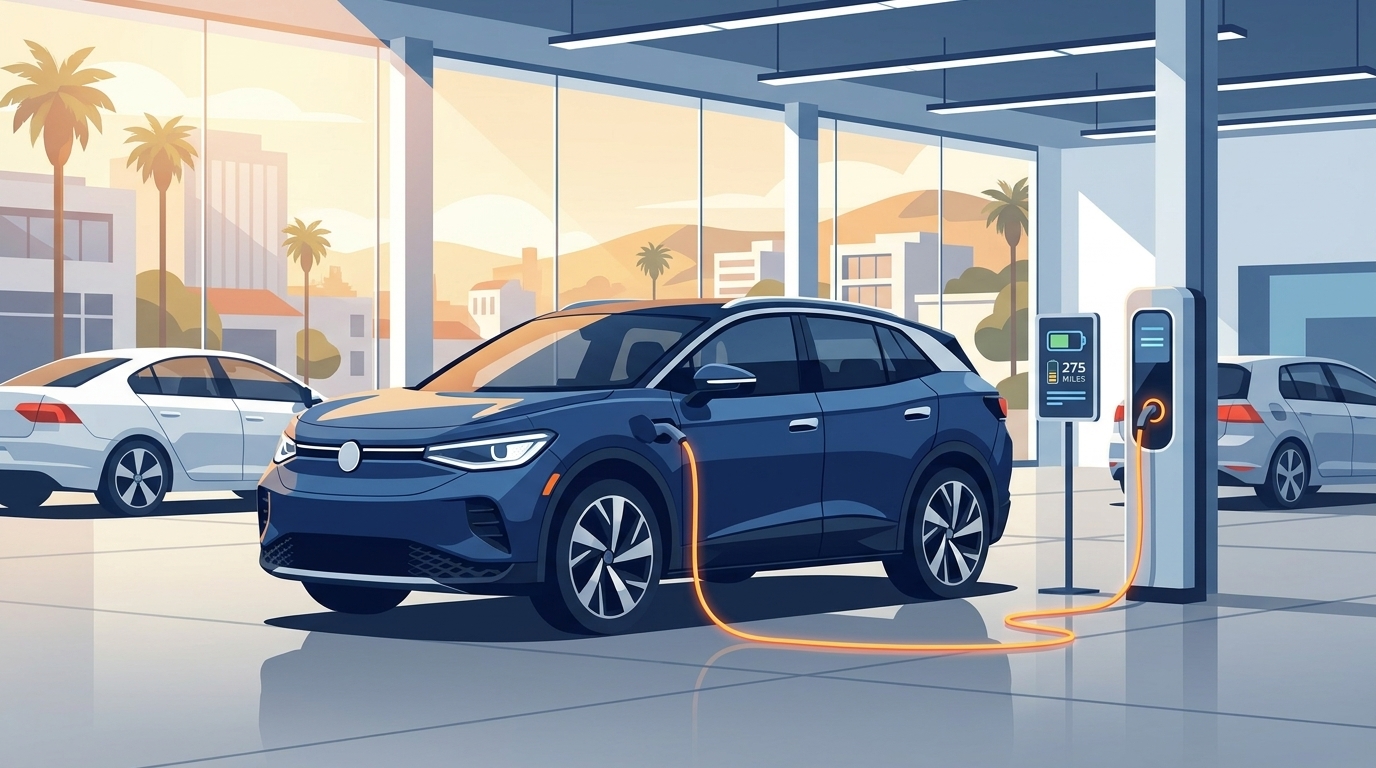
Volkswagen's lineup illustrates this dynamic clearly. A 2026 ID.4, for example, positions itself competitively against comparably equipped internal combustion alternatives once available incentives are applied. The gap narrows further for buyers financing over 60 to 72 months, where the monthly payment difference can be modest. Buyers should confirm their tax liability before assuming the full credit applies, as income caps and vehicle eligibility rules still govern qualification.
Fuel Costs: Electric vs Gas in Sunnyvale
Fuel cost comparison is where electric vehicles consistently demonstrate an advantage for high-mileage drivers. The U.S. Department of Energy's eGallon metric — which translates the cost of driving on electricity into a gasoline-equivalent price — has consistently shown electricity to be cheaper per mile in most U.S. markets. In California, where gas prices remain among the highest in the country, that differential is especially pronounced.
In Sunnyvale, residential electricity rates through PG&E vary by time of use, but drivers who charge overnight during off-peak hours typically pay the equivalent of well under $2.00 per gallon in energy costs. A driver covering 15,000 miles annually in a gas vehicle averaging 30 miles per gallon, at California's 2026 average pump price near $4.50 to $5.00 per gallon, spends roughly $2,250 to $2,500 per year on fuel. A comparable EV on off-peak charging could reduce that figure to $600 to $900 annually — a savings of $1,400 to $1,800 per year.
Public charging costs vary and should be factored in for drivers without reliable home charging access. Level 2 and DC fast charging at commercial stations typically cost more per mile than home charging, which can reduce the fuel-cost advantage for apartment dwellers or those relying heavily on paid charging networks.
Maintenance and Repair Costs
Electric vehicles have meaningfully fewer moving parts than internal combustion engines. There is no oil to change, no transmission fluid to service, no timing belt to replace, and no exhaust system to maintain. Independent analyses consistently show that EV owners spend 30 to 40 percent less on scheduled maintenance over the first 100,000 miles compared to gas vehicle owners. Brake wear is also reduced in EVs due to regenerative braking systems that recapture energy during deceleration.
The primary maintenance-related concern unique to EVs is battery health. Modern EV batteries are designed to retain 70 to 80 percent of their capacity after 100,000 to 150,000 miles, and manufacturer warranties typically cover the battery pack for eight years or 100,000 miles. Gas vehicle owners, by comparison, face a broader range of mechanical components that require periodic replacement — spark plugs, coolant flushes, air filters, and timing system service among them.
For buyers concerned about service access, it is worth confirming that a dealership's service department is equipped to handle both EV-specific diagnostics and traditional drivetrain repairs. Sunnyvale Volkswagen's service department handles both the ID.4 electric lineup and the broader range of Volkswagen's internal combustion models, giving owners of either platform a consistent service resource.
Insurance Costs
Insurance is an area where electric vehicles have historically carried slightly higher premiums than comparable gas models. The primary driver is repair cost — EV components, particularly battery packs and specialized electrical systems, can be expensive to replace after a collision. In 2026, the average annual insurance premium for an EV runs approximately 10 to 15 percent higher than a gas equivalent in the same vehicle class, though this varies significantly by insurer, driver profile, and specific model.
Some insurers have begun adjusting their EV pricing more competitively as repair data matures and parts availability improves. Buyers should obtain EV-specific insurance quotes before finalizing a purchase decision, as the variance between carriers can offset or amplify other cost differences in the TCO calculation.
Depreciation and Resale Value
Depreciation has historically been a weak point for electric vehicles. Early EV models experienced steep first-year value drops, driven in part by rapid technology improvement and buyers' uncertainty about battery longevity. The market has stabilized as EV adoption has broadened, but resale value still varies considerably by make, model, and trim level.
In 2026, established EV models with strong brand recognition — including Volkswagen's ID series — have demonstrated more predictable depreciation curves than early-generation EVs. Gas vehicles, particularly compact and midsize models, remain relatively stable in resale value, though fuel cost volatility can affect buyer demand for high-consumption models. Buyers planning to sell or trade within three to five years should factor depreciation estimates into the TCO comparison, as a vehicle that costs less to fuel but loses $8,000 more in value may not represent a net advantage over that horizon.
Five-Year Total Cost of Ownership: A Side-by-Side View
When all cost categories are combined over a five-year ownership period for a Sunnyvale driver covering 15,000 miles annually, the comparison typically looks like this:
- Purchase price (after incentives): EVs and comparable gas models often land within $2,000 to $4,000 of each other after federal credits are applied
- Fuel costs (5 years): EV advantage of $7,000 to $9,000 for home-charging drivers in Sunnyvale
- Maintenance (5 years): EV advantage of $2,000 to $3,500 on average
- Insurance (5 years): Gas vehicle advantage of $500 to $1,500 depending on model and insurer
- Depreciation: Roughly comparable for mainstream models; gas vehicles may hold a slight edge in some segments
Net result: for most Sunnyvale drivers who commute regularly and have home charging access, an EV carries a meaningful five-year cost advantage — often $6,000 to $10,000 — over an equivalent gas vehicle. For lower-mileage drivers or those without reliable home charging, the margin narrows and may favor a traditional powertrain depending on specific circumstances.
Frequently Asked Questions
Is it cheaper to own an electric car than a gas car in 2026?
For most drivers in Sunnyvale who have access to home charging and drive 12,000 miles or more annually, the five-year total cost of ownership for an electric vehicle is typically lower than a comparable gas model, driven primarily by fuel and maintenance savings. The margin depends on individual driving patterns, available incentives, and insurance costs.
What is the biggest hidden cost of owning an electric vehicle?
Home charging equipment installation is the most commonly overlooked upfront cost for new EV buyers. Installing a Level 2 (240-volt) home charger typically runs $500 to $1,500 depending on the home's electrical panel and the installer. This cost should be factored into the initial purchase comparison. Public charging costs are also worth modeling for drivers who cannot charge at home regularly.
Do electric cars cost more to insure than gas cars?
On average, yes — electric vehicles currently carry insurance premiums roughly 10 to 15 percent higher than comparable gas models. The difference is narrowing as insurers accumulate more EV claims data and as repair infrastructure improves. Buyers are advised to obtain specific quotes for any vehicle under consideration before making assumptions.
How does Volkswagen's ID.4 compare to a gas Tiguan on total cost?
The 2026 ID.4 and Tiguan occupy similar segments and are a useful comparison pair. The Tiguan generally carries a lower sticker price, but after federal incentives, the ID.4's purchase cost becomes more competitive. Over five years, the ID.4's fuel and maintenance savings are substantial for high-mileage California drivers. The Tiguan may hold a slight resale advantage in certain configurations. The better financial choice depends on individual usage and financing structure.
What should I ask a dealership before buying an EV?
Buyers should ask about current federal and state incentive eligibility for the specific vehicle and their tax situation, available home charging partnerships or installation support, the service department's EV diagnostic capabilities, and battery warranty terms. Transparency on these points is a reliable indicator of how a dealership will handle ownership questions after the sale.
Making the Right Choice for Your Situation
The electric vs. gas car decision is not universal — it is specific to how a driver uses their vehicle, where they live, and how long they plan to keep it. For Sunnyvale residents with a regular commute, access to home charging, and a five-year or longer ownership horizon, the TCO math generally favors an electric vehicle in 2026. For buyers with shorter ownership plans, limited charging infrastructure, or lower annual mileage, a well-equipped gas vehicle may still represent the more practical financial choice.
What matters most is getting the analysis right before committing, rather than relying on sticker price alone. One recent customer noted that the purchasing process at Sunnyvale Volkswagen involved "no hidden fees" and a salesperson who "listened to what I wanted" — the kind of transparent, pressure-free environment that makes it easier to work through these decisions carefully rather than reactively.
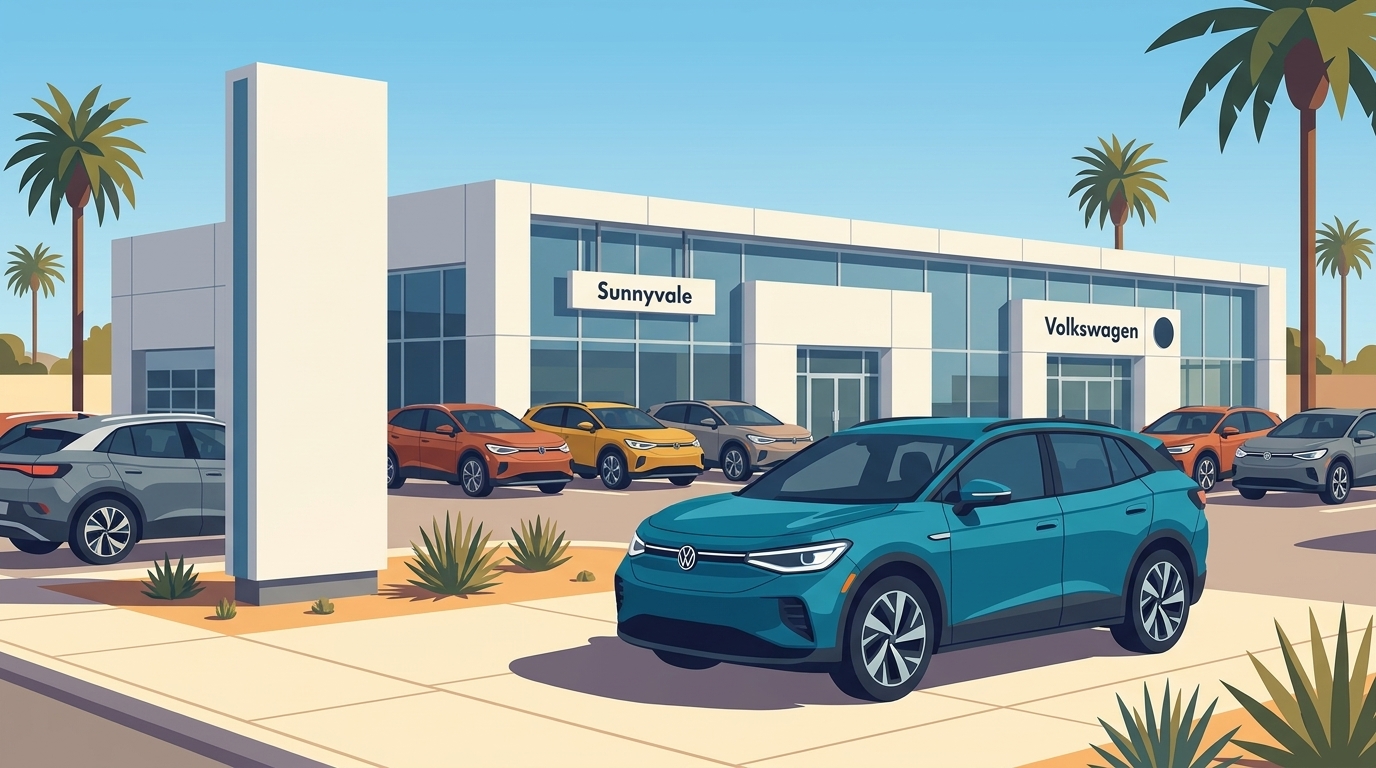
Drivers in Sunnyvale who want to work through the numbers on both electric and gas options — including current incentive availability, financing scenarios, and model-specific TCO comparisons — can find that guidance at Sunnyvale Volkswagen. The dealership carries both the ID.4 electric lineup and Volkswagen's full range of internal combustion vehicles, making it a practical resource for buyers who have not yet settled on a powertrain direction.