First-Time Car Buyer Guide: Santa Clara Edition (2026)
A practical 2026 guide for first-time car buyers in Santa Clara, CA — covering EV shopping, California DMV rules, financing, and what to expect at the dealership.
Buying a first car in Santa Clara is unlike buying one almost anywhere else in the country. The South Bay is the epicenter of California's electric-vehicle adoption curve, the state's registration and emissions rules are stricter than the national norm, and the local market — from Rivermark to the area around Santa Clara University — is shaped by tech-commuter routines, HOV-lane access, and access to public charging. A first-time buyer who walks in prepared will save money, avoid common DMV delays, and end up with a vehicle that actually fits the way people drive here.
This guide breaks down what first-time buyers in Santa Clara should know in 2026: how to think about EV versus gas, what California requires at the point of sale, how to budget realistically, and what to do once you've picked the car.
Start With How You Actually Drive in Santa Clara
The single most useful exercise for a new driver is to map a realistic week of driving before shopping. Many Santa Clara residents commute short distances — into North San Jose, Sunnyvale, or along the El Camino Real corridor — with occasional longer trips over the hill to the coast or down to Gilroy. That profile is almost ideal for an electric vehicle, which is part of why EV adoption in this part of Silicon Valley runs well ahead of the state average.
For a first car, the questions to answer honestly are: how many miles per day, whether home charging is available (a major variable for apartment dwellers near Lawrence Station or Old Quad), and whether the car will need to handle occasional road trips. The answers should drive the shortlist, not the other way around.
EV vs. Gas: What First-Time Buyers Should Weigh
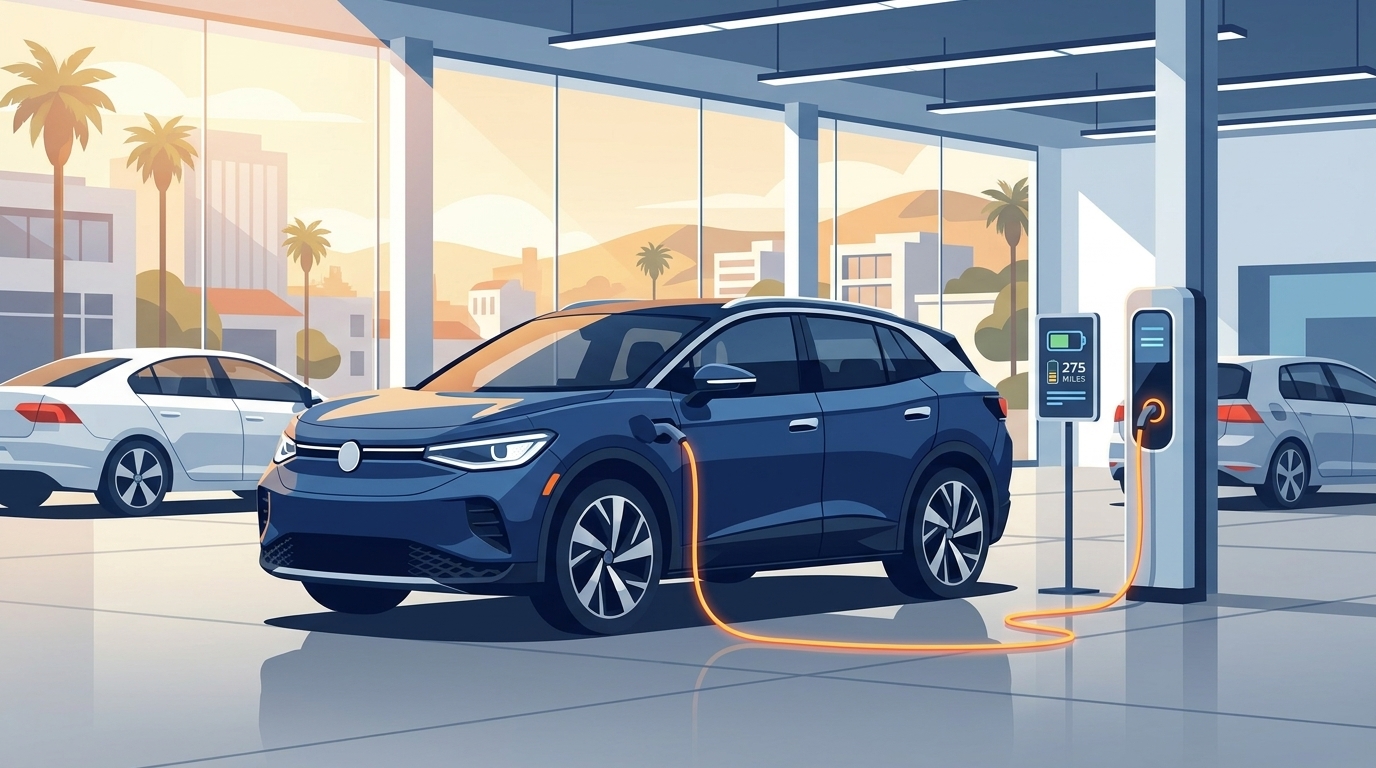
Santa Clara's public charging network is dense, and the city's own Silicon Valley Power utility has historically offered some of the lowest residential electricity rates in California — which materially changes the math on EV ownership compared to PG&E territory just a few miles north. For a first-time buyer who can charge at home or at work, an EV often pencils out as the lower-cost long-term option even before incentives.
That said, EVs are not automatic winners for every buyer. Renters without dedicated parking, buyers who frequently drive to Tahoe or beyond, and those on the tightest used-car budgets may find a fuel-efficient gas or hybrid vehicle simpler. The honest framing is this: in Santa Clara specifically, the infrastructure and electricity pricing tilt the decision toward EVs more than in most U.S. markets — but the right answer still depends on the individual.
Budgeting Beyond the Sticker Price
First-time buyers consistently underestimate the full cost of ownership. A realistic Santa Clara budget should account for:
- California sales tax, which applies to the full purchase price of the vehicle. Santa Clara County's combined rate is among the higher ones in the state.
- DMV registration and title fees, which in California include a vehicle license fee calculated as a percentage of the vehicle's value — meaning a more expensive car costs more to register every year, not just in year one.
- Insurance, which California requires before the DMV will finalize registration. Rates in the 95050–95054 ZIP codes are shaped by Bay Area density and theft patterns.
- Dealer document processing fees, which are capped by California statute. The applicable cap depends on the law in effect at the time of sale, so first-time buyers should verify the current cap rather than relying on what a friend paid years ago.
For an EV specifically, factor in home charging hardware if applicable, and check whether the vehicle qualifies for current federal, state, or utility incentives at the time of purchase — these change frequently, so the rule is to verify, not assume.
Financing a First Car: What to Know Before You Sign
First-time buyers without established credit have options, but the terms vary widely. A few principles hold up regardless of lender:
- Get pre-approved by a bank or credit union before visiting a dealership. This gives you a benchmark APR to compare against dealer financing.
- Negotiate the out-the-door price, not the monthly payment. Monthly-payment negotiation is how buyers end up with longer terms and more interest.
- Read the contract before signing. California requires specific disclosures on the buyer's order, and the numbers on the contract should match what was discussed.
- Be cautious with add-ons. Extended warranties, paint protection, and similar products are almost always negotiable and sometimes worth declining outright on a first car.
California Paperwork: What's Required to Register Your Car
California's documentation rules are more involved than many other states, and missing a step is the most common reason first-time buyers face delays or late fees. Per current California law, the basic requirements at the point of transfer include:
- The seller must endorse the certificate of ownership (title) and deliver it to the buyer; the buyer then applies for transfer and registration with the California DMV.
- Odometer disclosure is required on title-transfer paperwork for most vehicles under the applicable federal age threshold.
- Most gasoline-powered vehicles require a valid smog certification before transfer. Electric vehicles and motorcycles are exempt from smog certification, as are certain newer model-year vehicles as defined by state rules.
- Proof of insurance must be provided to the DMV — registration will not be completed without it.
- Vehicles brought in from out of state generally require VIN verification in addition to the standard documentation, plus the out-of-state title and registration.
For new California residents — common in Santa Clara, where tech relocations are frequent — the state requires registering an out-of-state vehicle within 20 days of establishing residency to avoid late fees. That window is shorter than many other states allow, and it catches a lot of newcomers off guard.
In dealer transactions, the dealer is generally responsible for submitting transfer paperwork to the DMV rather than the buyer — which removes a significant administrative burden for first-time buyers who go through a franchised dealership rather than a private-party sale.
Why First-Time Buyers Often Prefer Buying From a Dealership
Private-party sales can be cheaper on paper, but they place the entire DMV process — title transfer, smog certification (if applicable), VIN verification for out-of-state cars, and lien handling — on the buyer. For someone purchasing their first vehicle, that's a meaningful learning curve.
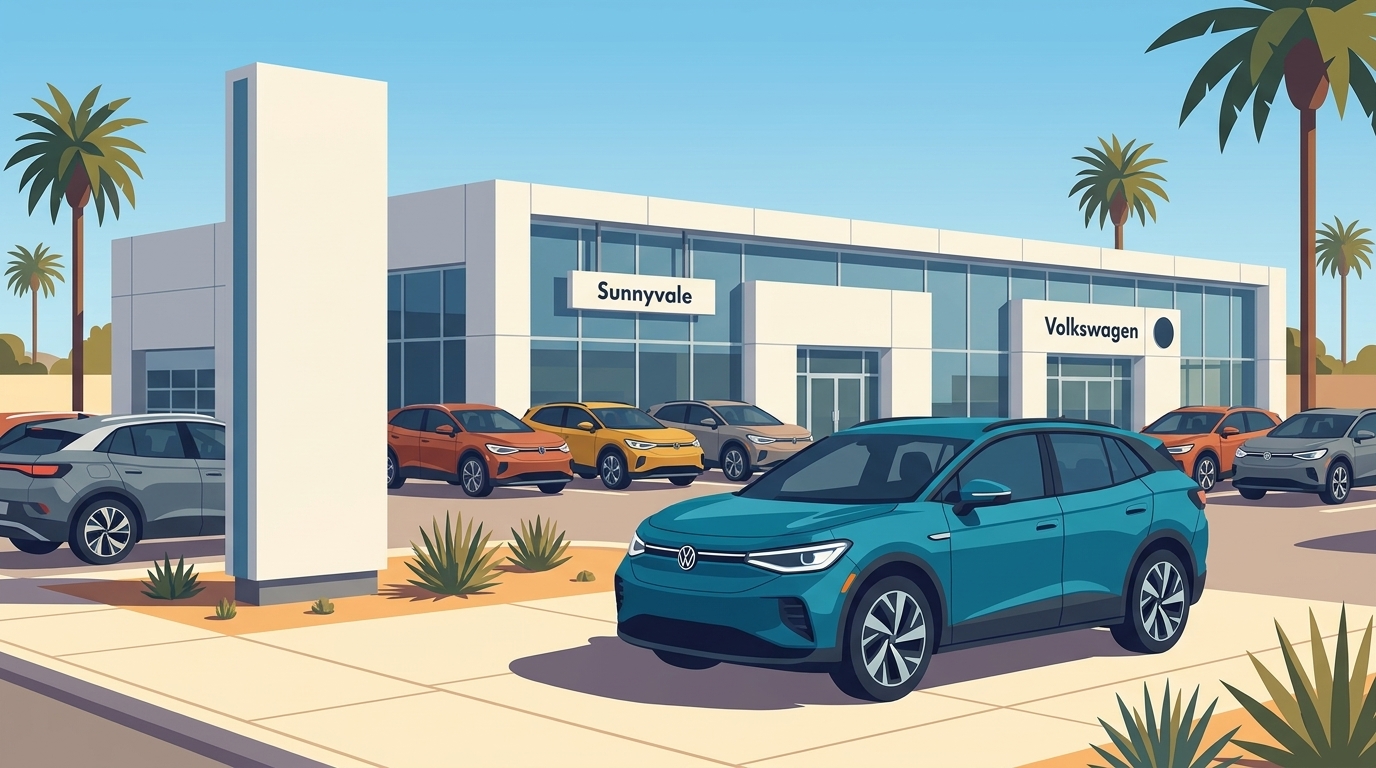
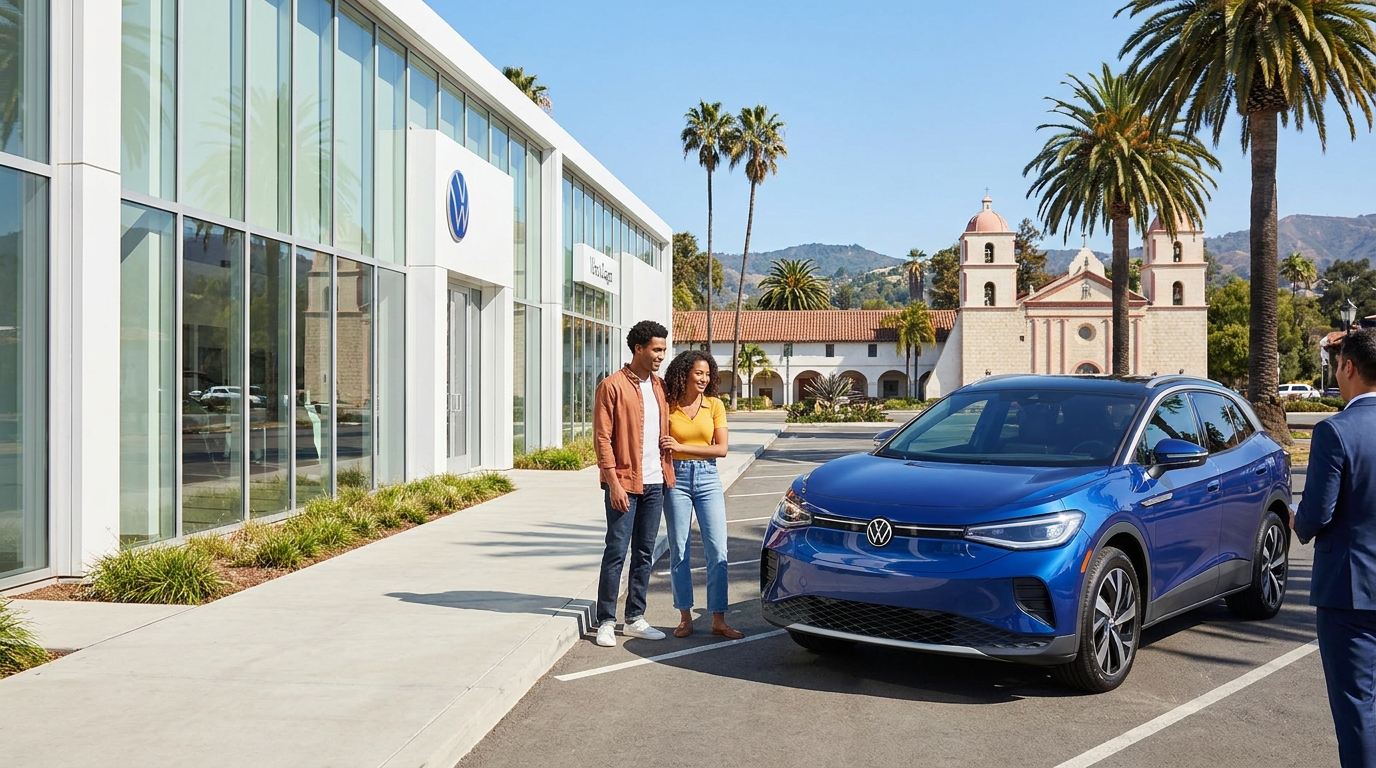
A franchised dealership handles the paperwork submission, can usually offer financing on-site, and provides recourse if something is wrong with the vehicle or documentation. For EV shoppers specifically, a brand-aligned dealer also brings model expertise — understanding charging options, warranty coverage on the battery, and software features that vary year to year. Sunnyvale Volkswagen, for instance, works regularly with first-time EV buyers in the Santa Clara area on the ID.4 and other electrified models, and the staff is accustomed to walking new drivers through both the vehicle and the paperwork.
FAQs for First-Time Car Buyers in Santa Clara
How long do I have to register a car after moving to Santa Clara?
New California residents must register an out-of-state vehicle within 20 days of establishing residency to avoid late registration fees.
Do I need a smog check if I'm buying an EV?
No. Electric vehicles are exempt from California's smog certification requirements. Motorcycles and certain newer model-year vehicles are also exempt.
What documents do I need to register a car bought from out of state?
Generally, you'll need a VIN verification, the out-of-state title and registration, a completed application, proof of insurance, and a smog certificate if the vehicle is not exempt.
Are dealer document fees regulated in California?
Yes. California caps dealer document processing fees by statute. The applicable cap depends on the law in effect at the time of sale, so verify the current figure on your buyer's order.
What happens if my paperwork is incomplete?
The DMV may deny or delay registration, assess late fees, and require correction before finalizing the transfer. Missing or improperly endorsed titles are a common cause of delays.
Putting It All Together
The Santa Clara first-time buyer who does well is the one who treats the purchase as two parallel projects: choosing the right vehicle for their actual driving life, and managing the California-specific paperwork that turns ownership from a handshake into a registered title. Neither part is difficult on its own; both reward preparation.
First-time buyers in Santa Clara who want a guided walk-through of the EV options, financing, and the DMV process can reach Sunnyvale Volkswagen at https://www.sunnyvalevw.com/ to schedule a no-pressure conversation or test drive. Going in with questions answered tends to produce a better first car — and a smoother first year of ownership.