Electric vs Gas Volkswagen Models: Complete 2026 Comparison
Compare the 2026 VW ID.4 against gas models like the Tiguan, Taos, and Atlas on price, range, efficiency, and fit for Sunnyvale, CA drivers.
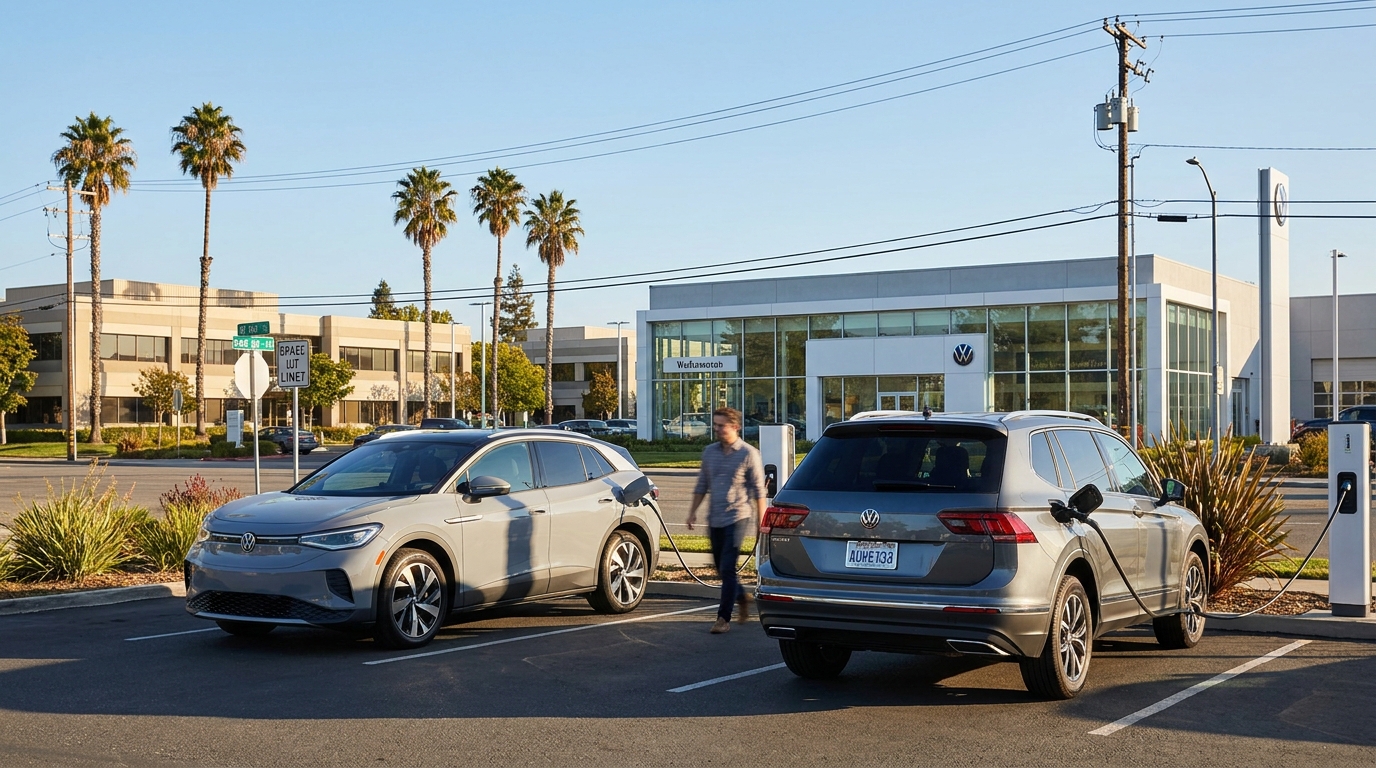
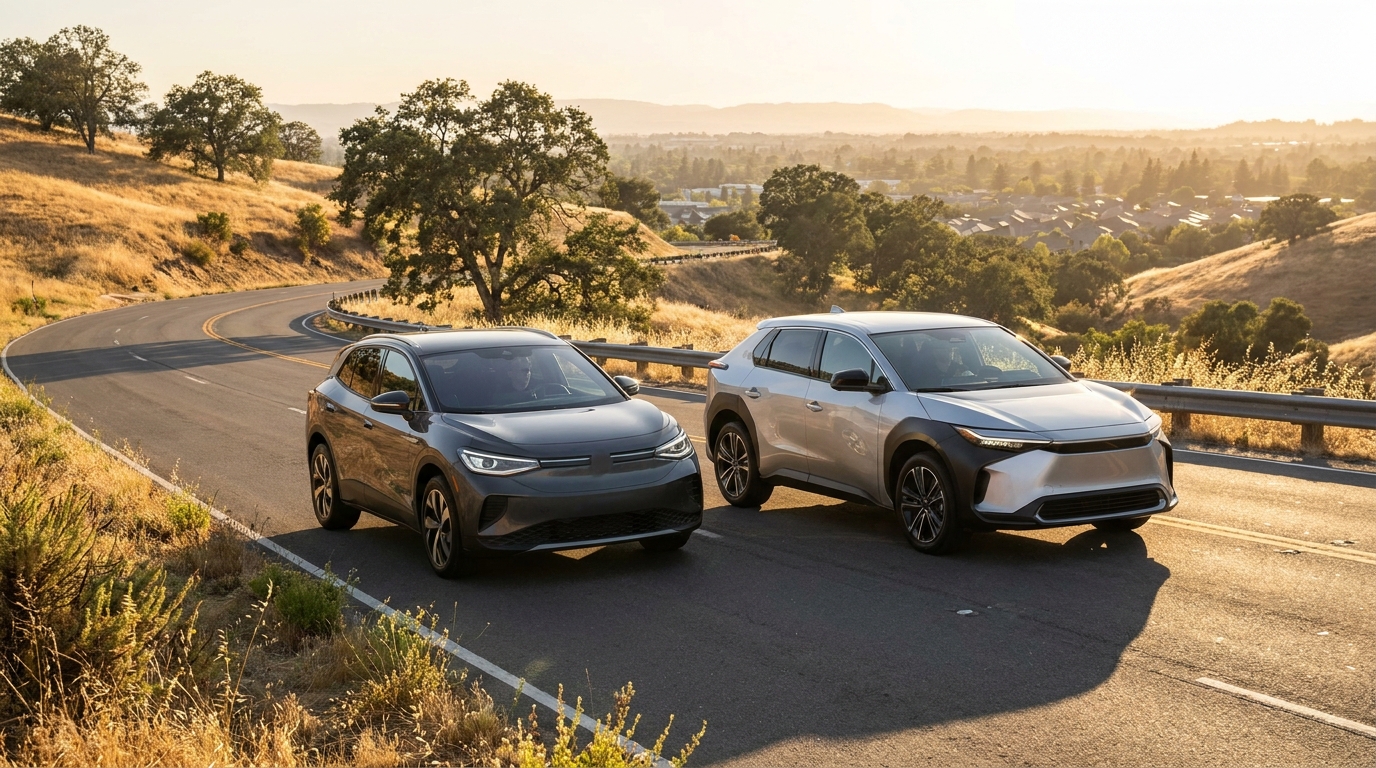
Buyers cross-shopping the 2026 Volkswagen lineup in Sunnyvale face a clearer choice than ever: commit to the all-electric ID.4, or stay with proven gas models like the Tiguan, Taos, and Atlas. Each path carries real tradeoffs in upfront price, daily operating cost, performance, and how well it fits the realities of Silicon Valley driving — from a Caltrain-adjacent commute to a weekend run up Highway 1.
This comparison breaks down the dimensions that actually matter for Bay Area shoppers, using verified 2026 specifications. The goal is not to declare a universal winner, but to help readers in Sunnyvale match the right Volkswagen to their driving life.
Starting Price and Trim Range
Gas Volkswagen models win decisively on entry price. The 2026 Taos starts at $26,500, making it the most accessible entry point in the VW SUV lineup. The Tiguan opens at $30,805, and the Atlas starts at $39,310. On the performance end, the Golf GTI begins at $35,865 and the Golf R tops out at $50,730.
The 2026 ID.4 starts at $45,095 for the Pro RWD, with three trim levels available: Pro, Pro S, and Pro S Plus. That base figure sits well above the Taos and Tiguan, though Bay Area inventory has been observed at transaction prices as low as approximately $40,371 with discounts. These MSRPs exclude destination charges, dealer documentation fees, and any market adjustments — figures to confirm on the actual window sticker.
The pricing picture changes when California incentives enter the equation. Federal EV tax credits, California state EV rebates, utility rebates from providers serving Santa Clara County, and HOV lane access can meaningfully reduce the ID.4's effective cost. None of those are reflected in MSRP. Buyers should verify current federal credit eligibility, including battery sourcing and income requirements, at the time of purchase.
Powertrain and Acceleration
The ID.4 holds a substantial performance advantage. The single-motor RWD configuration produces 282 horsepower; the dual-motor AWD version produces 335 horsepower and reaches 60 mph in roughly 4.8 to 4.9 seconds.
On the gas side, the Taos uses a 1.5L turbo I-4 rated at 174 horsepower. The Tiguan's 2.0L turbo I-4 produces between 201 and 268 horsepower depending on trim. The Atlas delivers 269 horsepower from its 2.0L turbo I-4. The Golf GTI makes 241 horsepower, and the Golf R leads the gas lineup at 328 horsepower — the only gas VW model that approaches the AWD ID.4's output.
Even so, the AWD ID.4's instant torque delivery sets it apart from all gas SUV options in this lineup. For drivers merging onto a busy 101 or climbing the grade toward Skyline Boulevard, the EV's responsiveness is a daily benefit, not a spec-sheet bragging point.
Fuel and Energy Efficiency
Efficiency is the ID.4's most decisive structural advantage. The RWD ID.4 is rated at 113 MPGe combined; the AWD version posts 102 MPGe combined. Translated to operating cost in California, home charging on an off-peak EV tariff typically costs a fraction of gasoline per mile.
Among gas models, the Taos leads on efficiency at 31 MPG combined. The Tiguan returns 25 to 29 MPG combined depending on configuration. The Atlas comes in at 21 MPG combined, reflecting its larger size. The Golf GTI achieves 27 MPG combined, and the Golf R returns 25 MPG combined.
With California gasoline prices consistently above the national average, the ID.4's per-mile cost advantage compounds quickly for high-mileage commuters traveling between Sunnyvale and San Francisco, San Jose, or Fremont.
Range, Refueling, and Charging in the Bay Area
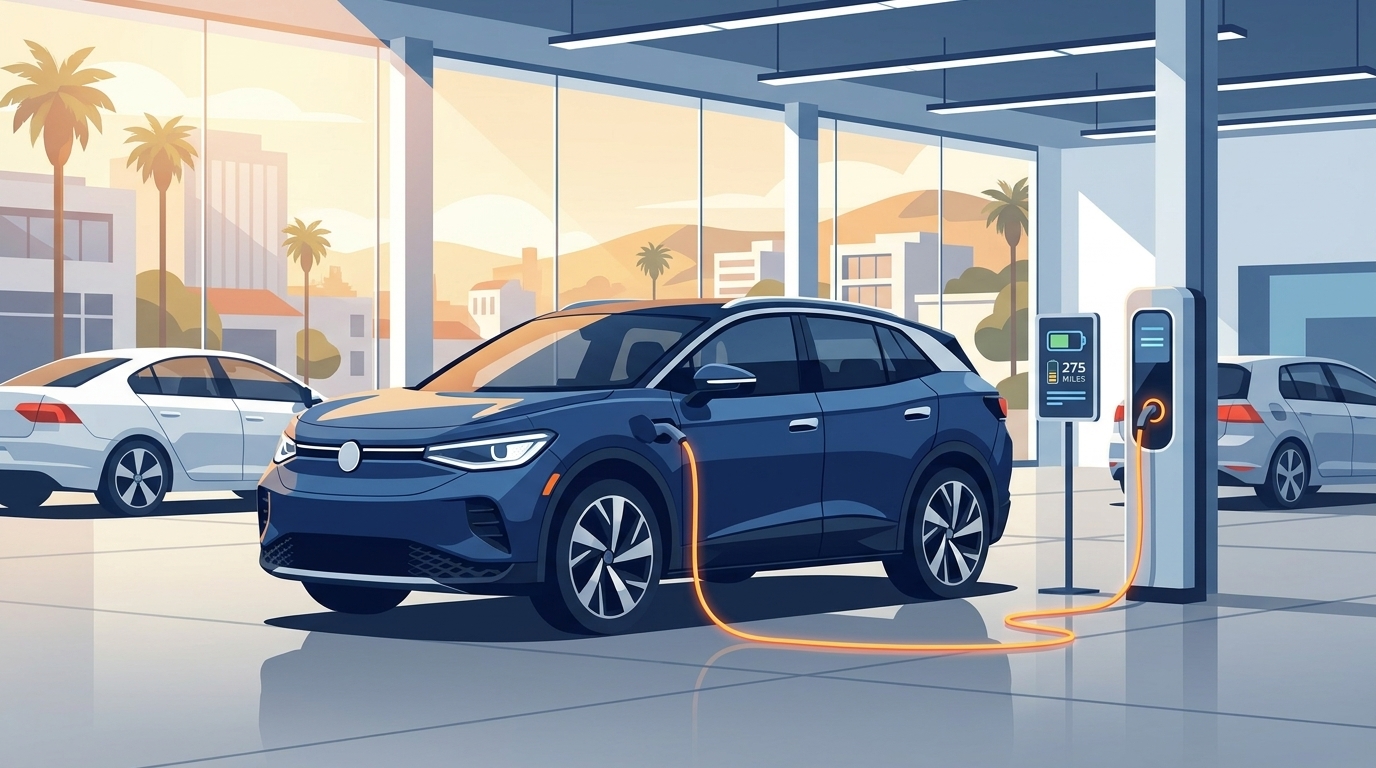
The 2026 ID.4 Pro RWD offers up to 291 miles of EPA-estimated range; the AWD version provides approximately 263 miles. DC fast charging supports up to 175 kW, taking the battery from 10–80% in about 30 to 35 minutes. A 2-year Electrify America Pass+ subscription is included with the purchase.
Gas Volkswagens still win on raw refueling convenience. A typical Taos or Tiguan tank allows for a full refuel at any gas station in roughly five minutes. For road trips down I-5 to Los Angeles or up to Tahoe, that simplicity matters.
Bay Area charging density tilts the daily-use math back toward the ID.4. Sunnyvale residents with home charging — particularly single-family homeowners in neighborhoods like Ortega Park, Cherry Chase, or Birdland — can wake up to a full battery most mornings. Apartment dwellers near Downtown Sunnyvale or the El Camino Real corridor without dedicated charging should weigh that constraint seriously before choosing the EV. Real-world EV range can also fall below EPA estimates at sustained highway speeds above 70 mph.
Cargo, Seating, and Body Style Variety
The ID.4 offers 30.3 cubic feet behind the second row and seats five passengers across two rows.
Gas models cover a wider range of body styles and use cases. The Taos is a subcompact SUV with 27.9 cubic feet of cargo space — the only gas model in this comparison with less cargo room than the ID.4. The Tiguan provides 33.8 cubic feet, and the Golf GTI and Golf R each offer 34.5 cubic feet. The Atlas leads the entire group at up to 96.6 cubic feet of maximum cargo capacity, and it is the only model here that seats seven passengers.
Buyers who need three-row seating must look at the gas Atlas, as no 2026 Volkswagen EV offers a third row in the U.S. market. The gas lineup also includes performance variants like the Golf GTI and Golf R that have no EV equivalent in the current VW U.S. lineup.
Warranty and Long-Term Ownership
Both powertrains share VW's 4-year/50,000-mile bumper-to-bumper basic warranty. The ID.4 adds an 8-year/100,000-mile high-voltage battery warranty — an important hedge against the single most expensive EV repair scenario. Gas models carry the same basic warranty without the battery-specific coverage.
Buyers should confirm the current status of any included maintenance program with the dealer before signing, as applicability can vary by model and configuration.
Which 2026 Volkswagen Fits Sunnyvale Drivers Best?
The ID.4 is the stronger fit for Sunnyvale residents who have home charging, drive predominantly within the Bay Area, want HOV access for solo commutes on 101 or 237, and value lower per-mile operating costs over lower MSRP. The AWD version's acceleration and instant torque make it particularly compelling for tech-corridor commuters.
The Taos, Tiguan, or Atlas makes more sense for buyers prioritizing the lowest possible monthly payment, those without reliable home charging access, frequent long-distance road trippers, or families who need three rows and a tighter budget. The Taos in particular delivers strong fuel economy at a price point the ID.4 cannot approach.
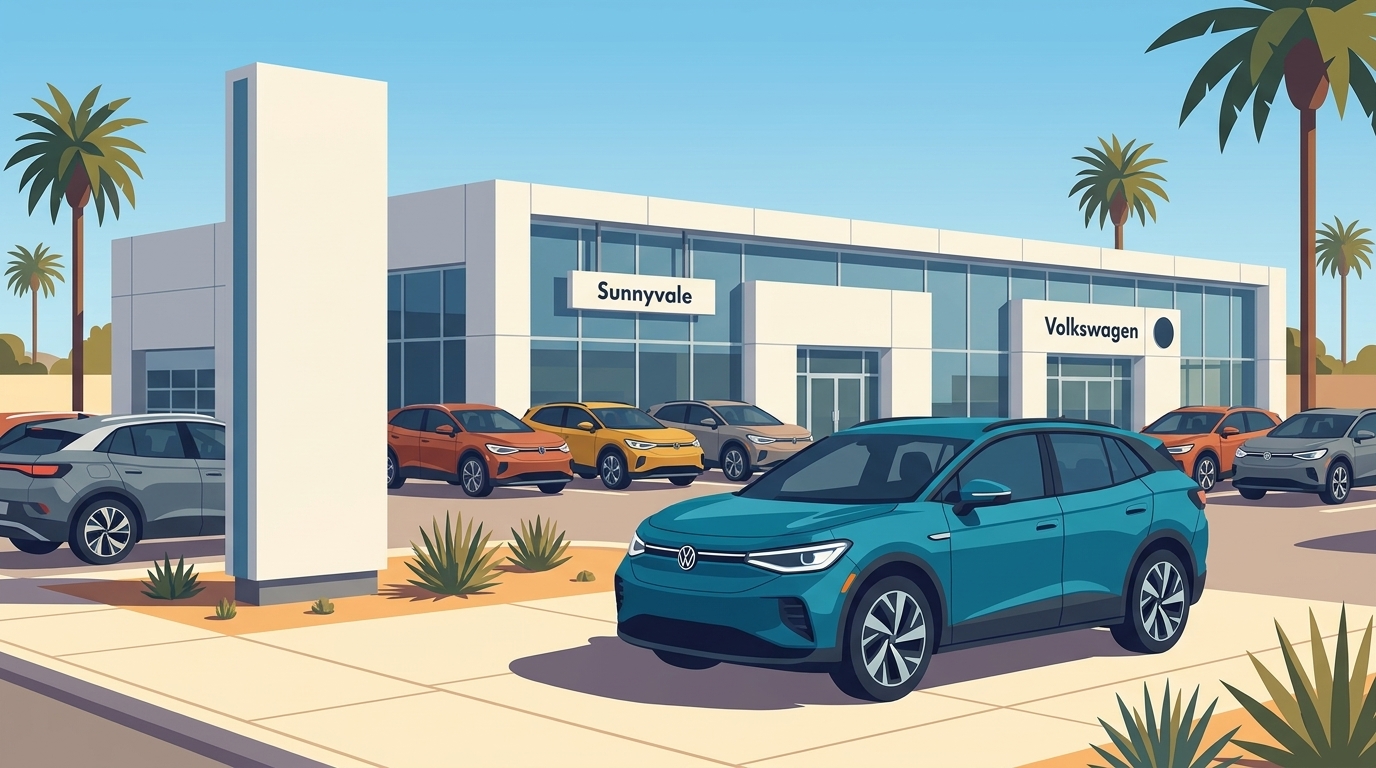
Buyers in Sunnyvale can visit Sunnyvale Volkswagen to compare models in person and confirm current pricing and incentive eligibility.
Frequently Asked Questions
Is the 2026 ID.4 eligible for California EV incentives?
California offers state and utility-level incentives for qualifying EVs, and the ID.4 may also qualify for HOV lane access and federal credits. Eligibility depends on configuration, buyer income, and program funding at the time of purchase, so confirm current eligibility before ordering.
Can the ID.4 use Tesla Superchargers?
The 2026 ID.4 supports DC fast charging at up to 175 kW and is compatible with public fast-charging networks; buyers should confirm specific connector compatibility and network access with their dealer.
How much faster is the ID.4 AWD than the Tiguan?
The ID.4 AWD reaches 60 mph in roughly 4.8 to 4.9 seconds with 335 horsepower. Even the highest-output Tiguan trims, rated between 201 and 268 horsepower, fall notably behind that figure in acceleration.
Does any 2026 Volkswagen EV offer three-row seating?
No. For 2026, all U.S. Volkswagen EVs are the five-passenger ID.4. Buyers needing a third row should consider the gas Atlas, which seats seven and starts at $39,310.
How does the ID.4's cargo space compare to gas VW SUVs?
The ID.4 offers 30.3 cubic feet behind the second row — more than the Taos (27.9 cu ft) but less than the Tiguan (33.8 cu ft), Golf GTI/R (34.5 cu ft), or Atlas (up to 96.6 cu ft maximum). For most daily uses the ID.4's space is practical, but larger families or those needing maximum hauling capacity may prefer the Tiguan or Atlas.
What are the ID.4's trim options for 2026?
The 2026 ID.4 is available in three trims: Pro, Pro S, and Pro S Plus. The Pro starts at $45,095 and offers RWD; upper trims add features and the dual-motor AWD option. Buyers should confirm current trim availability and pricing with their dealer, as inventory and configurations can vary by market.
The Bottom Line for Sunnyvale Shoppers
The right choice depends on charging access, annual mileage, and budget priorities rather than any universal verdict. Buyers who want to compare the 2026 ID.4 against the Tiguan, Taos, or Atlas in person — and confirm current California incentive eligibility on a specific configuration — can reach Sunnyvale Volkswagen at https://www.sunnyvalevw.com/ to review inventory and pricing for the Sunnyvale, CA market.