Why Volkswagen Electric SUVs Outperform in Santa Clara County Traffic
Discover why Volkswagen electric SUVs like the ID.4 handle Santa Clara County traffic so well — from regenerative braking to range efficiency in stop-and-go commutes.
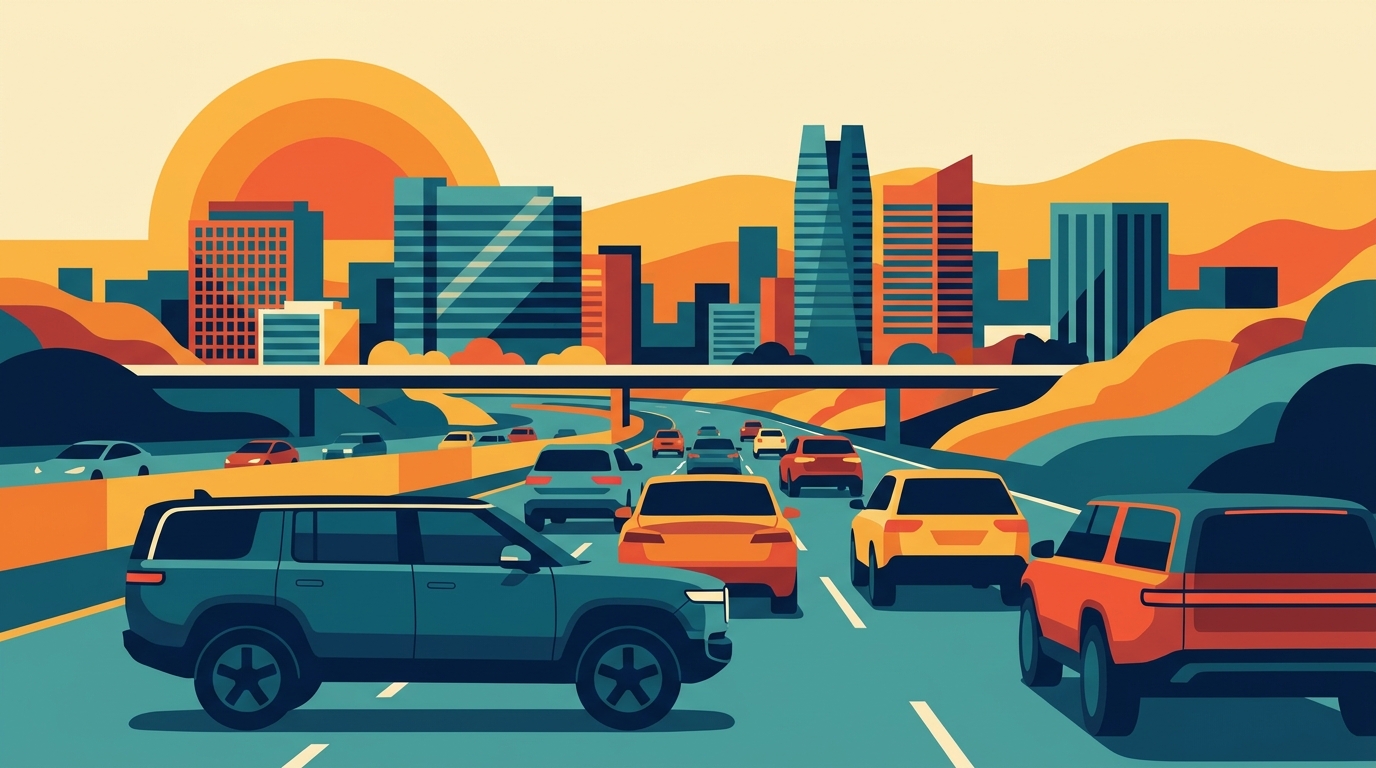
If you've spent any time crawling north on 101 between San Jose and Palo Alto, or inching through the 880/280 interchange during a Tuesday morning rush, you already know the truth: Santa Clara County traffic is its own kind of challenge. Stop-and-go conditions punish gas engines, drain driver patience, and reward vehicles built for exactly this kind of grind. That's where Volkswagen electric SUVs — particularly the ID.4 — have quietly become one of the smartest choices for daily commuters in the South Bay.
We've watched shoppers from Willow Glen to Berryessa to Cupertino come in looking for something that simply works in the conditions they actually drive in. Here's why a Volkswagen electric SUV often turns out to be the right answer.
Why Stop-and-Go Traffic Actually Favors EVs (Especially the ID.4)
Combustion engines are at their worst in slow, congested traffic. They burn fuel while idling, lose efficiency at low speeds, and generate heat without going anywhere. Electric SUVs flip that equation. An EV uses essentially zero energy at a standstill, and every time you lift off the accelerator, regenerative braking recaptures energy that would otherwise be lost as heat through your brake pads.
For Santa Clara County commuters, that's not a minor detail. The average drive from San Jose to a job in Sunnyvale, Mountain View, or Palo Alto often involves more braking than cruising. The ID.4's regen system — adjustable via the "B" drive mode — turns that congestion into range. Drivers regularly report higher real-world efficiency on a 101 commute than they'd see on a flat highway run at 75 mph.
VW EV Efficiency in Real South Bay Conditions
The ID.4's EPA-rated range sits in a competitive band for its class, but range numbers alone miss what makes the car work here. A few things matter more for South Bay drivers:
- Low-speed efficiency: The ID.4's rear-motor architecture (on RWD trims) is tuned for smooth, efficient power delivery at the speeds you actually drive between Coyote Valley and downtown San Jose.
- Climate-friendly battery: Santa Clara County's mild Mediterranean climate is genuinely ideal for EV battery longevity. No deep freezes, no sustained extreme heat waves. Your battery's chemistry stays in its happy zone most of the year.
- Predictable charging: With a home Level 2 setup, most commuters never visit a public charger for daily driving. The ID.4's onboard charger refills overnight on PG&E's EV rate plans.
Electric SUV Commuting: What South Bay Drivers Notice First
The first thing new ID.4 owners tend to mention isn't range or torque — it's how much less tiring their commute feels. One-pedal-style driving in B mode means your right foot does most of the work, and your left knee isn't constantly flexing on the brake pedal between Lawrence Expressway and Great America Parkway.
The second thing they notice is HOV access. Eligibility windows and decal availability shift periodically through CARB and the DMV, so we always recommend confirming current decal status before you buy — it's a real benefit when available, but the program rules do change.
ID.4 Traffic Performance: The Underrated Details
A few ID.4 features punch above their weight in daily Santa Clara County driving:
- Travel Assist: VW's adaptive cruise plus lane-centering handles the soul-crushing parts of 101 and 280 traffic gracefully, keeping you centered and at a safe following distance without nagging.
- Tight turning radius: Rear-wheel-drive ID.4 trims have a noticeably tight turning circle — useful in older San Jose neighborhoods like Naglee Park or the Rose Garden where street parking is a contact sport.
- Quiet cabin: Without engine noise, you hear traffic differently. Most drivers find it less stressful, even in heavy congestion.
- Flat floor: The MEB platform's flat interior floor makes the ID.4 feel roomier than its exterior footprint suggests — helpful when you're hauling kids to school in Almaden or gear up to Lexington Reservoir on the weekend.
Charging Realities in Santa Clara County
One of the unsung advantages of owning a Volkswagen electric SUV in this part of the Bay Area is infrastructure density. Major employers in North San Jose, Santa Clara, Sunnyvale, and Mountain View have widespread workplace charging. If you live in a single-family home anywhere from Cambrian Park to Evergreen, a Level 2 installation is generally straightforward — though if your home was built before the 1970s, you may need a panel upgrade, and the City of San Jose's permitting process for EV charger installation is something worth budgeting time for.
For renters and condo dwellers in dense areas like Japantown or near SJSU, California's "right to charge" law gives residents meaningful leverage to install charging at their own cost — a useful thing to know before you assume an EV won't work for your living situation.
Frequently Asked Questions
How does the ID.4 handle long commutes from San Jose to San Francisco?
Comfortably. A round trip from San Jose to SF and back is well within the ID.4's range on a full charge, even with HVAC running and traffic delays. Most commuters charge at home overnight and never think about it.
Is the ID.4 good for Uber or rideshare driving in the South Bay?
It can be a strong fit. Low operating costs, HOV access (with a valid decal), and a roomy back seat make it practical. High-mileage rideshare drivers should plan around DC fast charging cycles and battery care, which the team at Sunnyvale Volkswagen is happy to walk through.
Do California EV incentives still apply to a Volkswagen ID.4?
Federal tax credit eligibility depends on the specific ID.4 trim, where it was assembled, and your tax situation. Contact Sunnyvale Volkswagen to review current eligibility for the exact vehicle you're considering.
How does the ID.4 compare to other electric SUVs for traffic?
Most modern electric SUVs handle stop-and-go well — that's an EV strength generally. Where the ID.4 stands out is its balance of price, interior space, ride comfort, and a driving feel that's more relaxed than sporty. For a daily Santa Clara County commute, "relaxed" is often what you actually want.
Does extreme heat affect the ID.4's battery in the South Bay?
Santa Clara County's climate is genuinely favorable for EV batteries. The region rarely sees the sustained extreme heat that stresses battery chemistry in other California markets. The ID.4 also includes active thermal management to protect the pack during charging and driving. For most South Bay owners, battery longevity concerns are lower here than in inland or desert markets.
Can I complete the buying process without visiting the dealership in person?
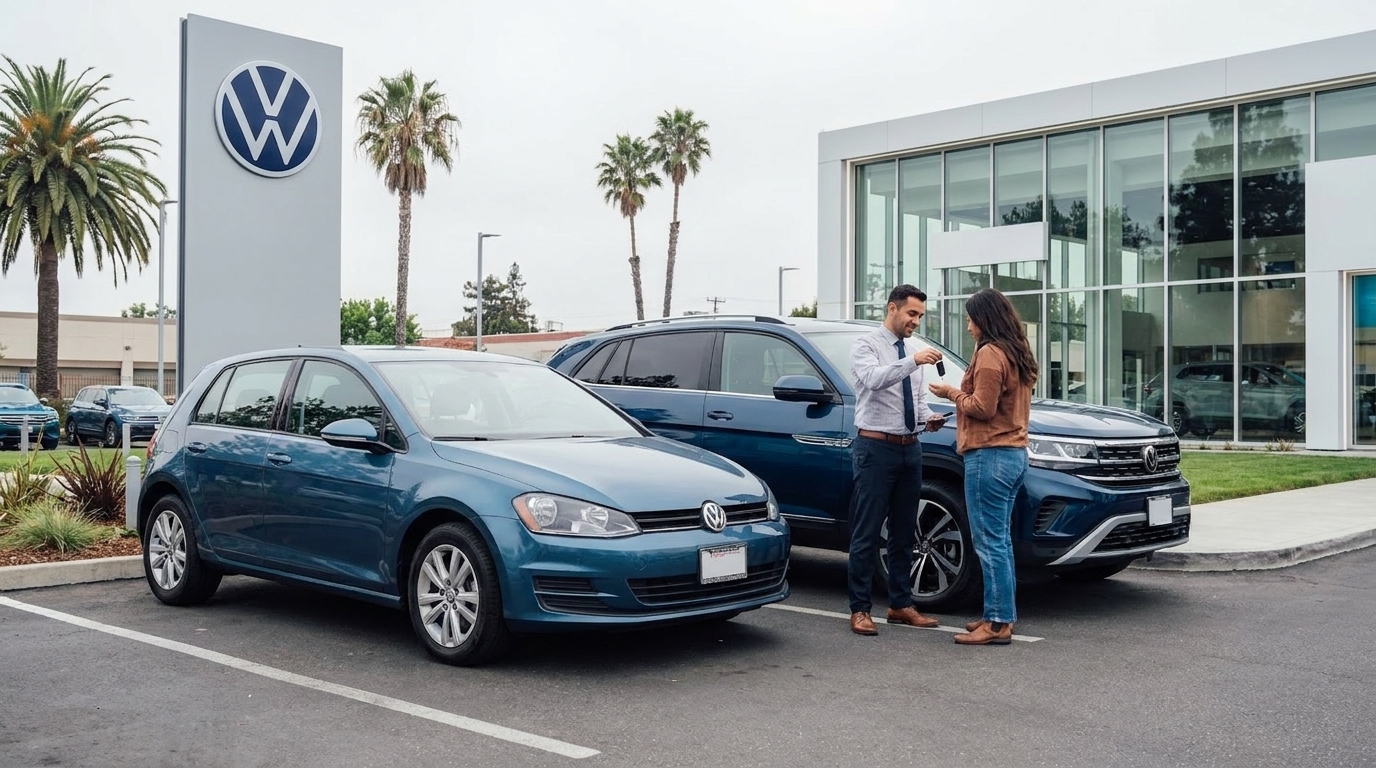
Yes. Sunnyvale Volkswagen offers a remote purchasing option that lets you shop and complete your vehicle purchase entirely online. Financing applications for both purchase and lease agreements are also available online. For buyers who prefer an in-person test drive on the routes they actually commute — 101, 280, or 237 — the team can arrange that as well.
Finding the Right Fit
The ID.4 remains the model most South Bay commuters end up gravitating toward once they drive one in real traffic. The no-pressure buying experience at Sunnyvale Volkswagen is something customers mention consistently — one recent reviewer noted that a salesperson was "the only sales representative to give me a complete breakdown of the cost," a contrast to experiences at other dealerships. Sunnyvale Volkswagen holds a 4.4★ rating from 1,455 Google reviews as of August 2026, reflecting a pattern of straightforward, low-pressure transactions.
If you commute anywhere in Santa Clara County and you're curious whether a Volkswagen electric SUV fits your daily reality, the team at Sunnyvale Volkswagen can set up a test drive on the routes you actually use — 101, 280, 237, or the surface streets around your office. Visit sunnyvalevw.com to ask questions, check current inventory, or schedule a visit at your own pace. You can also reach them at 1025 East El Camino Real, Sunnyvale, CA 94087, or call (408) 739-7321.
"