VW ID.4 vs Tesla Model Y: Which Electric SUV Should You Buy in Santa Clara?
Compare the 2026 VW ID.4 and 2026 Tesla Model Y on price, range, cargo, and charging — with Santa Clara buying context to help you decide.
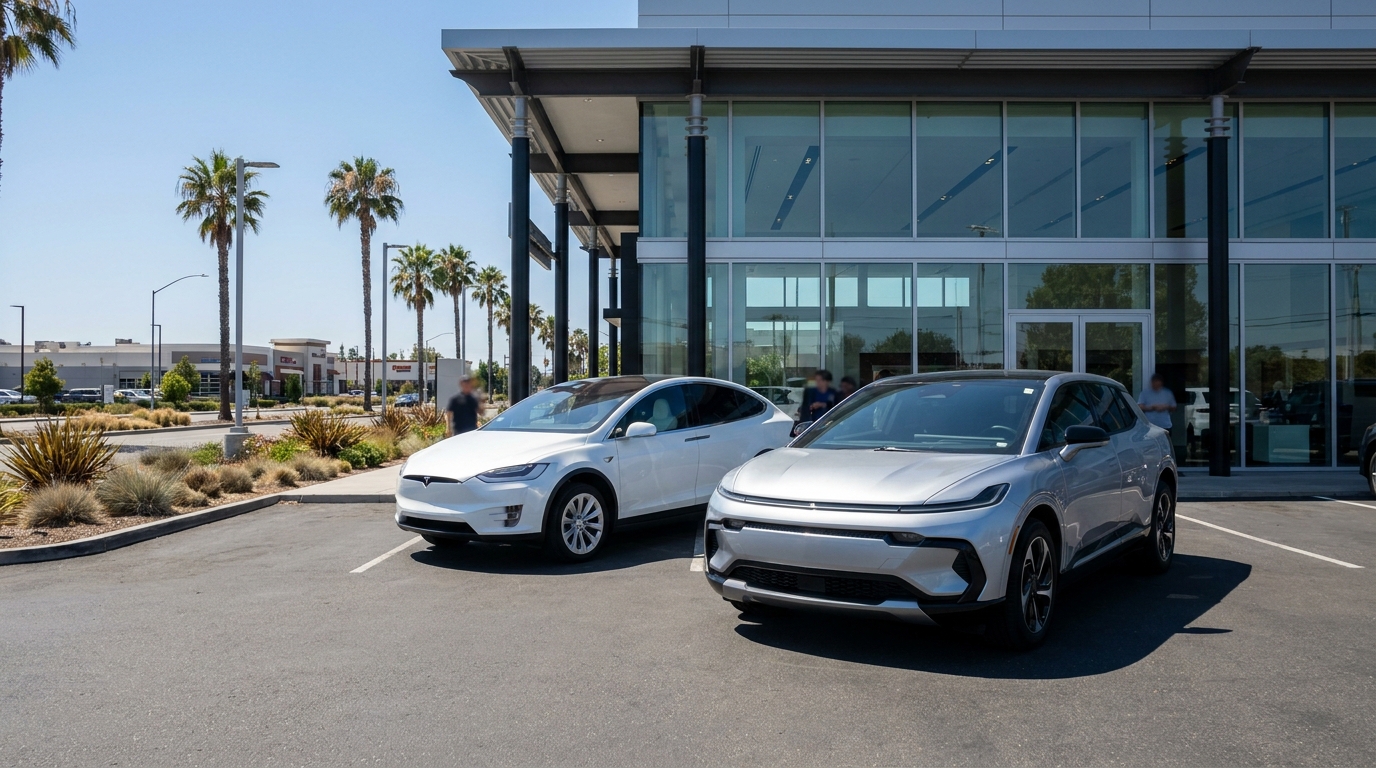
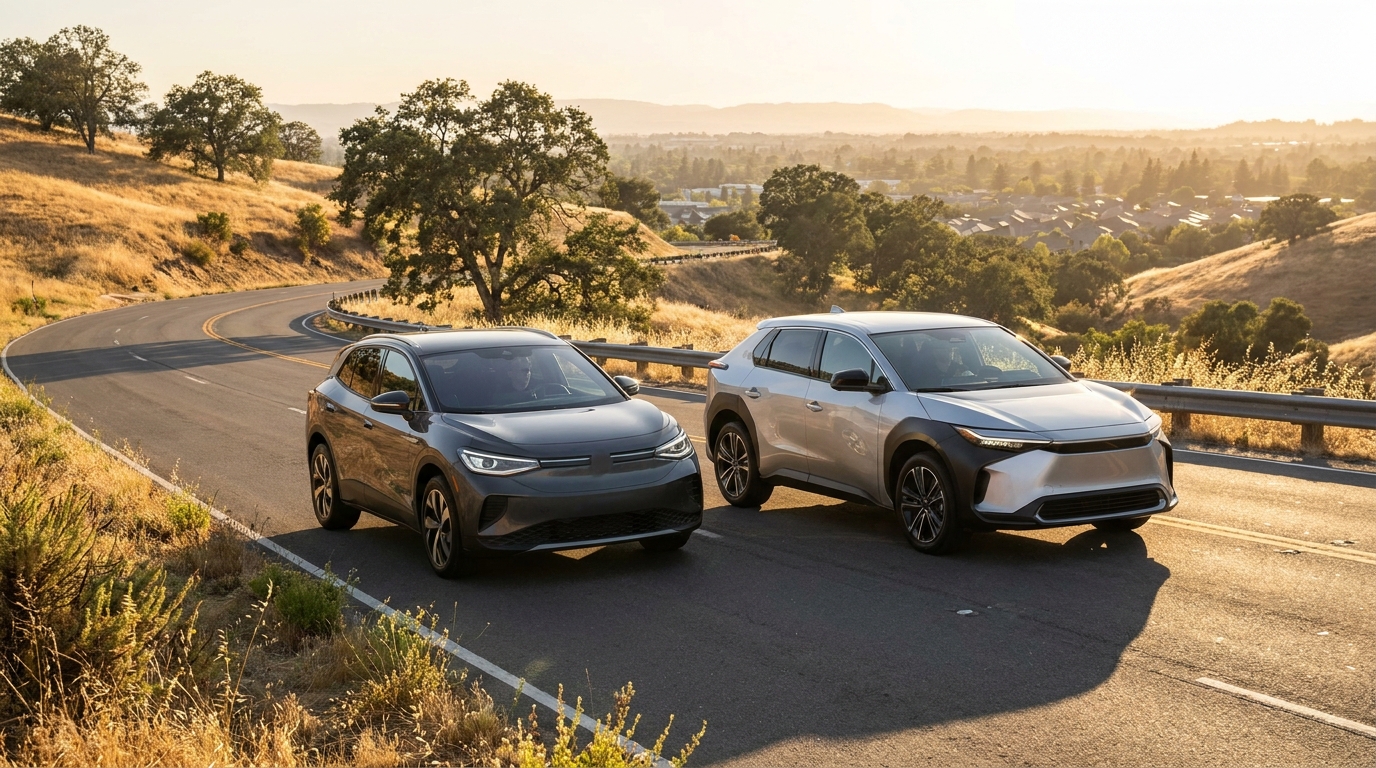
For Santa Clara shoppers cross-shopping electric SUVs, the decision almost always narrows to two vehicles: the 2026 Volkswagen ID.4 and the 2026 Tesla Model Y. Both seat five, both are built around modern battery-electric platforms, and both are heavily represented on Silicon Valley roads — from the Rivermark commuters heading up 101 to the Santa Clara University students parked along The Alameda. But they take very different approaches to what an electric SUV should feel like, and the right choice depends less on horsepower charts than on how you actually intend to live with the vehicle.
This comparison uses verified 2026 specifications from manufacturer and industry sources to lay out where each vehicle leads, where the tradeoffs land, and what Santa Clara-specific factors — charging infrastructure, dense parking, California tax treatment — should weigh into the final call.
The Short Answer
The 2026 Tesla Model Y wins on the objective spec sheet: it starts at $39,990 versus the ID.4's $45,095, offers up to 357 miles of range against the ID.4's 291-mile maximum, delivers better MPGe efficiency across trims, and provides more cargo room (33.1 cubic feet behind the rear seats versus 30.3, and 75.5 cubic feet maximum versus 64.2). Tesla also carries a longer battery warranty at 8 years / 120,000 miles versus the ID.4's 8 years / 100,000 miles.
The 2026 Volkswagen ID.4 wins on cabin familiarity, dealership-based service, a more compact footprint for tight South Bay parking, and available comfort features — including massaging front seats on certain trims — that the Model Y simply does not offer. It is also the more natural transition for buyers coming from a conventional gas SUV who want an EV that still feels like a car rather than a rolling tablet.
Pricing and What Santa Clara Buyers Actually Pay
The 2026 Model Y Standard RWD opens at $39,990, roughly $5,100 below the ID.4 Pro's $45,095 starting MSRP. Both figures exclude destination charges, California sales tax, DMV fees, and any dealer adjustments — and in Santa Clara County, sales tax alone adds a meaningful figure to the out-the-door price. California also taxes the full purchase price of a new vehicle rather than the post-trade-in difference, so buyers trading in a used EV or hybrid should factor that into the total cost comparison rather than assuming a trade offsets the taxable base.
Federal EV tax credit eligibility for either vehicle in 2026 should be verified at time of purchase, as eligibility rules and buyer income limits may affect the effective price. Tesla sells direct-to-consumer at uniform national pricing, while Volkswagen pricing may vary by dealer in the Santa Clara area — meaning ID.4 shoppers have room to negotiate and to compare offers across nearby stores, an option Model Y buyers do not have.
Range and Efficiency
Range is where the Model Y separates itself. Tesla lists 294 to 357 miles depending on trim, with the Long Range AWD cited at 321 miles by TrueCar. The ID.4 delivers an EPA-estimated 291 miles in RWD form and 263 miles in AWD, drawing from a 77.0-kWh pack. For most Santa Clara commuting patterns — home to work in Sunnyvale, San Jose, or Palo Alto and back — both vehicles cover a full week of driving between charges. The gap matters more for weekend trips to Tahoe, Monterey, or the Central Coast, where the Model Y's Long Range AWD advantage of roughly 58 miles over the ID.4 AWD translates into one fewer charging stop.
Efficiency follows a similar pattern. The Model Y is rated at 134 MPGe combined in Premium RWD form per Edmunds, 127 MPGe combined in Standard RWD per KBB, and 117 down to 104 MPGe combined for AWD and Performance trims per Car and Driver. The ID.4 lands at 102 MPGe combined in AWD (108 city / 96 highway per EPA) and an estimated 112 to 113 MPGe combined in RWD. Higher efficiency means lower cost per mile — a real consideration in California, where residential electricity rates run well above the national average.
Performance
The horsepower figures reflect two different design philosophies. The ID.4 produces 282 hp in RWD form and 335 hp in AWD, according to official Volkswagen and Car and Driver figures. The Model Y produces approximately 295 to 300 hp in RWD form, roughly 397 hp in AWD, and around 460 hp in Performance trim — though Tesla does not publish official horsepower figures, so these are third-party automotive estimates.
Zero-to-60 mph results follow suit. Car and Driver tested the ID.4 at 7.3 seconds for the entry RWD and 4.8 seconds for the AWD. Third-party comparison sources cite the Model Y at 6.8 seconds for RWD and 4.6 seconds for AWD. The Model Y is quicker in both formats, though the AWD gap is modest — the ID.4 AWD is genuinely fast by any reasonable standard.
Cargo, Size, and Santa Clara Parking Reality
The Model Y offers more cargo space: 33.1 cubic feet behind the rear seats and 75.5 cubic feet with seats folded, versus 30.3 and 64.2 for the ID.4 per Edmunds. That reflects a larger overall footprint. The Model Y measures roughly 187 to 188.7 inches long; the ID.4 comes in at 180.5 inches.
In dense Santa Clara neighborhoods — the older grid streets north of El Camino, the tight garages in downtown-adjacent condos, or the crowded lots around Santana Row and Valley Fair on weekends — those seven inches matter. The ID.4 is genuinely easier to park and maneuver in tight spaces, which is a quality-of-life factor many buyers underweight until they own the car.
Charging: NACS vs CCS in the Bay Area
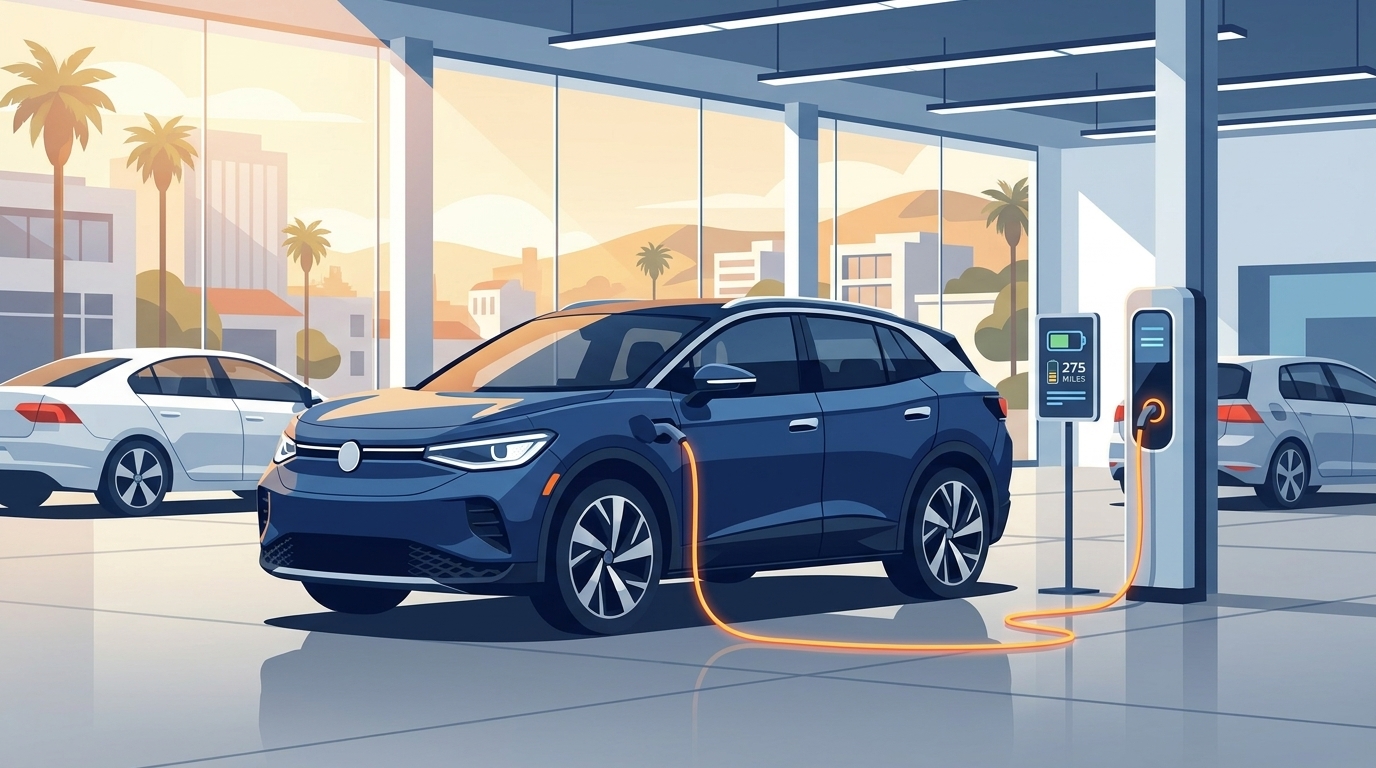
The Model Y uses Tesla's NACS port and taps directly into the Supercharger network, which Tesla advertises as adding 160 miles in 15 minutes under optimal conditions. The ID.4 uses a CCS port and can charge from 10% to 80% in approximately 29 minutes on DC fast charging. Both figures are best-case.
In Santa Clara and the broader Silicon Valley corridor, Supercharger density is high — stations at Coleman Avenue, along 101, and near Great America are consistently well-supplied. CCS infrastructure has expanded significantly through Electrify America and EVgo, and the ID.4 will not leave a Bay Area driver stranded. But for road-trip convenience, Tesla still holds the edge. That said, adapters and expanding NACS access are gradually narrowing this gap for non-Tesla EVs.
Cabin Experience
This is where preference, not spec sheet, decides the buyer. The ID.4 offers a conventional two-row SUV layout with physical controls, familiar switchgear, and available massaging front seats on higher trims. The Model Y is minimalist and software-centric — most controls live inside a central touchscreen, and there is no massaging seat option.
Buyers coming from a Tiguan, RAV4, CR-V, or similar gas SUV generally find the ID.4 an easier transition. Buyers who already live in Tesla's software ecosystem or who prefer a tech-forward interior tend to prefer the Model Y. Neither is wrong.
Warranty Coverage
Both vehicles carry 4-year / 50,000-mile basic warranties. The ID.4 adds 4-year / 50,000-mile powertrain coverage and 8-year / 100,000-mile EV battery coverage. Tesla offers 8-year / 120,000-mile powertrain and battery coverage plus 4-year / 50,000-mile roadside assistance. Tesla's battery mileage cap is 20,000 miles higher — meaningful for high-mileage commuters running the length of the Bay every day.
Frequently Asked Questions
Which has better resale in the Santa Clara market?
Both hold value reasonably well in the Bay Area, where EV demand remains strong. Resale is influenced heavily by battery health, charging port standard, and software support — factors that shift year to year.
Can I charge either at home in a Santa Clara condo or apartment?
Level 2 home charging is straightforward for single-family homes. Condo and apartment charging depends on HOA rules and available circuits; California law provides tenants and owners certain rights to install EV charging, but individual buildings vary.
Is the ID.4 a legitimate Tesla Model Y competitor in 2026?
Yes. The ID.4 trails the Model Y on range, efficiency, and cargo, but leads on cabin familiarity, dealer-based service, and compact footprint — and comes with the option of comfort features Tesla does not offer.
The Bottom Line
The Model Y is the stronger pure-spec choice: cheaper to start, longer range, more efficient, more cargo. The ID.4 is the stronger choice for buyers who want a traditional SUV experience with a dealership relationship, physical controls, a more compact footprint for Santa Clara's tighter streets and lots, and available comfort features the Model Y simply does not offer.
Santa Clara shoppers who want to test-drive the 2026 ID.4, review current pricing, and compare configurations in person can visit Sunnyvale Volkswagen at https://www.sunnyvalevw.com/. Cross-shopping both vehicles before signing anything remains the most useful step any EV buyer in this market can take.