VW CPO vs Used Car in Santa Clara, CA: Key Differences
What's actually different between a Volkswagen CPO and a regular used car? A Santa Clara buyer's guide to inspections, warranties, and real value in 2026.
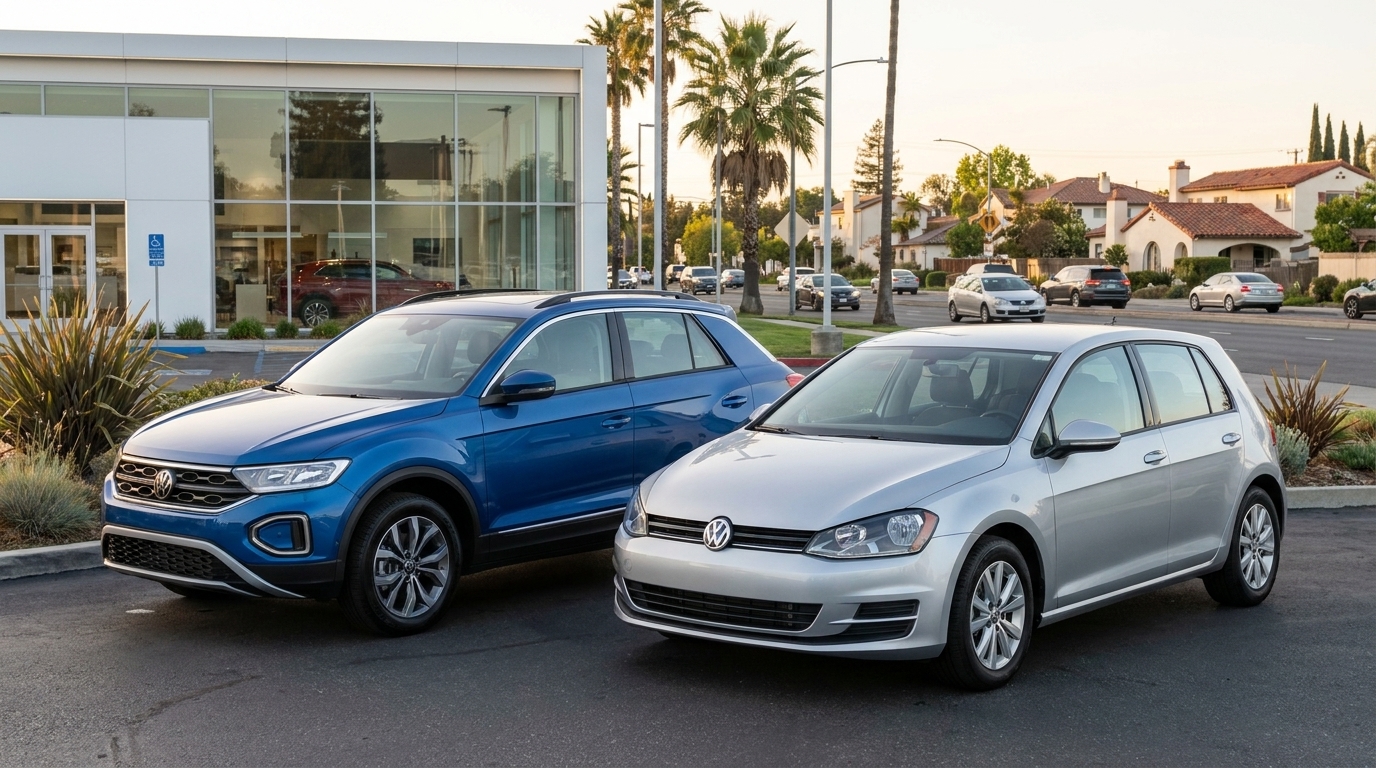
The practical difference between a Volkswagen Certified Pre-Owned (CPO) vehicle and a regular used Volkswagen comes down to three things: a factory-backed multi-point inspection, an extended limited warranty from Volkswagen of America, and eligibility for manufacturer-subsidized financing. A non-CPO used VW at the same dealership may look identical on the lot, but mechanically and contractually it is a different product.
For buyers in Santa Clara, CA — where a mid-range used Volkswagen can sit between $22,000 and $34,000 depending on model and mileage — that distinction is worth understanding before signing. This guide breaks down what the CPO designation actually buys, where a regular used VW can be the smarter call, and how to evaluate either option in the 2026 market.
What makes a Volkswagen CPO different from a regular used car?
A Volkswagen CPO is a used vehicle that Volkswagen of America has approved for its factory certification program after it passes a formal inspection at a franchised VW dealer. A regular used car is any pre-owned vehicle sold without that manufacturer-backed process — it may be inspected internally by the dealer, but it does not carry Volkswagen's warranty extension or program benefits.
To qualify for CPO status, a Volkswagen generally must be no more than five model years old and have fewer than 75,000 miles at the time of certification. Vehicles with salvage, flood, or frame-damage history are excluded. A used VW that fails any single point of the inspection cannot be sold as CPO — it either gets repaired to standard or moves to the regular used inventory at a lower price.
What's included in the VW CPO inspection?
Every Volkswagen CPO vehicle undergoes a 100+ point inspection performed by factory-trained technicians. The inspection covers major mechanical, electrical, safety, and cosmetic systems, and any deficiency must be corrected before the vehicle can be listed as certified.
Key inspection categories include:
- Powertrain: engine compression, transmission function, drivetrain components, fluid condition, and leak checks
- Brakes and suspension: pad and rotor thickness, shocks, struts, bushings, and steering geometry
- Electrical systems: battery load test, alternator output, infotainment, driver-assist sensors, and all lighting
- HVAC: refrigerant pressure, cabin airflow, and pollen filter condition
- Body and interior: paint, glass, upholstery, and confirmation that no accident damage remains unrepaired
- Road test: a functional drive assessing acceleration, braking, alignment, and noise/vibration
- History verification: a CARFAX or AutoCheck report and confirmation the VIN is free of salvage, buyback, or odometer issues
A regular used VW sold by a franchised dealer is typically safety-inspected — brakes, tires, lights, fluids — but not held to the factory checklist. Independent lots and non-VW dealers may perform even less. That gap is the single biggest mechanical difference between the two categories.
Warranty coverage: where CPO earns its price premium
The Volkswagen CPO program includes a limited warranty that extends coverage beyond the original new-car bumper-to-bumper term. Current CPO coverage provides an additional 2 years or 24,000 miles of limited warranty protection on top of any remaining new-vehicle warranty, plus 24-hour roadside assistance during the coverage period.
A regular used Volkswagen is sold either with the balance of its original factory warranty (if any remains) or as-is, depending on age and mileage. There is no factory extension. Buyers can purchase a third-party or dealer-offered service contract, but those are separate products with their own exclusions and are generally not backed by Volkswagen of America directly.
For a five-year-old Tiguan or Jetta with 55,000 miles, that warranty gap is the difference between an unexpected turbocharger or DSG transmission repair being a covered claim versus a $2,500 to $6,000 out-of-pocket event.
Price difference: what CPO actually costs in the Santa Clara market
In the Santa Clara, CA market as of 2026, a Volkswagen CPO vehicle typically carries a price premium of roughly $1,500 to $3,000 over a comparable non-certified used VW with similar mileage and trim. The exact spread varies by model — ID.4 and Tiguan CPOs tend to command the higher end of that range because of strong demand across Silicon Valley.
CPO buyers also gain access to special Volkswagen Credit APR offers that are not available on standard used inventory. In a higher-rate environment, a subsidized CPO rate can offset a meaningful portion of the upfront price premium over the life of the loan.
Should Santa Clara buyers choose CPO or a regular used Volkswagen?
CPO is the better choice for buyers who plan to keep the vehicle several years, drive it as a daily commuter, and want predictable ownership costs. A regular used VW is often the smarter call for buyers who are paying cash, buying an older or higher-mileage vehicle already outside CPO eligibility, or purchasing a second household car that will see limited use.
Local driving patterns matter here. Santa Clara commuters routinely cover the Lawrence Expressway and 101 corridor daily, and Silicon Valley traffic is hard on brakes, cooling systems, and 12-volt batteries — the exact systems the CPO inspection scrutinizes. For a household putting 15,000+ miles a year on a used Passat or Atlas, the warranty extension tends to pay for itself. For a low-mileage weekend car garaged near Santa Clara University, the calculus tilts the other way.
California-specific rules also factor in. The state requires a valid smog certification before title transfer on most used vehicles (with narrow exemptions for vehicles under four model years old and certain hybrids/EVs), and California does not offer a sales tax credit on trade-ins — buyers pay sales tax on the full purchase price of the new or used vehicle regardless of trade value. A CPO vehicle sold by a franchised VW dealer will already have smog compliance handled; private-party used purchases put that responsibility on the buyer.
How to evaluate either option before buying
Whether shopping CPO or regular used, buyers should confirm the same core items in writing before signing:
- Ask for the full inspection checklist — for CPO, this should be the official Volkswagen certification sheet, signed by the technician.
- Pull the vehicle history report and verify title status, accident history, and service records against the odometer.
- Confirm exactly what warranty applies, in writing, including remaining factory coverage, CPO extension terms, and any deductible.
- Verify current California smog certification is on file and dated within the state's transfer window.
- Compare the out-the-door price — including documentation fees, DMV fees, and sales tax — against the equivalent for a comparable CPO or non-CPO alternative.
Sunnyvale Volkswagen, which serves the Santa Clara area as a franchised VW dealer, handles both CPO and standard used Volkswagen sales and can produce the certification checklist and warranty paperwork for any CPO vehicle on request. That transparency is a theme in the dealership's 4.4-star Google review profile, where buyers frequently note the absence of hidden fees and pressure during the process.
Frequently asked questions
Can any used Volkswagen be certified?
No. A vehicle must meet Volkswagen's age and mileage limits (generally under six model years old and under 75,000 miles), pass the full 100+ point inspection, have a clean title history, and be certified by a franchised VW dealer. Independent used-car lots cannot sell VW CPO vehicles.
Does CPO coverage transfer if the car is sold again?
Yes. The remaining Volkswagen CPO limited warranty transfers to subsequent private-party owners at no cost, which supports resale value compared to a non-certified used VW.
Is a CPO Volkswagen worth it on an electric model like the ID.4?
Often yes, because CPO coverage on VW EVs includes the vehicle's high-voltage components alongside the standard limited warranty. Given the replacement cost of EV powertrain parts, the certified warranty carries more absolute value on an ID.4 than on a comparable gas model.
Can a regular used VW be upgraded to CPO status after purchase?
No. Certification must occur before the vehicle is sold as CPO. A buyer who purchases a non-certified used VW cannot retroactively add factory CPO coverage, though a Volkswagen extended service contract may be available separately.
The bottom line
The difference between a Volkswagen CPO and a regular used VW is not marketing — it's a documented inspection, a factory warranty extension, and manufacturer-backed financing eligibility. For most Santa Clara commuters keeping a car more than two years, CPO earns its premium. For cash buyers, short-term ownership, or vehicles outside program eligibility, a well-vetted regular used Volkswagen can be the more efficient choice.
Buyers in Santa Clara, CA who want to compare specific CPO and used inventory side by side, or review a certification checklist on a particular vehicle, can reach Sunnyvale Volkswagen at https://www.sunnyvalevw.com/.