
Volkswagen Tiguan vs Honda CR-V: Which Compact SUV Wins in Santa Clarita?
Comparing the 2026 Volkswagen Tiguan vs 2026 Honda CR-V for Santa Clarita buyers: power, MPG, cargo, tech, warranty, and which SUV fits your commute.
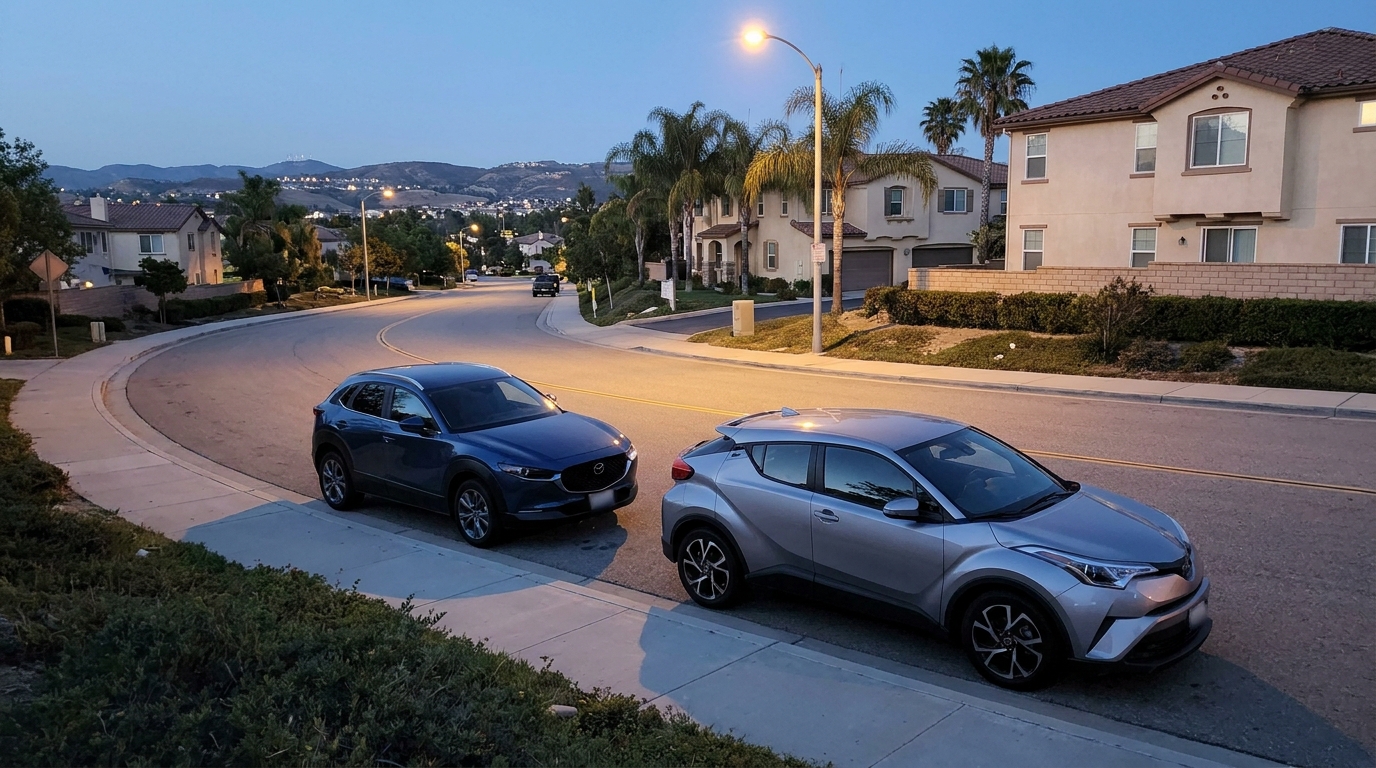
Few decisions in the compact SUV segment come down to a closer matchup than the 2026 Volkswagen Tiguan versus the 2026 Honda CR-V. Both start within roughly $100 of each other, both seat five, and both are among the most cross-shopped vehicles on Santa Clarita driveways. But once you look past the sticker, they take genuinely different approaches — the Tiguan leans premium and performance-oriented, while the CR-V leans toward efficiency and interior volume. Which one wins depends on how you actually drive in the Santa Clarita Valley.
Pricing: A Near-Tie at the Entry Point
The 2026 Volkswagen Tiguan starts at $30,805, and the 2026 Honda CR-V starts at $30,920. That's a difference smaller than a set of floor mats. Where the two diverge is at the top of each lineup: a fully-loaded Tiguan SEL R-Line Turbo can exceed $43,000, while a CR-V Hybrid Sport Touring approaches $40,000.
For Santa Clarita shoppers, the more meaningful pricing question is what's happening on the lot. VW dealers frequently run promotional lease programs on the Tiguan, and California buyers should confirm current incentives, dealer fees, and any regional adjustments directly — final transaction prices in the SCV can vary noticeably from advertised MSRP.
Engine and Horsepower: Tiguan Has the Muscle
The Tiguan is powered by a 2.0-liter turbocharged inline-4 producing 201 hp on the S, SE, and SE R-Line Black trims, jumping to 268 hp in the SEL R-Line Turbo. It's paired with a traditional 8-speed automatic transmission — a setup many drivers prefer over a CVT for its more decisive shift feel.
The CR-V counters with a 1.5-liter turbocharged inline-4 rated at 190 hp on gas trims, or a 2.0-liter plus electric motor combination producing 204 hp combined on hybrid trims. Both CR-V powertrains use a CVT (an e-CVT on the hybrid).
For grade climbs on the 14 out of Santa Clarita, or merging onto the 5 during peak traffic, the Tiguan's power advantage is tangible — particularly in the 268-hp SEL R-Line Turbo. If outright acceleration matters, this round goes to Volkswagen.
Fuel Economy: The CR-V Hybrid Wins on Commutes
This is where the CR-V pulls decisively ahead. The gas CR-V returns 30 mpg combined with front-wheel drive and 29 mpg combined with all-wheel drive. The hybrid delivers approximately 40 mpg combined.
The Tiguan tops out at 29 mpg combined in front-wheel-drive S trim and drops to 25 mpg combined on all-wheel-drive and higher trims. There is no hybrid Tiguan.
For Santa Clarita drivers who log daily miles into the San Fernando Valley, downtown Los Angeles, or over the Grapevine, that gap adds up quickly at California pump prices. HOV lane access rules in California apply to specific qualifying vehicles — buyers should verify current CARB eligibility directly, since the standard CR-V Hybrid does not automatically qualify for a Clean Air Vehicle decal.
Cargo and Passenger Space: CR-V Is the Bigger Box
The CR-V offers 39.3 cubic feet of cargo behind the rear seats and 76.5 cubic feet with them folded. The Tiguan offers 33.8 cubic feet and 69.8 cubic feet respectively — roughly 5.5 and 6.7 cubic feet less. (Note: VW's official cargo figures are used here; some dealer spec pages list different numbers, so verify with the manufacturer if this is a decision-driver.)
Passenger volume follows the same pattern. The CR-V's roughly 106 cubic feet edges the Tiguan's approximately 103.8 cubic feet, with about half an inch more front headroom, 1.1 inches more front legroom, and better rear legroom overall. Families hauling kids to Six Flags Magic Mountain, sports gear across the Santa Clarita school districts, or Costco runs from Valencia will feel that extra room.
Interior Technology: Tiguan Goes Premium
The Tiguan makes an aggressive play for tech-focused buyers. Available features include up to a 15-inch touchscreen (with a 12.9-inch screen standard on lower trims), available massage seats, configurable ambient lighting, and an available head-up display. These are features more commonly found in entry-luxury SUVs than mainstream compact utility vehicles.
The CR-V takes a more conventional approach, with a 9-inch touchscreen and no comparable massage-seat or 15-inch display option. It's a clean, well-executed cabin — but if a large screen, ambient lighting, and premium-feeling touchpoints matter, the Tiguan makes a stronger case.
Safety Features: CR-V Adds Passive Protection
Both SUVs come with strong standard driver-assistance packages. The Tiguan includes blind-spot monitoring, rear cross-traffic alert, and a driver knee airbag. The CR-V comes standard with the full Honda Sensing suite plus a front passenger knee airbag, smart side airbags that can adapt when a child leans against a door, and a driver alert monitor — passive-safety details the Tiguan doesn't match on paper.
For family-focused shoppers, the CR-V's extra passive-safety hardware is worth noting alongside the standard driver-assistance content on both vehicles.
Towing and Warranty: Two Wins for Volkswagen
The Tiguan is rated to tow up to 1,500 lbs. The CR-V Hybrid drops to approximately 1,000 lbs, with gas trims rated somewhat higher (buyers should confirm with Honda for exact figures). For light utility trailers or a small watercraft headed to Castaic Lake, the Tiguan has the edge.
The warranty comparison is also clearly in Volkswagen's favor: the Tiguan carries a 4-year / 50,000-mile New Vehicle Limited Warranty, compared to Honda's 3-year / 36,000-mile basic limited warranty. That's an extra year and 14,000 miles of coverage — a meaningful ownership-cost consideration.
Which SUV Fits Santa Clarita Best?
The right answer depends on how the vehicle will actually be used:
- Choose the CR-V if fuel economy is the top priority (particularly for long SCV-to-LA commutes), if maximum cargo and rear-seat room matter, or if the extra passive-safety features and hybrid powertrain justify the tradeoffs.
- Choose the Tiguan if you want more power (especially the 268-hp SEL R-Line Turbo), a traditional 8-speed automatic instead of a CVT, a more premium-feeling cabin with larger screens and available massage seats, higher towing capacity, and a longer basic warranty.
Frequently Asked Questions
Is the Tiguan more powerful than the CR-V?
Yes. The Tiguan's 2.0-liter turbo produces 201 hp on most trims and 268 hp on the SEL R-Line Turbo. The CR-V produces 190 hp on gas trims and 204 hp combined on hybrid trims.
Does the Volkswagen Tiguan offer a hybrid in 2026?
No. The 2026 Tiguan is gas-only. The CR-V is the choice if a hybrid powertrain is a requirement.
Which has the better warranty?
The Tiguan, at 4 years / 50,000 miles versus the CR-V's 3 years / 36,000 miles basic coverage.
Which is better for family use?
The CR-V has more cargo space, more passenger volume, and additional passive-safety features. The Tiguan counters with more standard power, more configurable tech, and a longer warranty. Both seat five.
The Bottom Line for Santa Clarita Buyers
The Tiguan and CR-V are both strong choices, and neither is objectively wrong. The Tiguan makes the stronger case on power, transmission feel, interior technology, towing, and warranty length. The CR-V makes the stronger case on fuel economy, cargo volume, and passive safety. Test-driving both on familiar SCV roads — a mix of surface streets in Valencia or Saugus and a stretch of freeway on the 5 or 14 — is the fastest way to feel the difference.
Shoppers in Santa Clarita who want to drive the 2026 Tiguan, compare trims side by side, or look at current lease and finance offers can visit Sunnyvale Volkswagen at https://www.sunnyvalevw.com/ to schedule a test drive and review available inventory.