How to Choose the Best EV for Road Trips: Santa Clarita Buyer's Guide
A Santa Clarita buyer's guide to choosing the best EV for road trips — range, charging networks, comfort, and what matters on California highways.
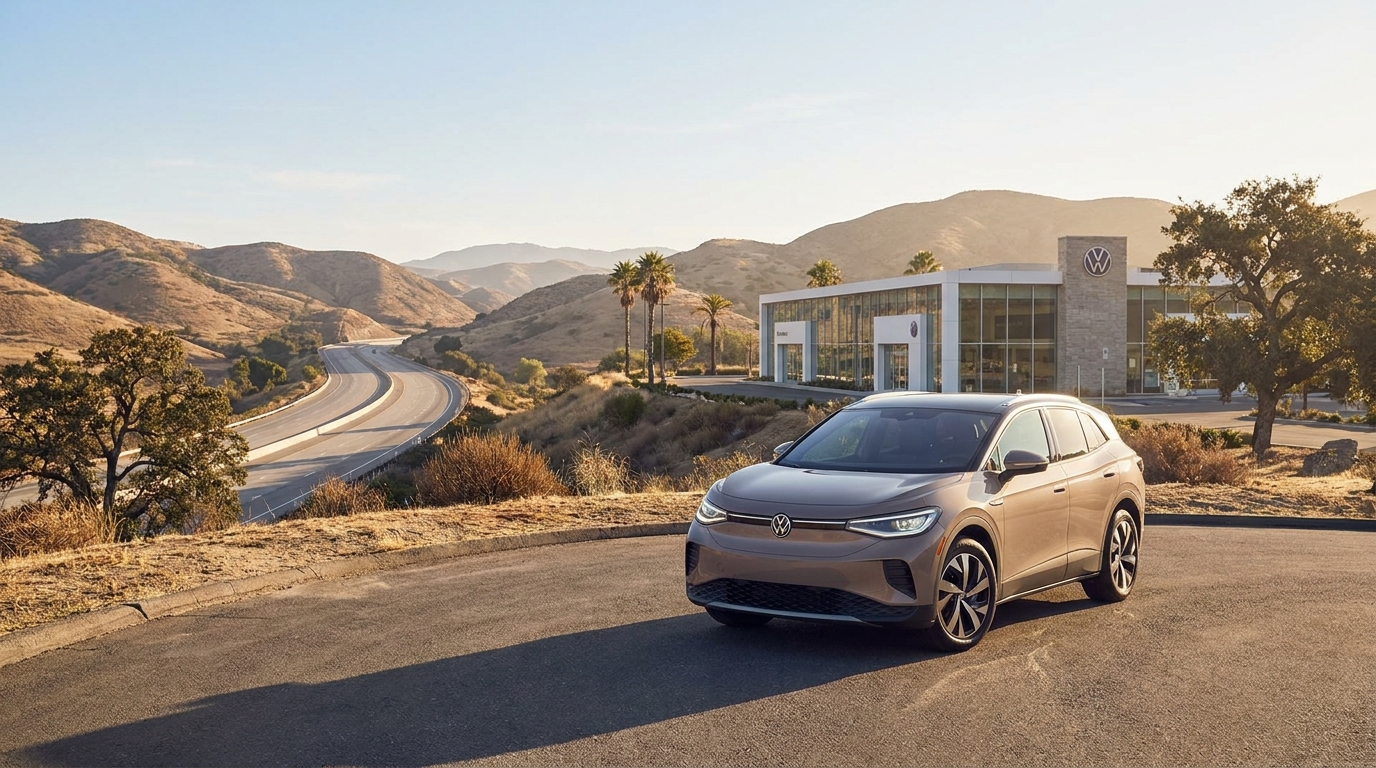
For Santa Clarita drivers, the road trip question is the question that decides whether an EV makes sense at all. The Grapevine climb up I-5 toward the Central Valley, the weekend run to Mammoth, the desert haul to Las Vegas — these are real trips that real households take, and they're the trips that expose the difference between an EV that's pleasant to live with and one that turns vacation planning into a spreadsheet exercise. Choosing the right electric vehicle for long-distance driving comes down to a handful of practical criteria, and getting them right matters more than chasing headline range numbers.
This guide walks through what actually matters when evaluating the best EV for road trips from a Santa Clarita perspective, where the terrain, heat, and highway geometry all shape the answer.
Why Road Trips Are the Real Test for an EV
Daily commuting is the easy use case for any electric vehicle. Charge overnight, drive 30 to 60 miles, plug back in. The road trip is harder because it stacks variables: elevation gain, sustained highway speeds, summer cabin cooling loads, charger availability, and charger reliability. An EV that returns 280 miles of EPA range in mild suburban driving may deliver closer to 200 miles of usable range on a 95-degree afternoon climbing out of the Santa Clarita Valley toward Tejon Pass.
This is why buyers should weigh road-trip suitability separately from city range. The criteria that matter are different.
The Criteria That Actually Matter
1. Real-World Highway Range, Not EPA Range
EPA combined-cycle range is a useful comparison number, but it overstates highway efficiency for most EVs. A reasonable rule of thumb is to assume 70 to 80 percent of EPA range at a steady 75 mph, less in heat or on a climb. For Santa Clarita drivers heading north on I-5, a vehicle rated at 275 EPA miles is more honestly a 200- to 220-mile highway vehicle on a hot day with the climate control working hard.
2. DC Fast Charging Speed and Curve
Peak charging speed gets the marketing attention, but the shape of the charging curve matters more. A vehicle that holds 150 kW from 10 to 60 percent state of charge will get a driver back on the road faster than one that briefly peaks at 200 kW and then tapers aggressively. Volkswagen's ID.4, for example, is engineered around a flatter charging curve in its current configuration, which translates into predictable 25- to 30-minute fast-charge stops on a long route.
3. Charging Network Access
For California road trips, charger density along the I-5, US-101, and I-15 corridors is generally strong, but reliability varies by network. Vehicles with native NACS access or adapter compatibility to the Tesla Supercharger network now have a meaningful advantage on routes east toward Nevada and Arizona. Buyers should ask specifically which networks a given EV can use without friction and which require third-party apps or memberships.
4. Cabin Comfort on Long Hauls
Seat design, road noise, adaptive cruise behavior, and rear-seat space separate vehicles that are tolerable for six hours from vehicles that are genuinely pleasant. This is where the best electric SUV options tend to pull ahead of smaller sedans for family road trips — cargo flexibility and second-row comfort matter when the trip involves luggage, kids, and gear for Mammoth or Big Bear.
5. Climate Resilience
Santa Clarita summers regularly push past 100°F, and battery thermal management becomes a real differentiator in that environment. EVs with active liquid cooling — which includes the Volkswagen ID.4 and most premium electric SUVs — maintain charging speed and battery longevity in heat better than passively cooled designs. Drivers planning summer trips through the Mojave or down to Palm Springs should treat thermal management as a non-negotiable.
How Volkswagen Electric Vehicles Fit the Road-Trip Profile
Volkswagen's EV lineup, led by the ID.4, was designed around the European long-distance driving model — sustained highway speeds, frequent fast-charging stops, and a focus on cabin refinement over headline acceleration numbers. For Santa Clarita buyers, that translates into a vehicle that behaves predictably on the kinds of trips locals actually take.
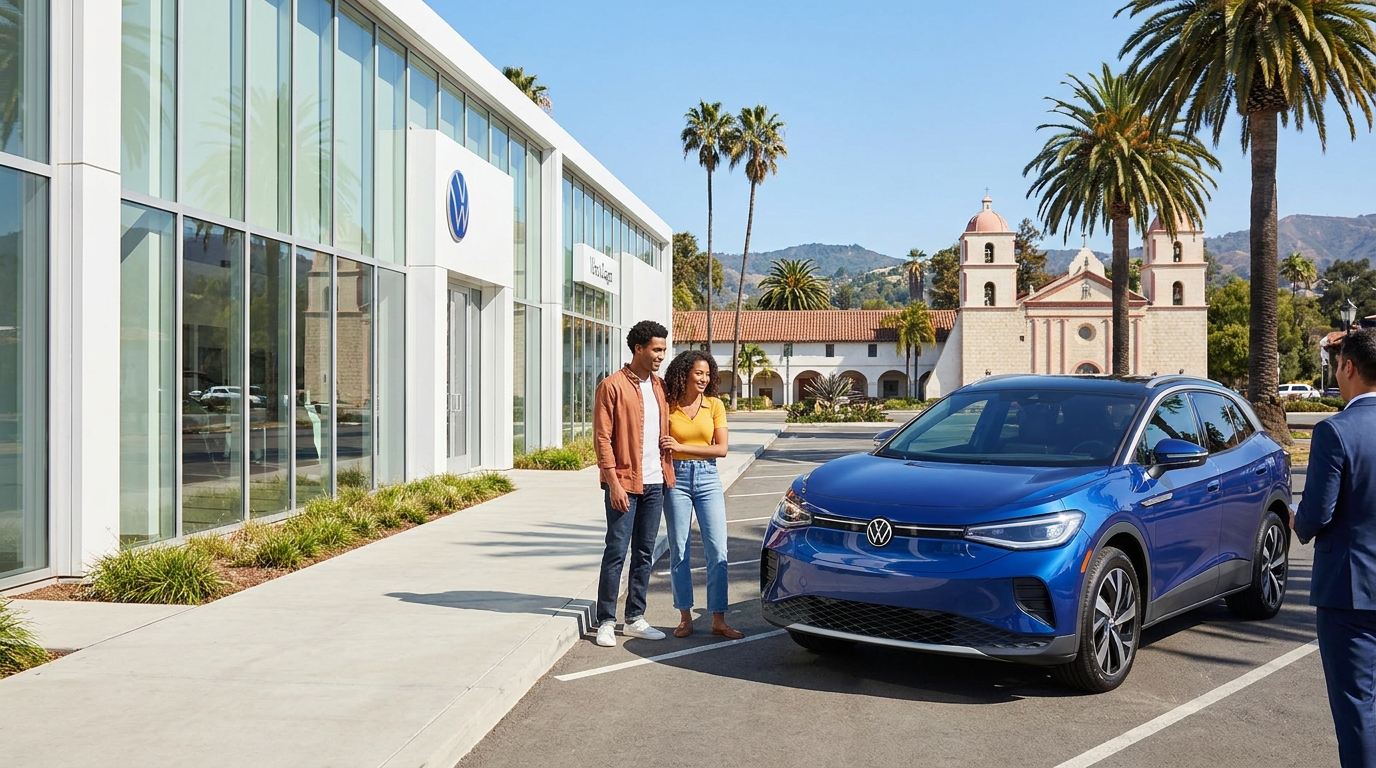
The ID.4 Pro S, in particular, has become a popular choice among California buyers comparing electric SUVs in the $40,000 to $50,000 range. Its combination of usable range, flat charging curve, and standard driver-assistance features makes it credible for the Grapevine and beyond. Reputable Volkswagen EV dealerships, including Sunnyvale Volkswagen, typically walk buyers through real-world range expectations for specific routes rather than quoting EPA figures alone.
Local Considerations for Santa Clarita Buyers
A few factors specific to the Santa Clarita area deserve attention when shopping for a road-trip EV.
- Elevation and climbing efficiency. Trips out of the valley almost always involve grade. The climb from Castaic up to Tejon Summit is one of the most efficiency-punishing stretches of highway in California for EVs. Vehicles with strong regenerative braking recover meaningful energy on the descent, partially offsetting the climb.
- California incentives and HOV access. California's Clean Air Vehicle decal program, which provides solo HOV lane access, has historically applied to qualifying EVs and remains relevant for commuters who also take longer trips. Eligibility rules change periodically, so buyers should verify current status through the California DMV before assuming access.
- Summer heat and garage charging. Many Santa Clarita homes in neighborhoods like Valencia, Saugus, and Stevenson Ranch have attached garages that simplify Level 2 home charging installation. Buyers should plan for a 240V circuit installation as part of the EV purchase budget — typically $800 to $2,500 depending on panel location and capacity.
- Wildfire season and evacuation range. A practical consideration that doesn't get discussed enough: during red-flag warnings and evacuation events, having an EV with a comfortable buffer of range and a known charging plan along likely evacuation routes is genuinely valuable.
What to Ask a Volkswagen EV Dealership
Buyers searching for a Volkswagen EV dealership near me should treat the conversation as a working session, not a transaction. Useful questions include:
- What is the expected highway range of this specific trim in summer conditions?
- Which fast-charging networks does this vehicle access natively, and which require adapters?
- What home charging setup does the dealership recommend, and can they coordinate with a local electrician?
- How does the included charging credit or subscription work, and how long does it last?
- What does the battery warranty cover specifically, and how is degradation measured?
A dealership that answers these directly — with specifics rather than brochure language — is the kind of partner worth working with. Customer feedback for Sunnyvale Volkswagen frequently highlights this kind of transparent, low-pressure consultation; one recent reviewer described the process as "smooth" and "stress free" with "no hidden fees," which is the baseline buyers should expect.
FAQ: Road Trips and EVs in Santa Clarita
How far can a Volkswagen ID.4 actually go on the highway?
Expect roughly 200 to 230 miles of usable highway range from a full charge on a typical California interstate trip, depending on speed, temperature, and elevation. EPA figures are higher, but real-world highway driving is the honest planning number.
Is the I-5 corridor well covered by fast chargers?
Yes. Both Electrify America and EVgo maintain stations roughly every 50 to 75 miles between Santa Clarita and the Bay Area, and Tesla Supercharger access has expanded for many non-Tesla EVs. Buyers should still plan stops in advance for unfamiliar routes.
Is an electric SUV better for road trips than an electric sedan?
For family road trips with cargo, generally yes — cabin space, seat comfort, and luggage flexibility matter more than the modest efficiency advantage of a sedan. For solo or two-person travel, a sedan may be the more efficient choice.
How long does a typical fast-charging stop take?
For most modern EVs, including the Volkswagen ID.4, a 10 to 80 percent fast charge takes 25 to 35 minutes — roughly the time for a coffee and a restroom break.
Closing Thoughts
The best EV for road trips is the one that matches the routes a household actually drives, the climate it drives them in, and the charging infrastructure it has reasonable access to. For Santa Clarita drivers, that means weighing highway range honestly, prioritizing thermal management, and confirming charger compatibility on the corridors that matter — I-5, US-101, and I-15.
Buyers in the Santa Clarita area who want to evaluate Volkswagen electric vehicles in person, talk through real-world range on specific routes, or compare the ID.4 against other electric SUV options can reach Sunnyvale Volkswagen at https://www.sunnyvalevw.com/ to schedule a consultation or test drive.