Home EV Charging in Palo Alto, CA: Costs & Permits
What VW ID.4 owners in Palo Alto need to know about Level 2 home charging: permit rules, panel upgrades, PG&E vs. CPAU service, and setup costs in 2026.
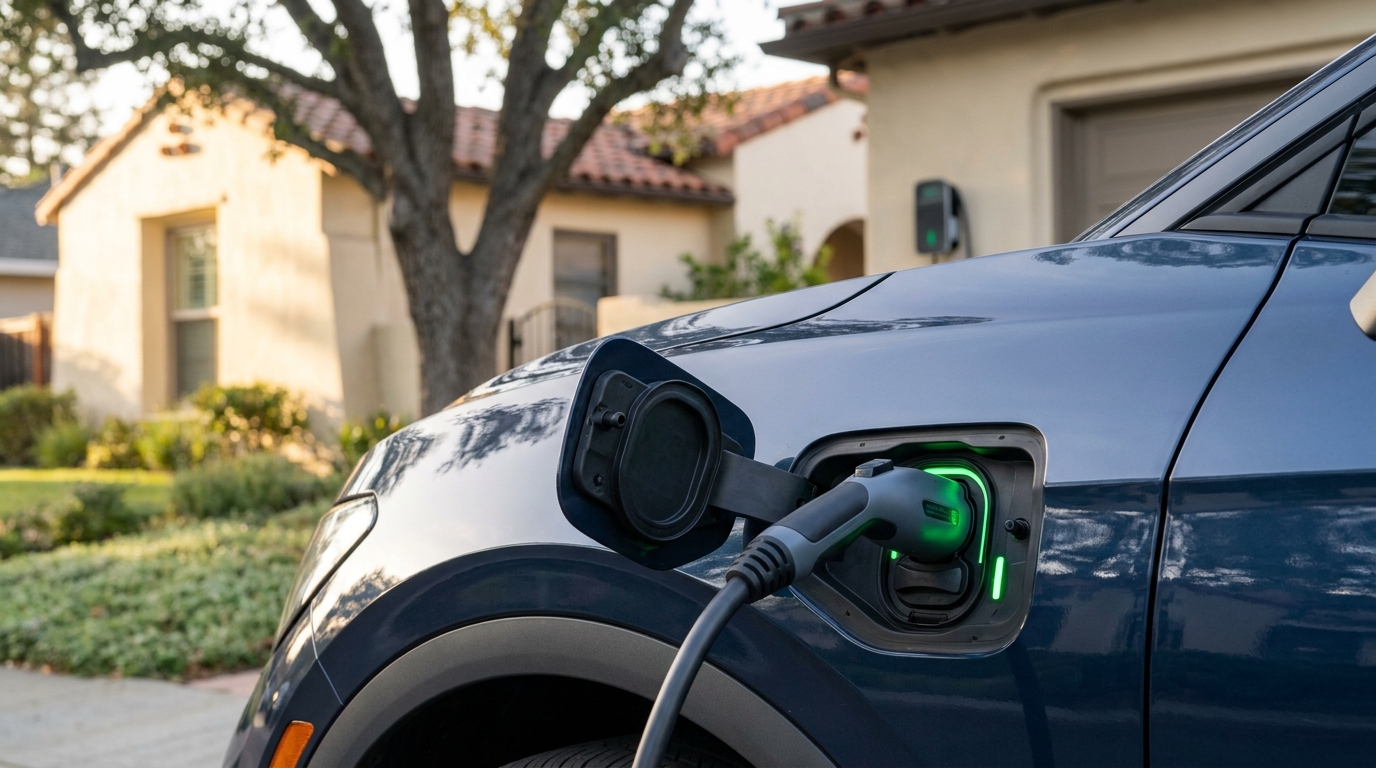
For a Volkswagen ID.4 owner in Palo Alto, a Level 2 home charging setup requires a city electrical permit, a CEC Article 220 load calculation to confirm the existing panel can handle the added load, and — if the service can't — a permitted panel upgrade. Under California Government Code § 65850.7, the City of Palo Alto must act on a complete residential EV charger application within 5 business days using a ministerial, checklist-based review. No separate PG&E interconnection application is required for a standard behind-the-meter charger.
That's the short version. The longer version — which determines whether a home install runs a few hundred dollars in permit-and-wire work or several thousand in service upgrades — depends on the age of the house, the utility serving the address, and how the 2026 California Electrical Code (effective January 1, 2026) treats the new circuit. Sunnyvale Volkswagen sees these questions constantly from ID.4 buyers across the mid-Peninsula, and the answers are more Palo Alto-specific than most generic EV charging articles suggest.
Do Palo Alto homeowners need a permit for a Level 2 EV charger?
Yes. Any new 240-volt branch circuit for a residential Level 2 EV charger — whether it's a hard-wired EVSE or a new NEMA 14-50 receptacle — requires an electrical permit from the City of Palo Alto Development Services under the California Electrical Code (Title 24, Part 3). A Level 1 charger plugged into an existing, properly rated 120-volt outlet generally does not require a permit because no new wiring is added.
The permit process itself is designed to be fast. California Government Code § 65850.7 requires Palo Alto to process complete residential EV charger applications ministerially — meaning checklist-based, without discretionary planning or architectural review — and to act within 5 business days. Electronic submittals must be accepted. Sunnyvale Volkswagen typically advises ID.4 buyers to have their licensed C-10 electrical contractor pull the permit as part of the installation quote, since the contractor is already producing the load calculation and single-line diagram the city expects.
One useful nuance: if the EV circuit is bundled into the same permit scope as a panel or service upgrade, it's generally covered under that single electrical permit rather than requiring a separate EV charger permit. That matters for older homes in neighborhoods like Old Palo Alto, Professorville, and Crescent Park, where 100-amp services are still common.
When does a Palo Alto home need an electrical panel upgrade for EV charging?
A panel or service upgrade is required whenever a CEC Article 220 load calculation shows the existing service can't safely support the added EV load. EV chargers are treated as continuous loads under CEC Article 625, so branch circuits must be sized at 125% of the EVSE nameplate rating. Homes with 100–125 amp service — common in mid-century Palo Alto housing stock — frequently fail the calculation once a 40- or 48-amp EVSE is added.
The upgrade itself must be permitted through Palo Alto Development Services with updated service sizing calculations, panel schedules, and documentation of CEC working clearance, grounding, and bonding compliance. GFCI protection is required for EV charger circuits installed in garages and exterior locations. Rough and final inspections must pass — verifying conductor sizing, breaker rating, EVSE listing, working clearances, and GFCI/AFCI protection — before the installation can be energized.
For a typical ID.4 owner, this is the single biggest cost variable. A straightforward install into a modern 200-amp panel with garage-adjacent space is a fundamentally different project than a service upgrade on a 1950s Eichler with the meter on the far side of the house.
What does home EV charging setup cost in Palo Alto in 2026?
Costs vary widely because they're driven by three independent factors: the EVSE hardware, the wiring run, and whether a panel or service upgrade is required. The table below outlines the scope categories Palo Alto ID.4 buyers should plan around. Actual pricing should be confirmed with a licensed C-10 contractor; permit fees should be confirmed directly with City of Palo Alto Development Services, as fee schedules change.
| Scope | What's included | Typical complexity |
|---|---|---|
| Level 1 (existing 120V outlet) | No new circuit, no permit required | Lowest — hardware only |
| Level 2, simple install | New 240V circuit, short conduit run, existing 200A panel with capacity, city permit | Moderate — 1 day install |
| Level 2, long run or exterior | Adds trenching, exterior-rated conduit, GFCI protection per CEC | Higher — labor-driven |
| Level 2 with panel upgrade | New 200A panel, service upgrade permit, utility coordination, load calc | Highest — multi-day, utility-dependent |
| Level 2 with full service upgrade | Meter/service change through PG&E or CPAU, panel, EV circuit | Highest — weeks, not days |
Does PG&E require an interconnection application for home EV charging?
No. A standard residential Level 2 EV charger is treated as a behind-the-meter load by PG&E, so no separate interconnection application is required. PG&E involvement is triggered only by a service upgrade, meter change, or optional enrollment in an EV rate plan such as EV2-A or EV-B. Homeowners who are simply adding a 240-volt circuit to an adequate existing panel do not need to file anything with the utility.
The wrinkle in Palo Alto specifically: parts of the city are served by City of Palo Alto Utilities (CPAU), the municipal electric utility, rather than PG&E. Homeowners must confirm which utility serves their address before planning any service upgrade, because CPAU customers coordinate disconnects, reconnects, and service upgrades directly with CPAU — not PG&E — and rate plan options differ. Boundary and legacy properties can go either way, so utility identity should be independently verified rather than assumed based on the neighborhood.
How does the 2026 California Electrical Code affect installs in 2026?
The 2026 California Electrical Code (Title 24, Part 3), based on NEC 2026, took effect statewide on January 1, 2026, and it now governs every new EV charger permit in Palo Alto. Projects permitted before that date may have been reviewed under the prior 2026 CEC edition; anything permitted in 2026 is under the 2026 CEC. The applicable code edition should be confirmed with the city at time of permit application.
Practically, the 2026 CEC continues to treat EV chargers as continuous loads (Article 625) requiring 125% branch-circuit sizing, requires GFCI protection for garage and exterior installations, and enforces working clearance, grounding, and bonding standards at the panel. Under Government Code § 65850.7, Palo Alto can only deny a compliant EV charger application based on specific health and safety findings consistent with the CEC — it cannot impose discretionary review or aesthetic conditions on a code-compliant install.
How should VW ID.4 buyers in Palo Alto sequence the decision?
The most efficient sequence is: confirm the utility (PG&E vs. CPAU), get a licensed C-10 contractor to run a CEC Article 220 load calculation on the existing panel, decide on EVSE amperage (32A, 40A, or 48A) based on daily driving needs, and only then pull the permit. Deciding on hardware before the load calculation is the most common way ID.4 owners end up with a mismatched install — a 48-amp EVSE requires a 60-amp breaker at 125% continuous sizing, which many older Palo Alto panels can't accommodate without an upgrade.
Sunnyvale Volkswagen works with new ID.4 owners on the charging decision because it meaningfully affects the ownership experience.
Frequently asked questions
How long does Palo Alto take to approve a residential EV charger permit?
California Government Code § 65850.7 requires the City of Palo Alto to act on complete residential EV charger permit applications within 5 business days using a ministerial, checklist-based review. Electronic submittals must be accepted. Incomplete applications restart the clock once corrected. Panel or service upgrade permits bundled with an EV circuit follow the same electrical permit pathway but may involve additional plan-check items.
Is a permit required for a Level 1 (120-volt) EV charger?
Generally no. A Level 1 charger plugged into an existing, properly rated 120-volt outlet does not require an electrical permit in Palo Alto because no new wiring or branch circuit is being installed. A Level 2 (240-volt) charger always requires a permit because it involves a new branch circuit, whether the EVSE is hard-wired or connects to a new NEMA 14-50 receptacle.
Does PG&E need to approve my home EV charger installation?
No separate PG&E interconnection application is required for a standard behind-the-meter Level 2 EV charger. PG&E only becomes involved if the installation requires a service upgrade, meter change, or if the homeowner chooses to enroll in an EV rate plan such as EV2-A or EV-B. CPAU-served homes coordinate any service changes directly with City of Palo Alto Utilities instead.
What size electrical service do I need for a VW ID.4 home charger?
Sizing depends on the EVSE nameplate rating and existing household load. Under CEC Article 625, the EV branch circuit must be sized at 125% of the charger's continuous load — so a 40-amp EVSE requires a 50-amp breaker, and a 48-amp EVSE requires a 60-amp breaker. A CEC Article 220 load calculation determines whether the existing service, commonly 100 to 200 amps in Palo Alto, can accommodate the addition.
Can Palo Alto require design review for my EV charger?
No. Under California Government Code § 65850.7, cities cannot impose discretionary review — such as planning commission or architectural board approval — on residential EV charger permit applications that comply with the California Electrical Code and applicable building standards. The permit process must be ministerial and checklist-based. Denials are limited to specific health and safety findings consistent with the CEC.
What happens if I install an EV charger without a permit in Palo Alto?
Unpermitted EV charger or panel work can trigger correction notices from the City of Palo Alto Building Division, requirements to obtain retroactive permits, and potential fines or penalties under California Building Standards law. Inspections verify conductor sizing, breaker rating, EVSE listing, working clearances, grounding, bonding, and GFCI/AFCI protection before the circuit can be energized. Unpermitted work can also complicate home sales and insurance claims.
Getting the setup right the first time
Home charging is the single biggest quality-of-life factor in electric vehicle ownership, and in Palo Alto it's genuinely more nuanced than in most California cities — the mix of PG&E and CPAU service territories, aging housing stock, and the 2026 CEC transition all shape what an install actually looks like. The regulatory framework is favorable to homeowners (5-business-day permit review, no discretionary approval, no PG&E interconnection paperwork for standard installs), but the physical realities of older panels and long wiring runs are what drive real-world cost.
Readers in Palo Alto weighing a Volkswagen ID.4 purchase — or already driving one and planning their home charging setup — can reach Sunnyvale Volkswagen at https://www.sunnyvalevw.com/ for guidance on matching the vehicle's charging profile to a home electrical situation. This article is a summary of regulatory requirements and does not constitute legal or electrical engineering advice; a licensed C-10 electrical contractor and the City of Palo Alto Development Services should confirm project-specific details.