Home EV Charging in Palo Alto, CA: VW Owner Guide
Palo Alto VW owners: what you need to install a Level 2 home charger — permits, code requirements, utility considerations, and 2026 setup guidance.
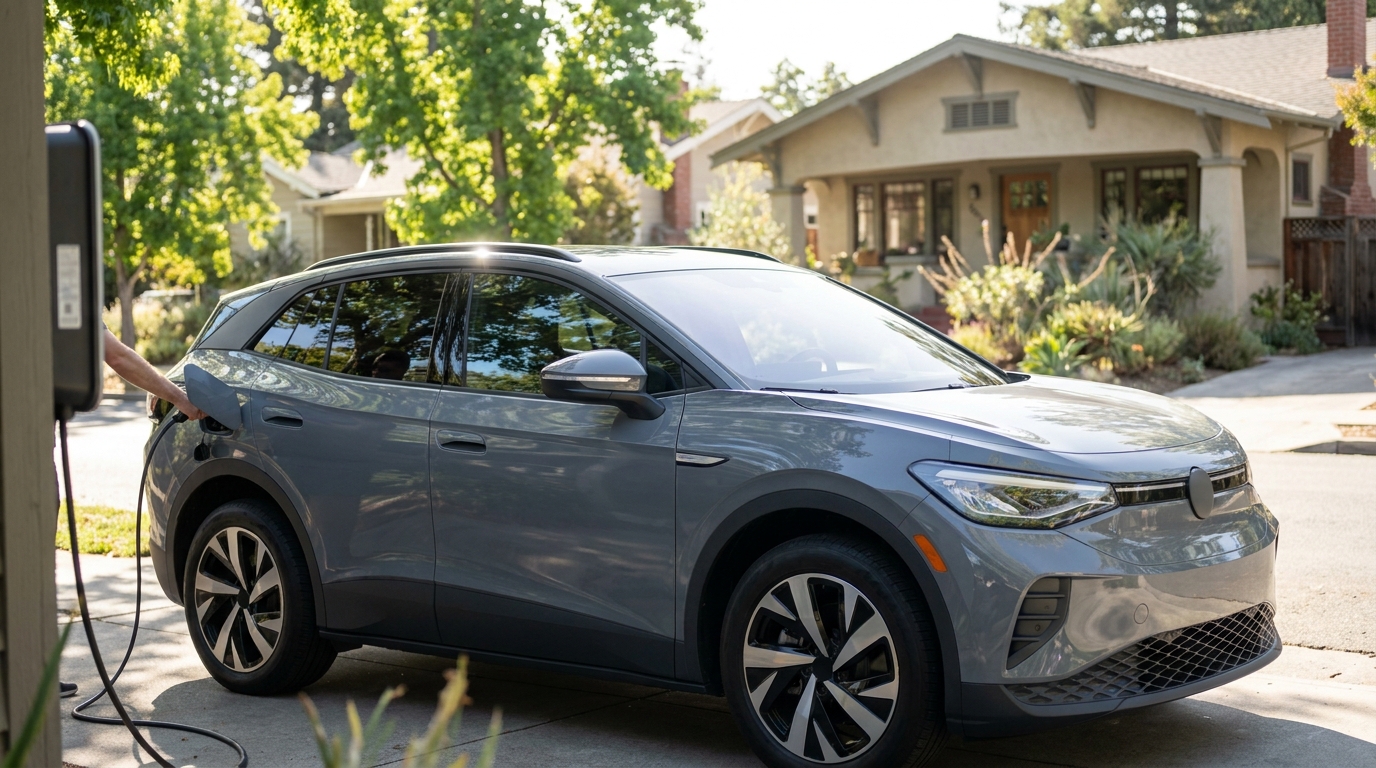
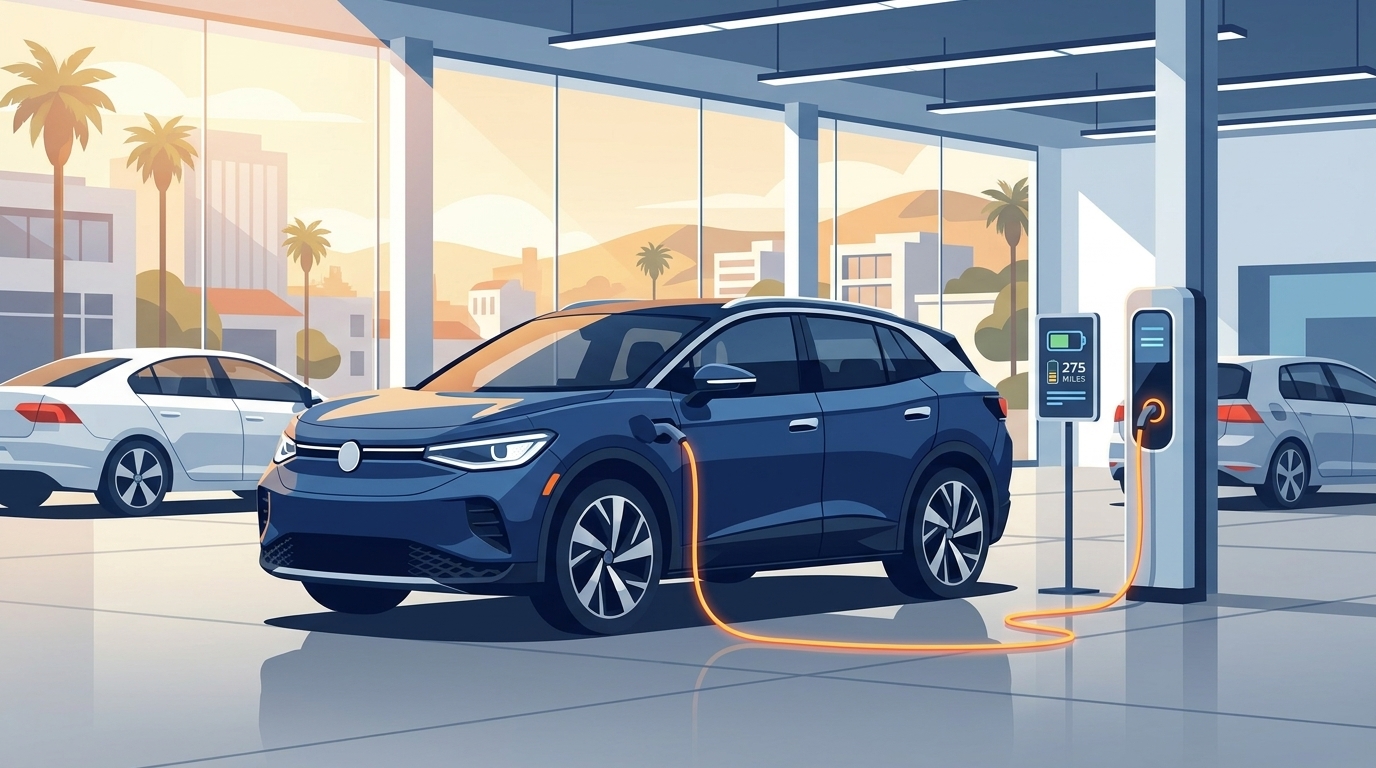
Volkswagen owners in Palo Alto who want to charge an ID.4 or other VW EV overnight at home need three things lined up before an installer picks up a wrench: an electrical permit from the City of Palo Alto Development Center, a code-compliant 240-volt circuit sized to the charger, and clarity on which utility actually serves the address. Get those right and a Level 2 charger install is straightforward; get them wrong and the work can be flagged, delayed, or forced open for re-inspection.
This guide walks Palo Alto homeowners through what a permitted Level 2 install looks like in 2026, which local and California rules apply, and where the utility question changes the math on charging costs.
Do You Need a Permit to Install a Home EV Charger in Palo Alto?
Yes. Any new 240-volt branch circuit for a Level 2 EV charger requires an electrical permit from the City of Palo Alto Development Center before work begins, under the California Electrical Code (Title 24, Part 3). This applies whether the charger is hard-wired or served by a NEMA 14-50 receptacle in the garage.
California Government Code § 65850.7, in effect since 2026, requires Palo Alto to run residential EV charger permits through a ministerial, checklist-based process, accept electronic submittals, and approve or deny complete applications within five business days. The city can impose only health- and safety-related conditions and cannot unreasonably restrict the installation.
The one common exception: a Level 1 (120 V) charger plugged into an existing, properly rated outlet generally does not require a permit because no new wiring is added. For most VW ID.4 owners, though, Level 1 is too slow to be the primary charging solution.
What the California Electrical Code Requires for a VW Home Charger
Under California Electrical Code Article 625 (incorporating NEC Article 625), the EVSE must sit on a dedicated branch circuit, and both the circuit conductors and the overcurrent device must be sized at 125% of the charger's rated continuous load. In practical terms, a 40-amp charger — a common configuration for a VW ID.4 — requires a 50-amp breaker on a dedicated circuit.
A few other Article 625 requirements shape what a compliant install looks like:
- The EVSE must be listed and labeled by a recognized testing laboratory, such as UL.
- A readily accessible disconnecting means must be provided.
- If a NEMA 14-50 receptacle is used instead of a hard-wired connection, GFCI protection must comply with Article 625 and associated CEC sections.
- A feeder or service load calculation is required to confirm the existing panel can accept the new load without exceeding its rating.
That load calculation is where many older Palo Alto homes — the postwar single-family stock in neighborhoods like Midtown, Barron Park, and parts of Old Palo Alto — run into trouble. A 100-amp service that already carries central AC, an electric range, and a heat pump water heater may not have room for a 50-amp EV circuit without a panel or service upgrade coordinated with the utility.
Who's Actually Your Utility: PG&E or Palo Alto Utilities?
This is the single most misunderstood point for new EV owners in the city: much of Palo Alto is served by the City of Palo Alto Utilities, a municipal utility, not PG&E. Homeowners should check the electric provider printed on their utility bill before assuming any PG&E rate plan or program applies.
For residents who are on PG&E service, two EV-specific time-of-use rate plans are available:
- Schedule EV2-A — a whole-house TOU rate on a single meter, designed to reward off-peak EV charging without requiring a second meter.
- Schedule EV-B — a separate-meter TOU rate that isolates EV charging on its own meter. This requires installation of a second meter meeting PG&E standards.
Both require a smart meter capable of interval metering, and both are subject to CPUC-approved tariff terms that can change. For residents on Palo Alto Utilities, the municipal utility publishes its own residential and EV-related rate options, which follow a different structure than PG&E's schedules.
Do You Need an Interconnection Agreement?
No. A standard Level 2 EV charger is an electrical load, not a generation or storage device, and does not require a PG&E Rule 21 or net-metering interconnection agreement. A load calculation is still required to confirm service capacity, and a panel or service upgrade may be needed, but there is no separate interconnection paperwork for the charger itself.
Interconnection agreements come into play only when pairing the charger with solar, battery storage, or a bidirectional (V2H/V2G) system — a growing area of interest as VW rolls out more of its ID series, but not part of a standard Level 2 install.
Who Can Legally Do the Work
If a homeowner hires a contractor, that contractor must hold a valid C-10 Electrical Contractor license issued by the California Contractors State License Board. Homeowners may pull their own permit and do the wiring themselves as owner-builders on their primary residence, provided they perform the work personally — but the same permit, inspection, and code requirements apply.
At least one final electrical inspection is required after installation, and some jurisdictions also require a rough inspection before wiring is concealed. Unpermitted work can trigger a correction notice, a stop-work order, a requirement to expose concealed wiring, and administrative penalties under California Building Code enforcement authority. Permit fees themselves are capped by § 65850.7 to the reasonable cost of providing the service.
A Sensible Sequence for Palo Alto VW Owners in 2026
- Confirm your utility on your bill — PG&E or City of Palo Alto Utilities — before comparing rate plans.
- Choose a UL-listed Level 2 charger matched to your VW's onboard charger capacity. For the ID.4, a 40- or 48-amp unit is typical.
- Have a licensed C-10 contractor perform a load calculation on your existing panel. If a service upgrade is needed, factor in additional utility coordination time.
- Submit the electrical permit application to the City of Palo Alto Development Center. Under state law, complete applications should be acted on within five business days.
- Schedule required inspections, and if you're on PG&E, enroll in EV2-A or EV-B once the charger is energized to capture off-peak rates.
FAQ
How long does the Palo Alto EV charger permit take?
State law requires the city to approve or deny complete residential EV charger permit applications within five business days, per California Government Code § 65850.7. Incomplete applications or ones needing plan review for a panel upgrade can take longer.
Does a NEMA 14-50 outlet install still need a permit?
Yes. Adding a new 240-volt receptacle is new branch-circuit work under the California Electrical Code and requires an electrical permit from the City of Palo Alto Development Center, even if you plan to plug in a portable EVSE rather than hard-wire a unit.
Can I install the charger myself?
A homeowner may perform electrical work on their own primary residence as an owner-builder without a C-10 license, but must pull the permit, do the work personally, and pass all required inspections. Anyone hired to do the work must hold a valid C-10 Electrical Contractor license from the CSLB.
Will a Level 2 charger require a panel upgrade?
Sometimes. Older Palo Alto homes with 100-amp service and existing electric appliances often can't accommodate a 40- or 48-amp EV circuit without exceeding capacity. A load calculation, required under the code, will confirm whether the existing service is sufficient or an upgrade is needed.
Getting It Handled Locally
Home charging is what makes daily VW EV ownership genuinely low-friction — provided the install is permitted, code-compliant, and matched to the right utility rate. Palo Alto homeowners who want the vehicle side of that equation handled — ID.4 test drives, charging-capability questions, or trade-in guidance as they move into an EV — can reach Sunnyvale Volkswagen at https://www.sunnyvalevw.com/ for information and next steps. For the electrical work itself, a licensed C-10 contractor familiar with the City of Palo Alto Development Center's permit process is the appropriate partner.