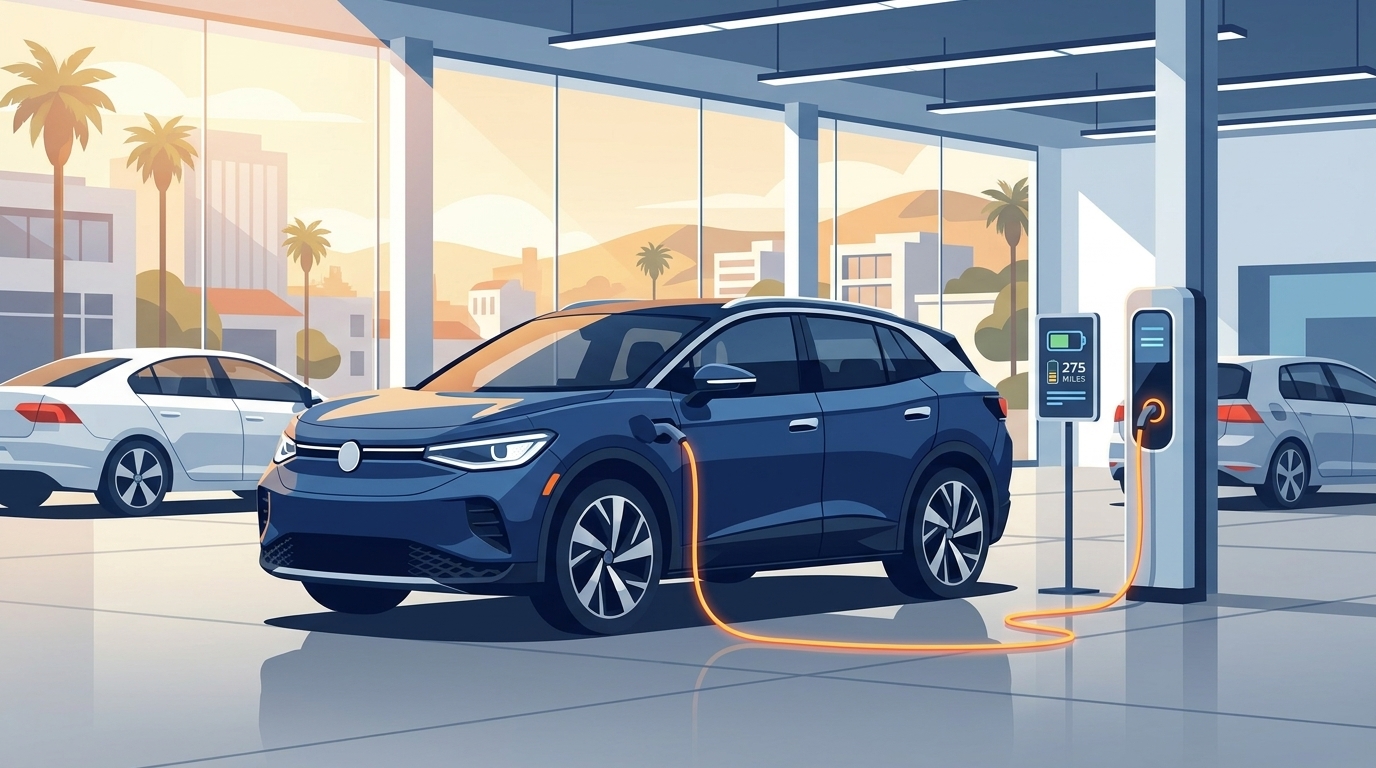
Electric Vehicle Winter Performance: What San Jose Drivers Need to Know
How EVs handle winter in San Jose — real range expectations, battery care tips, and charging advice for cold weather driving in the South Bay.
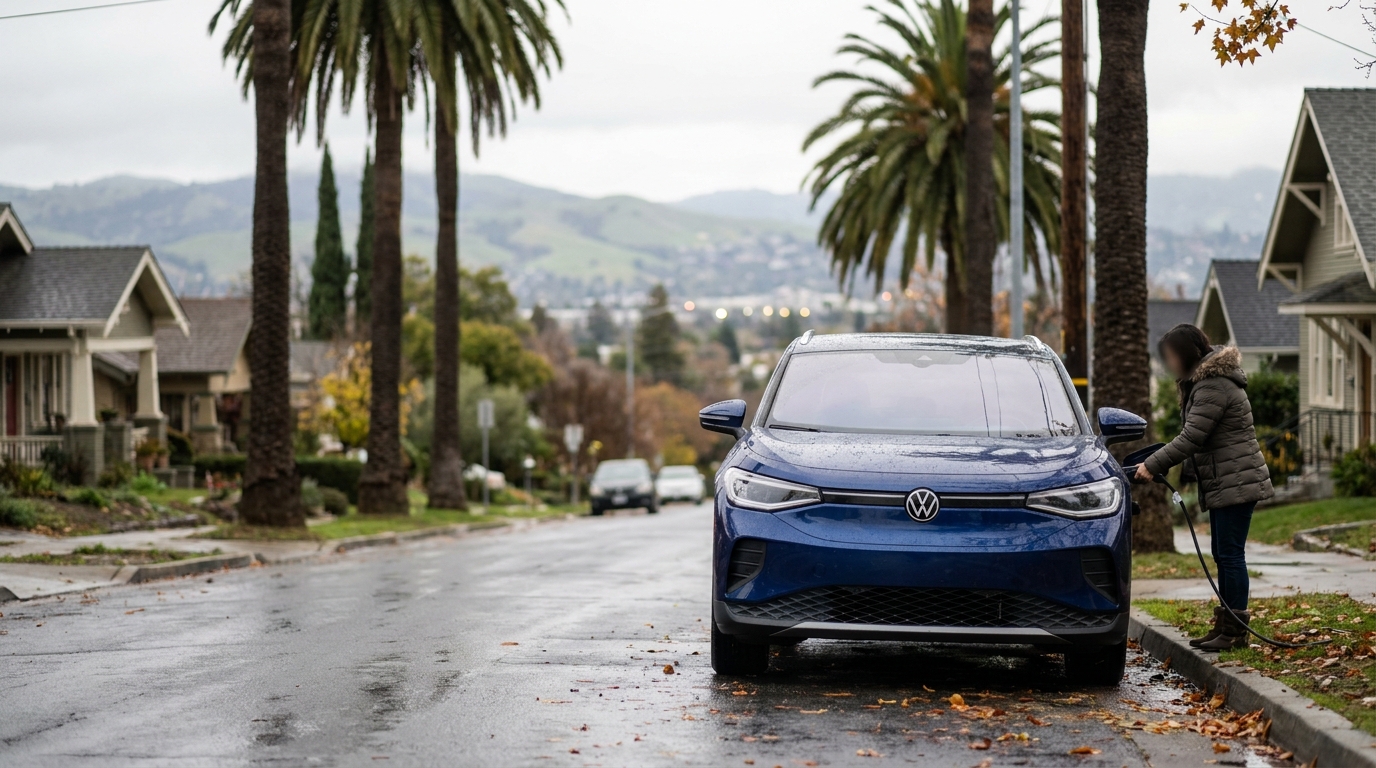
If you drive an EV in San Jose, you've probably wondered how your battery is going to behave when temperatures drop into the 30s overnight or when you head up to Tahoe for a weekend. The good news: Bay Area winters are mild compared to most of the country. The honest news: even our relatively gentle cold snaps affect electric vehicle range, charging speed, and cabin comfort more than most drivers realize.
Here's what San Jose EV owners actually need to know about winter performance — without the hype, and without the doom.
How Cold Weather Affects EV Battery Performance
Lithium-ion batteries don't like being cold. The chemistry that moves electrons through the cells slows down when temperatures drop, which means two things happen at once: your available range shrinks, and your battery accepts a charge more slowly. This isn't a defect — it's physics, and it applies to every EV on the market, from a Volkswagen ID.4 to anything else parked in your driveway.
For San Jose drivers, the practical impact is modest most of the year. Our typical winter lows in neighborhoods like Willow Glen, Almaden Valley, and Evergreen sit in the 38–45°F range overnight, warming into the 50s and 60s by mid-morning. At those temperatures, you might see a 5–15% reduction in real-world range compared to a 70°F day. Noticeable, but rarely disruptive.
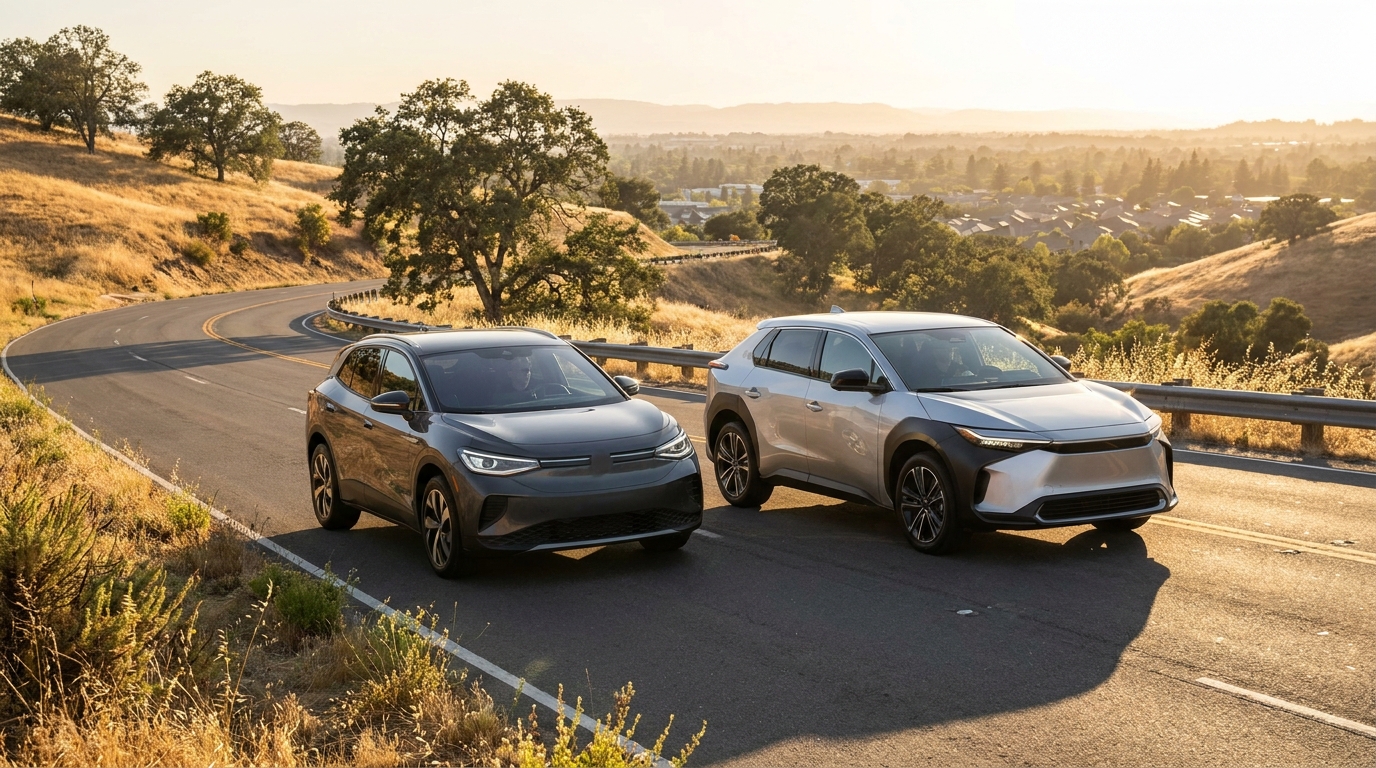
The bigger swings show up when you drive out of the valley. A Friday afternoon trip up Highway 17 toward Santa Cruz, or eastbound on I-80 toward the Sierra, can drop your battery into temperatures it isn't used to. At 20°F, many EVs lose 25–35% of their rated range. Plan accordingly.
EV Cold Weather Range: What to Actually Expect
Range loss in winter comes from three sources, and understanding them separately helps you plan better:
- Battery chemistry: Cold cells deliver less usable energy. This is the unavoidable piece.
- Cabin heating: Unlike a gas car, which heats your cabin using engine waste heat, an EV pulls energy directly from the battery to warm you up. On a 35°F morning commute from South San Jose to a downtown office, your heater can pull 3–5 kW — meaningful drain on a short trip.
- Tire pressure and rolling resistance: Cold air contracts. Tires lose roughly 1 PSI for every 10°F drop, and underinflated tires hurt efficiency.
The combined effect for a typical San Jose winter day is usually 10–20% reduced range. If your EV is rated for 250 miles, plan around 200–225 in January. For most local driving — commutes, errands, school runs around the Cambrian or Berryessa areas — that's still plenty.
Electric Car Winter Driving Tips for the South Bay
A few habits make a real difference:
- Precondition while plugged in. Nearly every modern EV lets you warm the cabin and battery from your phone before you unplug. Doing this while still connected to your home charger means the energy comes from the wall, not your battery. This is the single highest-impact winter habit.
- Use seat heaters over cabin heat. Resistive seat and steering wheel heaters use a fraction of the energy that warming an entire cabin requires.
- Check tire pressure monthly through the winter. Pressure drops with temperature, and the difference between properly inflated and 4 PSI low is several percent of range.
- Charge to a higher percentage before mountain trips. Heading to Tahoe or even up to Mount Hamilton? Climb plus cold equals heavier draw. Leave with more buffer than you'd want in July.
- Park in a garage when possible. Even an unheated garage stays 10–15°F warmer than an open driveway in San Jose's coldest weeks, and your battery starts the morning happier.
Charging Speed in Cold Weather
This is the piece that surprises new EV owners most. When a battery is cold, it physically cannot accept a fast charge at full speed — the vehicle's battery management system deliberately slows the charge to protect the cells. A DC fast-charging session that takes 25 minutes in summer might take 40–50 minutes on a January morning if you pull in with a cold battery.
The workaround: most EVs will precondition the battery for fast charging automatically if you set the charger as your navigation destination. This warms the cells en route so they're ready to accept full power when you plug in. It's a feature worth learning on your specific vehicle.
What About California's EV Infrastructure?
San Jose is one of the better-served EV markets in the country. Public Level 2 and DC fast chargers are plentiful around downtown, Santana Row, Westfield Valley Fair, and along the major commute corridors. California's commitment to phasing out new gas vehicle sales by 2035 has accelerated charger deployment statewide, and PG&E offers EV-specific time-of-use rates that make overnight home charging significantly cheaper than daytime grid power.
For South Bay drivers, that means winter charging logistics are rarely the constraint. The constraint is planning around the temporary range hit on the days it actually matters — long trips, early mornings, or unusual cold snaps.
Frequently Asked Questions
Do EVs work reliably in San Jose winters?
Yes. San Jose's mild winters are well within the comfortable operating range for every modern EV. You'll notice some range reduction, but reliability isn't a concern at the temperatures we see locally.
Should I worry about my EV battery degrading faster in winter?
No. Cold weather temporarily reduces available range but doesn't accelerate long-term battery degradation. What actually shortens battery life is sustained high heat and habitually charging to 100% — both summer issues, not winter ones.
Is it bad to leave my EV unplugged in cold weather?
For a few days, no. For longer periods, leaving it plugged in lets the battery management system maintain optimal temperature and state of charge. In San Jose's climate, this is a minor concern, not a critical one.
How much does winter affect charging cost?
Slightly. Because cold reduces efficiency, you'll use a bit more energy per mile, which translates to a small increase in your monthly charging bill. With PG&E's EV time-of-use rates, the impact for most South Bay drivers is a few dollars a month.
Choosing an EV That Handles Winter Well
Heat pump climate systems, battery preconditioning, and well-designed thermal management all matter more than raw range numbers when you're evaluating winter performance. The Volkswagen ID.4, for example, includes a heat pump on most trims, which uses substantially less energy than resistive cabin heating — a meaningful difference on cold mornings.
If you're shopping for an EV and want to understand how a specific model behaves in real Bay Area conditions, the team at Sunnyvale Volkswagen works with South Bay drivers daily and can walk you through the practical differences between vehicles. The dealership's 4.4★ rating across more than 1,400 Google reviews reflects a sales approach that customers describe as low-pressure and transparent — one reviewer noted there were "no hidden fees" and the process was "stress free."
San Jose drivers who want to talk through EV winter performance, test drive an ID.4, or compare options against their actual commute can reach Sunnyvale Volkswagen at https://www.sunnyvalevw.com/. Winter in the South Bay is one of the easier seasons to own an EV — a little planning is all most drivers need.