Electric Vehicle Safety Features That Matter Most to Sunnyvale Families
A practical 2026 guide to the EV safety technology Sunnyvale families should prioritize, from driver assistance to battery protection and child-friendly design.
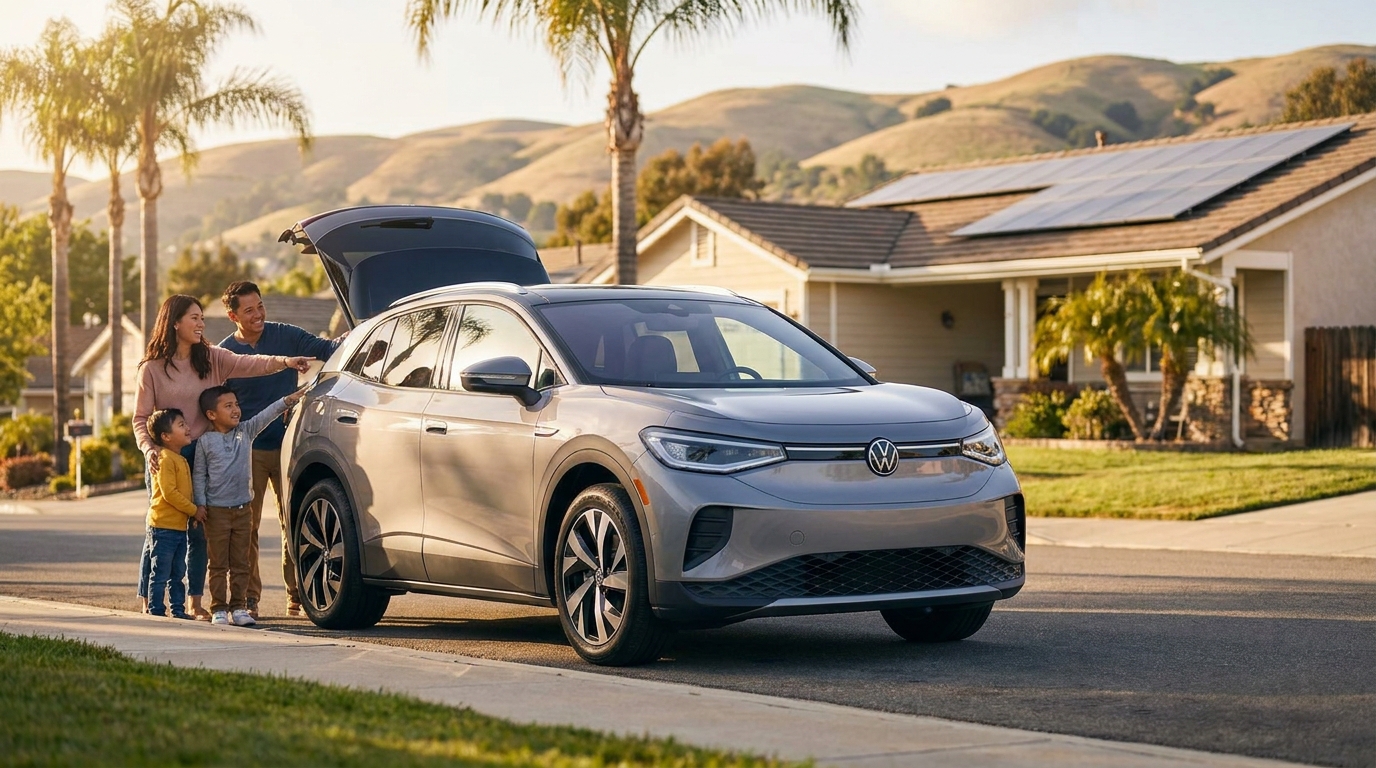
If you're a Sunnyvale parent shopping for an electric vehicle in 2026, safety probably sits at the top of your list — right alongside range and charging convenience. Between school runs to Cumberland and Cherry Chase Elementary, weekend drives over Highway 17 to Santa Cruz, and the daily crawl on 101 and 237, the car you choose is going to spend a lot of time carrying the people who matter most to you.
The good news: today's electric SUVs and crossovers are some of the safest passenger vehicles ever built. The harder question is which safety features actually matter for family driving in the South Bay — and which ones are mostly marketing. Here's how we think families should evaluate EV safety technology this year.
Why EV Safety Is Different (and Often Better)
Electric vehicles have a few structural advantages over gas-powered cars that show up directly in crash performance. Without a heavy combustion engine up front, EV designers have more room for crumple zones. The battery pack sits low in the floor, which lowers the center of gravity and dramatically reduces rollover risk — a meaningful factor for family SUVs.
That low, heavy battery also gives EVs excellent stability on the curvy, uphill stretches Bay Area families drive often, from Foothill Expressway up into Los Altos Hills to weekend trips on 280. For families who've previously driven taller gas SUVs, the difference in cornering composure is noticeable from the first test drive.
The Driver Assistance Features That Actually Matter
Modern EVs come loaded with acronyms — ADAS, AEB, LKA, BSM — and it's easy to glaze over. For family drivers in Sunnyvale, these are the systems we think are worth prioritizing:
Automatic Emergency Braking with Pedestrian Detection
This is the single most valuable safety feature in dense, walkable areas like downtown Sunnyvale around Murphy Avenue, the Caltrain station, and the school zones near Homestead High. AEB systems use forward radar and cameras to detect imminent collisions and apply the brakes if you don't. The pedestrian-detection upgrade — now standard on most new EVs — extends that protection to people stepping off curbs, which matters a great deal in family neighborhoods.
Blind Spot Monitoring and Rear Cross-Traffic Alert
If you've ever backed out of a packed lot at Sunnyvale Town Center on a Saturday afternoon, you understand the value of rear cross-traffic alert. It watches for approaching vehicles when you're reversing — exactly the scenario where kids in car seats limit your sightlines. Blind spot monitoring is equally useful on multi-lane stretches of El Camino Real and 101.
Lane-Keeping Assist and Adaptive Cruise Control
For commuters who spend real time on the freeway, adaptive cruise that handles stop-and-go traffic transforms the daily grind into something far less fatiguing. Tired drivers are unsafe drivers, and Bay Area congestion creates a lot of tired drivers. Lane-keeping assist works as a quiet backup when attention wavers.
360-Degree Camera Systems
Surround-view cameras have moved from luxury feature to family essential. Parking a family-sized EV in a tight Sunnyvale driveway or a compact spot at Whole Foods on Sunnyvale-Saratoga is genuinely easier with a top-down view. They also catch the soccer ball, scooter, or small child you couldn't otherwise see.
Family Electric SUV Safety: What to Look For in the Cabin
Crash test scores tell part of the story, but families should also evaluate the everyday safety design of the interior.
- LATCH anchor accessibility: If you use car seats, ask to install yours during the test drive. Some EVs have deeply buried anchors that turn a two-minute job into a frustration.
- Three full-size rear seating positions: Carpool duty is a fact of life in Sunnyvale. A flat floor (an EV advantage) and three real seatbelts matter more than a fold-down armrest.
- Rear occupant alert: Systems that remind you to check the back seat before locking the car have become standard on Volkswagen ID. models and many competitors. In California summers, this matters.
- Side curtain airbags that cover all three rows if you're shopping a three-row EV.
Volkswagen Safety Systems Worth Knowing About
Volkswagen bundles its driver assistance technology under the IQ.DRIVE name, and it's standard on the ID.4 — the brand's family-oriented electric SUV. The package includes adaptive cruise control, lane-keeping, blind spot monitoring, rear traffic alert, automatic emergency braking with pedestrian monitoring, and a travel assist feature that combines lane-centering with adaptive cruise for semi-automated highway driving.
The ID.4 has also earned strong third-party crash test recognition since its U.S. launch, and the structural design — with the battery pack acting as a reinforced floor — contributes to its rigidity in side-impact scenarios. For Sunnyvale families specifically, the ID.4's combination of size (compact enough for tight parking, roomy enough for car seats and Costco runs) tends to match how local families actually use a vehicle.
Battery Safety: The Question Every EV Parent Asks
Battery fires get headlines, but the data consistently shows EVs catch fire at significantly lower rates than gas vehicles. Still, families are right to ask how manufacturers protect the pack. Look for:
- Liquid thermal management (not just air cooling) for consistent battery temperature
- Reinforced battery casing with crash-absorbing structure around the pack
- Automatic high-voltage disconnect in the event of a collision
- Over-the-air software updates that can improve battery management over time
California's climate is generally kind to EV batteries — we don't see the extreme cold that shortens range elsewhere, and Sunnyvale's mild temperatures mean less thermal stress year-round. That's one underrated reason EVs have done so well in the South Bay.
FAQs: EV Safety for Sunnyvale Families
Are electric SUVs safer than gas SUVs for kids?
Generally yes, for two reasons: lower rollover risk due to the battery's low placement, and larger crumple zones because there's no engine block. Crash test results from IIHS and NHTSA on popular family EVs have been strong across the board.
What's the most important EV safety feature for new parents?
Automatic emergency braking with pedestrian detection, followed by a 360-degree camera and rear occupant alert. These three address the highest-frequency real-world risks for parents driving in mixed urban environments like Sunnyvale.
Do EVs handle Bay Area roads safely in the rain?
The low center of gravity gives EVs excellent wet-weather stability, and most include traction and stability control calibrated for instant electric torque. Tires matter more than powertrain here — make sure yours have healthy tread before the winter rains arrive.
How do I test these features before buying?
Ask your dealer for an extended test drive that includes freeway merging, a parking lot maneuver, and ideally a route past a school zone or busy crosswalk. Feeling how the systems behave is far more useful than reading the spec sheet.
Choosing the Right EV for Your Family
The safest EV for your family is the one whose features you understand, whose driving position fits you, and whose cabin works for your real-life routines — car seats, groceries, sports gear, and all. Spec sheets only get you so far; sitting in the vehicle, installing your own car seat, and driving familiar roads tells you more in twenty minutes than hours of online research.
Sunnyvale families who want to walk through these features in person — and compare how the ID.4 and other electric Volkswagens handle the specific roads and parking realities of the South Bay — can visit Sunnyvale Volkswagen at sunnyvalevw.com to schedule a test drive. The team there can demonstrate IQ.DRIVE features in real driving conditions and answer the safety questions specific to your family's situation, with the kind of unhurried, no-pressure approach reflected in their customer reviews.