VW Jetta vs Toyota Corolla: Which Sedan Makes More Sense to Buy in 2026?
Compare the 2026 VW Jetta vs Toyota Corolla on price, performance, space, and reliability — a Santa Clara buyer's guide to the smarter compact sedan.
For Santa Clara buyers cross-shopping compact sedans under $30,000, the decision almost always comes down to two nameplates: the 2026 Volkswagen Jetta and the 2026 Toyota Corolla. Both are competent, efficient, and well-equipped. But they represent meaningfully different philosophies — and the right answer depends on whether a buyer prioritizes driving character and interior space or long-term efficiency and resale value.
This comparison breaks down how the two sedans differ on the criteria that actually matter for daily driving between Silicon Valley commutes, weekend runs to Santana Row, and the occasional trip over the hill to the coast.
Pricing: Where the Corolla Opens the Door
The 2026 Toyota Corolla LE starts at $22,725, while the 2026 Volkswagen Jetta S opens at $23,995 — a gap of roughly $1,270 before destination charges, dealer fees, and any regional adjustments common to the Bay Area market. That's a real difference at the entry point, though not a decisive one once buyers move up the trim ladder or factor in Jetta incentives, which can narrow the gap on the dealer lot.
Both figures reflect national MSRPs and exclude destination charges, which apply to virtually every new car sold in Santa Clara. California sales tax, DMV fees, and any dealer-added items will land on top of either sticker. Buyers running the numbers should also remember that California taxes the full purchase price of a new vehicle — trade-in credit does not reduce the taxable amount here, unlike in many other states.
Engine, Torque, and How They Actually Drive
Under the hood is where the two cars diverge most clearly. The Jetta uses a 1.5-liter EA211 turbocharged inline-four producing 158 horsepower and 184 lb-ft of torque. The Corolla counters with a 2.0-liter naturally aspirated Dynamic Force inline-four rated at 169 horsepower and 151 lb-ft of torque.
The Corolla wins the horsepower line on the spec sheet. The Jetta wins where drivers feel it: 33 additional lb-ft of torque, delivered lower in the rev range thanks to the turbocharger. Independent testing from Car and Driver and MotorTrend puts the Jetta's 0–60 mph time at roughly 7.1 to 7.8 seconds, versus 8.3 to 8.9 seconds for the Corolla. On a Highway 101 on-ramp during commute hours, that difference is noticeable.
The Jetta also offers something the Corolla gas sedan simply does not: a 6-speed manual transmission alongside its standard 8-speed automatic. The Corolla is CVT-only on gas trims. For enthusiasts — and Santa Clara has plenty of them — that alone can settle the argument.
Fuel Economy for Bay Area Commuters
The Corolla LE returns an EPA-estimated 35 mpg combined (32 city / 41 highway). The Jetta comes in at 33 mpg combined (29 city / 40 highway) with its 8-speed automatic. That 2-mpg combined advantage isn't dramatic, but for a driver logging 15,000-plus miles a year between San Jose, Sunnyvale, and San Francisco, it adds up.
Buyers focused primarily on fuel savings should also weigh the Corolla Hybrid lineup, which is a separate powertrain family and not part of this gas-versus-gas comparison. The point stands: on efficiency alone, the Corolla is the more frugal choice among gas sedans.
Interior Space and Cargo
This is where the Jetta pulls decisively ahead. Volkswagen quotes up to 94.7 cubic feet of passenger volume for the Jetta, versus 88.6 cubic feet for the Corolla — roughly 6 additional cubic feet of usable cabin space. The Jetta is also about 4 inches longer overall and offers approximately 2.6 inches more rear legroom.
Trunk space follows the same pattern: 14.1 cubic feet in the Jetta versus 13.1 in the Corolla. That extra cubic foot handles a Costco run or an airport trip more comfortably. For families or drivers who regularly carry adult rear-seat passengers, the Jetta simply fits people better.
Warranty and Ownership Costs
The Jetta carries a 4-year / 50,000-mile New Vehicle Limited Warranty, plus 3-year / 36,000-mile Roadside Assistance and the VW Carefree Coverage and 3-year Safe & Secure plans. The Corolla's basic warranty is 3-year / 36,000-mile, though Toyota bundles in ToyotaCare — 2-year / 25,000-mile scheduled maintenance plus 2-year unlimited-mileage roadside assistance.
The Jetta's basic warranty runs a full year and 14,000 miles longer. Toyota's counter is complimentary scheduled maintenance during the first two years, which VW's standard coverage doesn't match in the same form. Neither approach is objectively better — it depends on whether a buyer values longer coverage or lower out-of-pocket maintenance early on.
Long-term, the Corolla has a well-earned reputation for reliability and strong resale value, and industry data suggests it typically incurs roughly $1,000 to $1,500 less in repair costs over a 6- to 8-year ownership window. In the competitive Bay Area used-car market, Corolla resale values remain notably firm.
Trim Structure
The Jetta offers four gas trims — S, Sport, SE, and SEL — plus the separate GLI Autobahn performance model, which produces 228 horsepower. The Corolla runs three gas trims (LE, SE, XSE) alongside three hybrid trims (Hybrid LE, Hybrid SE, Hybrid XLE). Buyers who want a genuine performance variant of a compact sedan will find it in the GLI; there is no direct Corolla equivalent among the gas trims.
Which Sedan Makes More Sense for Santa Clara Buyers?
The honest answer is that both cars deserve their reputations, and the right pick depends on the buyer's priorities:
- Choose the 2026 Toyota Corolla if the priorities are lowest entry price, best combined fuel economy, and the strongest historical resale value.
- Choose the 2026 Volkswagen Jetta if the priorities are quicker acceleration, more rear-seat and trunk space, a longer basic warranty, a more refined interior feel, and the option of a manual transmission.
For many Santa Clara buyers — particularly those commuting daily on 101, 280, or Lawrence Expressway and carrying passengers or cargo regularly — the Jetta's torque, space, and warranty coverage tend to earn it the nod once buyers spend time in both cars back-to-back.
Frequently Asked Questions
Is the VW Jetta more expensive to maintain than the Corolla?
Historically, yes. Industry data suggests Corolla owners typically spend roughly $1,000 to $1,500 less on repairs over 6 to 8 years. That said, the Jetta's longer 4-year / 50,000-mile basic warranty offsets some of that early-ownership risk.
Does the 2026 Jetta still come with a manual transmission?
Yes. The 2026 Jetta remains available with a 6-speed manual in addition to its 8-speed automatic — a rarity in the compact sedan segment. The Corolla gas sedan uses a CVT exclusively.
How much bigger is the Jetta's interior?
The Jetta offers roughly 6 more cubic feet of passenger volume (94.7 vs 88.6), about 2.6 inches more rear legroom, and 1 additional cubic foot of trunk space (14.1 vs 13.1).
Which sedan is quicker?
The Jetta, by roughly a full second to 60 mph in independent testing — about 7.1–7.8 seconds versus 8.3–8.9 for the Corolla — thanks to its turbocharged torque advantage.
The Bottom Line
The Corolla is the safer, cheaper, more efficient pick. The Jetta is the roomier, quicker, more engaging one with a stronger factory warranty. Neither is a wrong answer under $30,000, but they solve different problems.
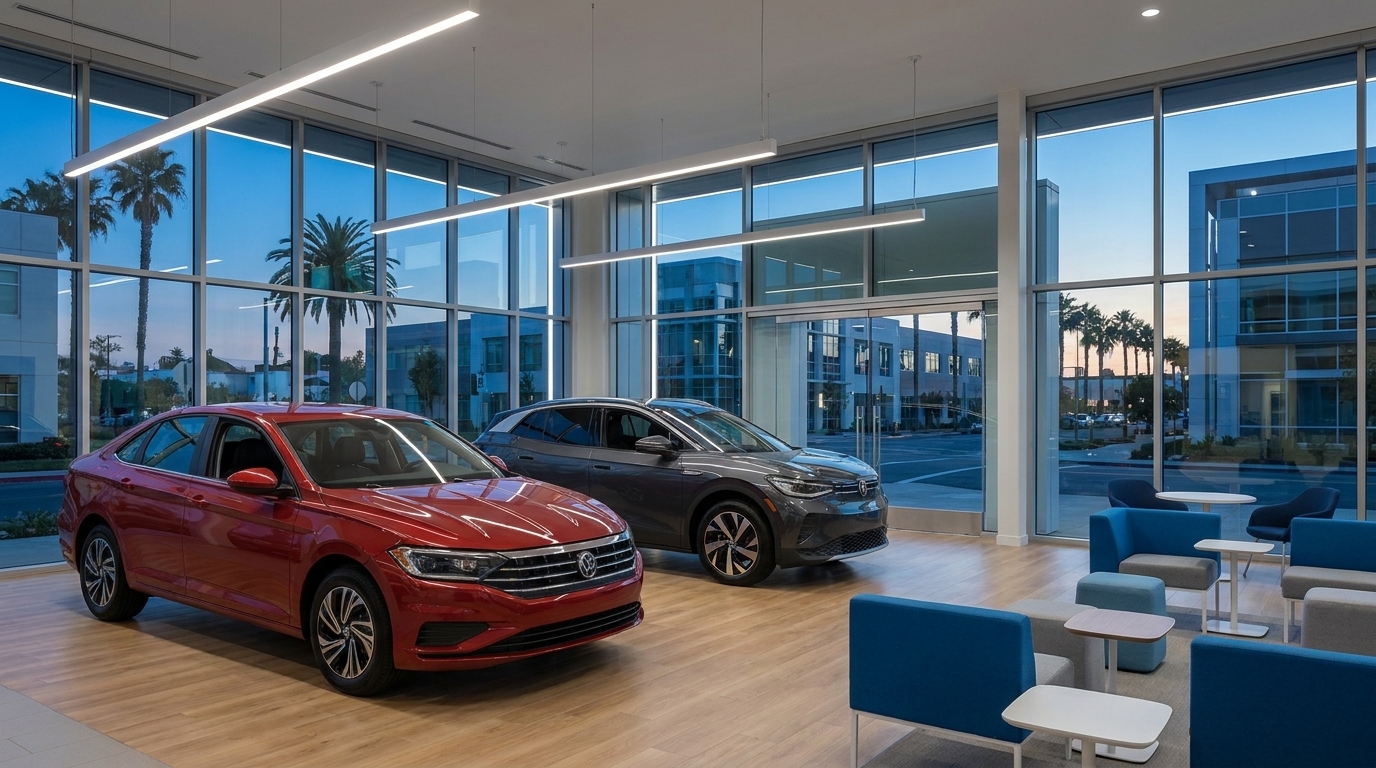
Santa Clara drivers who want to see how a 2026 Jetta compares in person — including the GLI Autobahn and the manual-transmission trims — can browse current inventory and configure a test drive with Sunnyvale Volkswagen at https://www.sunnyvalevw.com/. Cross-shopping both cars at the dealer stage, with real transaction pricing in hand, is the most reliable way to settle the debate for any given buyer.