Volkswagen Atlas vs Toyota Highlander: Which SUV Is Worth It in 2026?
A spec-by-spec comparison of the 2026 VW Atlas and 2026 Toyota Highlander — pricing, cargo, fuel economy, and what matters for Santa Clara families.
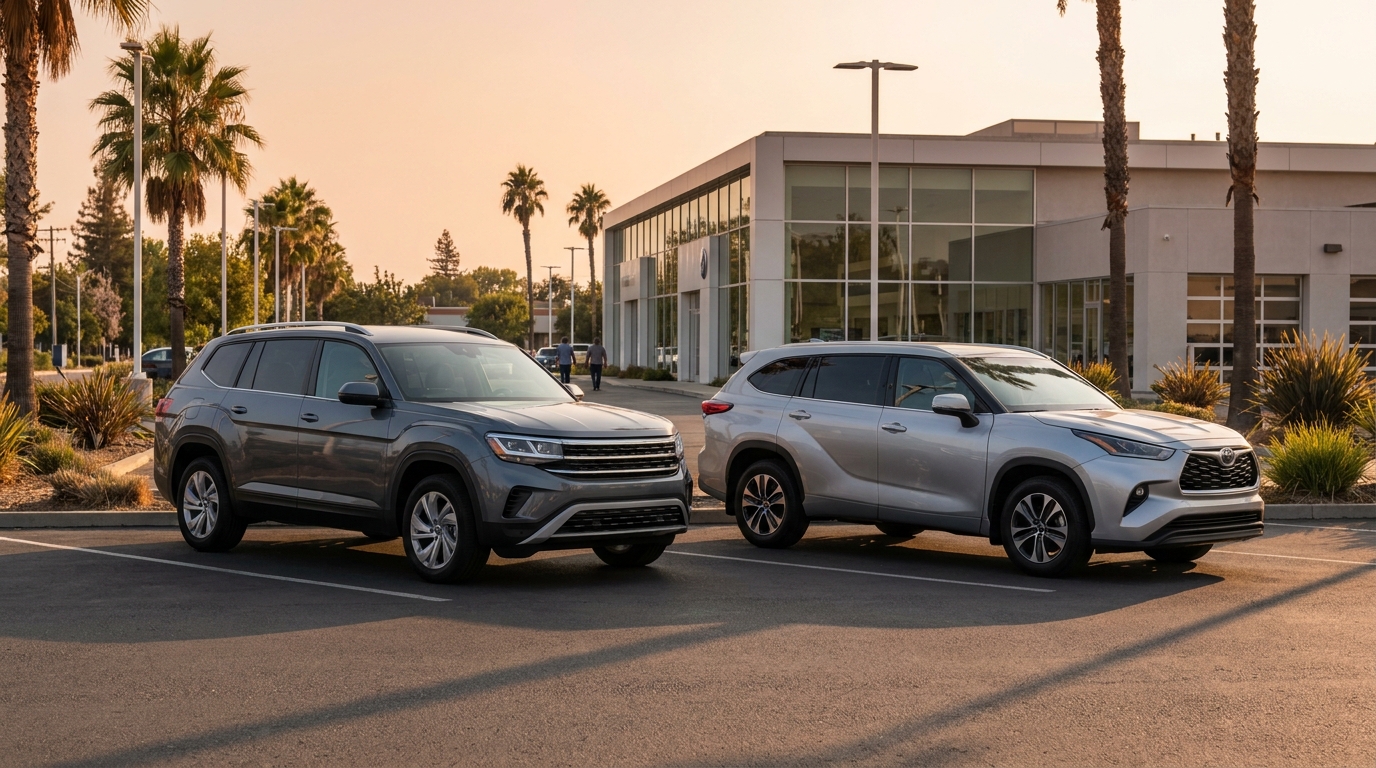
Families cross-shopping three-row SUVs in Santa Clara almost inevitably end up comparing the 2026 Volkswagen Atlas and the 2026 Toyota Highlander. Both are established midsize three-row nameplates, both seat seven or more, both are rated to tow 5,000 pounds in their gas configurations, and both target the same suburban buyer running kids between Rivermark, Central Park, and youth sports on the weekends. The differences show up in price, packaging, and powertrain philosophy — and those differences matter more than the surface similarities suggest.
Pricing: Where the Atlas Opens a Clear Gap
The 2026 Volkswagen Atlas starts at $39,310, while the 2026 Toyota Highlander starts at $45,270 — a difference of roughly $5,960 at base trim. That gap is significant in a segment where buyers often stretch to reach a well-equipped example. For a Santa Clara family financing over 60 or 72 months, the Atlas's lower starting point leaves meaningful room in the budget for the SE with Technology or Peak Edition trims without exceeding the Highlander's entry price.
One caveat worth surfacing early: Toyota had not published a consolidated 2026 Highlander MSRP grid at the time of research, and the $45,270 figure comes from third-party pricing data rather than a primary Toyota document. Highlander Hybrid trims run higher still, with the Hybrid XLE, Limited, and Platinum landing in the $49,000–$56,800 range according to Kelley Blue Book. Neither manufacturer publishes a Santa Clara–specific MSRP, so out-the-door pricing in the South Bay will vary with destination charges, dealer add-ons, and any regional incentives in play.
Fuel Economy: Highlander Wins, Especially as a Hybrid
Bay Area commuting is where the Highlander's efficiency story earns its keep. The gas Highlander is rated at 24 mpg combined, edging the Atlas's 21–23 mpg combined range (23 mpg for the SE FWD, 22 mpg for SE AWD, and 21 mpg for the upper AWD trims). The gap widens dramatically with the Highlander Hybrid, which is rated up to 36 mpg combined per manufacturer estimates.
For a driver commuting from Santa Clara up 101 toward San Francisco or over to the East Bay, the Hybrid's roughly 12–13 mpg advantage over an AWD Atlas translates into real annual fuel savings, particularly given California gas prices. The Atlas does not offer a hybrid variant, which is the single biggest structural gap between the two vehicles for efficiency-minded buyers.
Space and Cargo: The Atlas's Structural Advantage
The Atlas is the larger vehicle in almost every dimension that matters to a family. Volkswagen lists 96.6 cubic feet of maximum cargo capacity, with 20.6 cubic feet behind the third row and 55.5 cubic feet behind the second row. The Highlander comes in around 84 cubic feet maximum, with roughly 16 cubic feet behind the third row and 48 cubic feet behind the second row.
That's roughly 12–13 additional cubic feet of total cargo space in the Atlas, and — perhaps more importantly — meaningfully more usable room behind the third row when it's in use. For families using the third row regularly for carpools or Sunday trips to Great America, the Atlas's third row is generally considered more accommodating for adults and teens, and the cargo well behind it swallows more gear.
Seating layouts diverge slightly: the Atlas is a seven-passenger vehicle standard, with an optional six-passenger configuration featuring second-row captain's chairs. The Highlander offers seven or eight passengers depending on whether buyers select captain's chairs or a second-row bench. If maximum headcount matters, the Highlander's eight-seat configuration is the only way to get there between these two.
Powertrain and Towing
Under the hood, the Atlas runs a turbocharged 2.0L TSI inline-four producing 269 horsepower and 273 lb-ft of torque. The gas Highlander uses a 2.4L turbocharged four making 265 horsepower and a stronger 310 lb-ft of torque. The Highlander Hybrid produces 243 combined horsepower from its 2.5L hybrid system.
Horsepower is effectively a wash between the two gas models, but the Highlander's torque advantage is noticeable in low-speed pulls and merging situations. Both gas vehicles are rated to tow up to 5,000 pounds — enough for most boats, small campers, or utility trailers common in the South Bay. The Highlander Hybrid is limited to 3,500 pounds, which is a real consideration for buyers who need towing capacity along with fuel economy.
Drivetrain: A Structural Difference for Bay Area Weather
Every 2026 Highlander gas trim comes with AWD standard, and the Hybrid trims are AWD as well. The Atlas SE starts as front-wheel drive, with 4MOTION AWD available or standard on upper trims. For most Santa Clara driving — dry roads, urban commuting, occasional trips over 17 to Santa Cruz or up to Tahoe in winter — either drivetrain handles daily conditions. Buyers who want AWD without stepping up trim levels will find the Highlander's standard configuration simpler.
Warranty Coverage
Warranty is one of the areas where the Atlas actually pulls ahead. Volkswagen provides a 4-year/50,000-mile New Vehicle Limited Warranty and includes 2-year/20,000-mile scheduled maintenance under its Carefree Coverage program, plus a 3-year Safe & Secure connected services plan. Toyota's Highlander carries a 3-year/36,000-mile basic warranty and a 5-year/60,000-mile powertrain warranty, and the Hybrid adds an 8-year/100,000-mile hybrid system warranty with a 10-year/150,000-mile hybrid battery warranty.
The practical read: the Atlas has stronger coverage during the first three to four years of ownership and includes maintenance the Highlander buyer will pay for out of pocket. The Highlander Hybrid, however, has industry-leading long-term battery protection that matters if buyers plan to keep the vehicle a decade or more.
Which SUV Is Worth It for Santa Clara Buyers?
The honest answer depends on which tradeoff matters more.
- Choose the Atlas if: maximum interior space, a lower starting price, standard maintenance coverage, and a more usable third row are priorities. It's the better value on a dollars-per-cubic-foot basis and the more accommodating family hauler.
- Choose the Highlander if: hybrid efficiency is essential, standard AWD across all gas trims matters, or an eight-passenger configuration is required. The Hybrid is the standout choice for pure commuting economics in the Bay Area.
Neither vehicle is objectively "better" — they're built around different priorities. The Atlas is a space-and-value proposition; the Highlander is an efficiency-and-brand-continuity proposition. Santa Clara buyers who spend most of their miles inside the 880/101/280 triangle and want the flexibility of a genuine seven-seater with room for cargo will find the Atlas easier to live with. Buyers focused on fuel bills or long-haul commuting north will find the Highlander Hybrid hard to ignore.
Frequently Asked Questions
Is the Volkswagen Atlas bigger than the Toyota Highlander?
Yes. The 2026 Atlas offers 96.6 cubic feet of maximum cargo capacity compared with roughly 84 cubic feet in the Highlander, along with more room behind both the second and third rows.
Does the Volkswagen Atlas come as a hybrid?
No. The 2026 Atlas is offered only with a turbocharged 2.0L gas engine. Buyers who want a hybrid three-row from these two nameplates need to consider the Highlander Hybrid, which is rated up to 36 mpg combined.
Which SUV holds more people?
The Highlander can seat up to eight with a second-row bench. The Atlas seats seven standard, with an optional six-passenger captain's-chair layout.
Are both SUVs available with all-wheel drive?
Yes, but configured differently. Every 2026 Highlander gas trim comes with AWD standard. The Atlas offers FWD on the base SE and 4MOTION AWD on higher trims.
The Bottom Line
Both the 2026 Atlas and the 2026 Highlander deserve a spot on any Santa Clara family's shortlist. The Atlas wins on price, cargo, and warranty; the Highlander wins on fuel economy, hybrid availability, and standard AWD. The right choice depends on how the vehicle will actually be used — not on badge preference. Santa Clara shoppers who want to see the Atlas lineup in person, compare trims side by side, or talk through financing on a specific configuration can reach Sunnyvale Volkswagen at https://www.sunnyvalevw.com/ to schedule a test drive or request a quote.