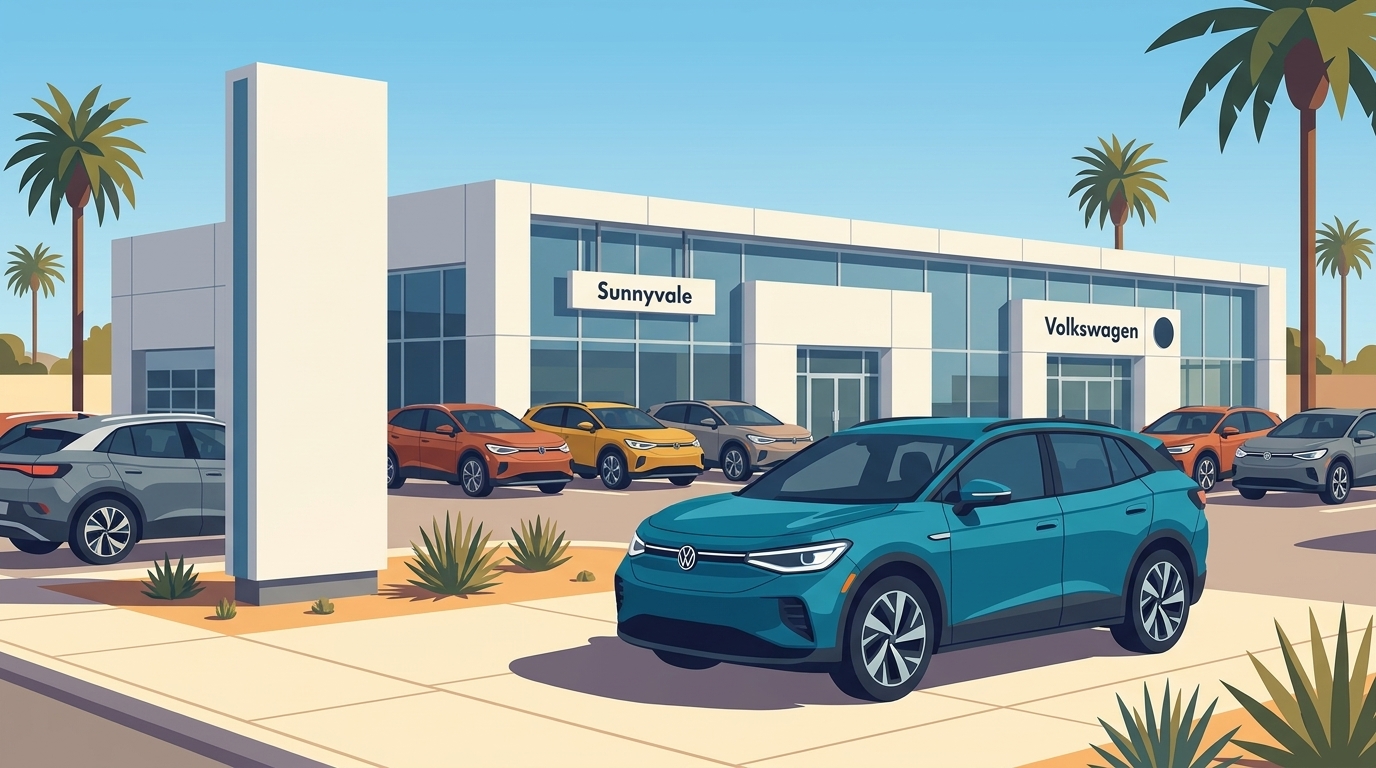
How to Get the Lowest Car Financing Rate in San Jose
A practical 2026 guide to securing the lowest car financing rate in San Jose — credit unions vs. dealer financing, California disclosure rules, and rate-shopping tactics.

Car shoppers in San Jose face one of the most expensive vehicle markets in the country, and the difference between a competitive auto loan and a mediocre one can quietly cost a buyer thousands of dollars over a typical five- or six-year term. Securing the lowest rate is rarely about luck — it's about preparation, knowing which lenders actually compete in this market, and understanding the California-specific rules that govern how financing must be disclosed before a contract is signed.
This guide walks through the rate-shopping process for San Jose buyers in 2026, with attention to local lending dynamics, the regulatory framework, and how to read a dealer's financing offer with a critical eye.
Start With Your Credit Profile Before You Shop
The single biggest determinant of an auto loan rate is the borrower's credit score, and any rate comparison done without first knowing that score is essentially guesswork. Buyers should pull their credit reports from all three bureaus and review them for errors at least 30 to 60 days before walking into a showroom in Stevens Creek, Capitol Expressway, or anywhere else in Santa Clara County.
The reason for the lead time is practical: disputing an error, paying down a credit card balance to lower utilization, or resolving a small collection account can shift a borrower from one rate tier to the next. In a market where Bay Area vehicle prices run high, moving from a 7.9% rate to a 5.9% rate on a $40,000 loan saves real money over the life of the contract.
Get Pre-Approved Before Negotiating
The most reliable way to know whether a dealer's financing offer is competitive is to walk in with a pre-approval already in hand. A pre-approval establishes a benchmark rate that the dealer must beat — or at least match — to win the financing portion of the deal.
San Jose buyers typically have three categories of lenders worth comparing:
- Local and regional credit unions. Credit unions with a Bay Area footprint frequently offer some of the most competitive auto loan rates available to qualified members, particularly for buyers with strong credit. Membership often requires living, working, or worshiping in Santa Clara County, which most San Jose residents already satisfy.
- National banks and online lenders. Large banks and direct online auto lenders provide quick pre-approvals and rate locks, useful as a floor for negotiation.
- Dealer-arranged (indirect) financing. Dealers source rates from a network of lenders and can sometimes beat outside pre-approvals, especially when manufacturer-subsidized rates are available on specific models.
Dealer Financing vs. Credit Union: How They Actually Compare in San Jose
The conventional wisdom that credit unions always beat dealer financing is incomplete. Credit unions tend to win on rate for buyers with prime and super-prime credit on used vehicles or vehicles outside of a manufacturer promotion. Dealer financing tends to win when a captive lender — Volkswagen Credit, for example — is running a subvented APR on a specific new model, which can dip well below what any outside lender offers.
The practical move is to do both. Secure a credit union pre-approval, then let the dealer try to beat it. Under California's Rees-Levering Motor Vehicle Sales and Finance Act (Civil Code § 2981 et seq.), any conditional sale contract must disclose the APR, finance charge, total of payments, and full payment schedule in writing — which means a buyer can compare the dealer's offer against the credit union pre-approval line by line, without having to take anyone's word for it.
Understand Dealer Reserve and How It Affects Your Rate
When a dealer arranges financing through an indirect lender, the lender quotes a "buy rate," and the dealer is generally permitted to mark that rate up before presenting it to the buyer. That markup is known as dealer reserve, and it is one of the largest single sources of avoidable cost in auto financing.
California does not have a single explicit dealer reserve statute, but Rees-Levering requires that the APR shown on the contract reflect the actual rate the buyer is being charged, and the California Financing Law (Financial Code § 22000 et seq.), administered by the DFPI, prohibits misrepresentations and deceptive acts in connection with brokering loans. A buyer who arrives with a competing pre-approval gives the dealer a strong reason to reduce or eliminate the reserve markup to keep the deal.
New California Disclosure Rules Taking Effect October 1, 2026
San Jose buyers shopping in late 2026 should know that, takes effect October 1, 2026, and meaningfully changes how dealers must present pricing and add-ons.
Key provisions buyers can use to their advantage:
- Dealers must disclose a clear and conspicuous "Total Price" in any advertisement referencing a specific vehicle and in the first communication with a consumer.
- Any optional add-on — service contracts, GAP, nitrogen tire packages — must be clearly disclosed as optional, and the dealer must inform the buyer the vehicle can be purchased without it.
- Dealers are prohibited from charging for add-on products that provide no benefit, including nitrogen-filled tire products that are less than 95% nitrogen purity and oil change packages sold for electric vehicles.
- Used vehicle purchasers receive a three-day cooling-off right to cancel the purchase contract. This right does not apply to new vehicle purchases.
These rules don't directly set interest rates, but they make it harder for unnecessary add-ons to inflate the amount financed — which is the figure the APR is applied to.
Rate-Shopping Tactics That Actually Work
Several specific behaviors tend to produce the lowest realized rate:
- Compress rate shopping into a two-week window. Credit scoring models generally treat multiple auto loan inquiries within a short window as a single inquiry, so applying to several lenders in quick succession protects the score.
- Negotiate the vehicle price first, financing second. A lower out-the-door price reduces the amount financed regardless of rate.
- Watch the term length. Longer terms lower the monthly payment but typically carry higher rates and far more total interest. A 60-month loan almost always costs less in total than a 72- or 84-month loan on the same vehicle.
- Read the contract before signing. Every disclosure required by Rees-Levering — cash price, down payment, amount financed, finance charge, APR, total of payments, and itemization of official fees — is on the contract. Buyers should verify each figure matches what was agreed verbally.
Frequently Asked Questions
Is dealer financing or a credit union better in San Jose?
It depends on the vehicle and the buyer's credit. Credit unions often win on used vehicles and standard new vehicle purchases for buyers with strong credit. Dealer financing can win when a manufacturer is offering a subvented promotional APR on a specific model. Comparing both is the only reliable way to know.
Does California give car buyers a cooling-off period?
Effective October 1, 2026, the California CARS Act grants a three-day cooling-off right for used vehicle purchases. This right does not apply to new vehicle purchases.
What disclosures must appear on a California auto finance contract?
Under Rees-Levering, the contract must disclose cash price, down payment, amount financed, finance charge, APR, total of payments, the payment schedule, itemization of official fees, any insurance or add-on charges rolled into financing, and late charge provisions — all in writing.
Can a dealer mark up my interest rate without telling me?
The APR on the contract must reflect the rate the buyer is actually being charged, including any dealer reserve. The buy rate from the lender is generally not separately disclosed, which is why arriving with an outside pre-approval is the most effective check on markup.
Putting It Together
The lowest rate in San Jose goes to buyers who treat financing as a separate negotiation from vehicle selection, who arrive with a credit union or bank pre-approval in hand, and who read the Rees-Levering disclosures on the contract carefully before signing. The new CARS Act protections taking effect October 1, 2026 add another layer of transparency, particularly around Total Price and optional add-ons.
Buyers in the San Jose area who want to compare a dealer-arranged financing offer against an outside pre-approval — particularly on a Volkswagen, where captive-lender promotional rates sometimes change the math — can review current options with the finance team at Sunnyvale Volkswagen at https://www.sunnyvalevw.com/.