How to Buy a Used Car in Sunnyvale: Local Dealer vs Private Party
Comparing local dealers vs private party used car sales in Sunnyvale? This guide breaks down costs, risks, and what buyers should know before deciding.
How to Buy a Used Car in Sunnyvale: Local Dealer vs Private Party
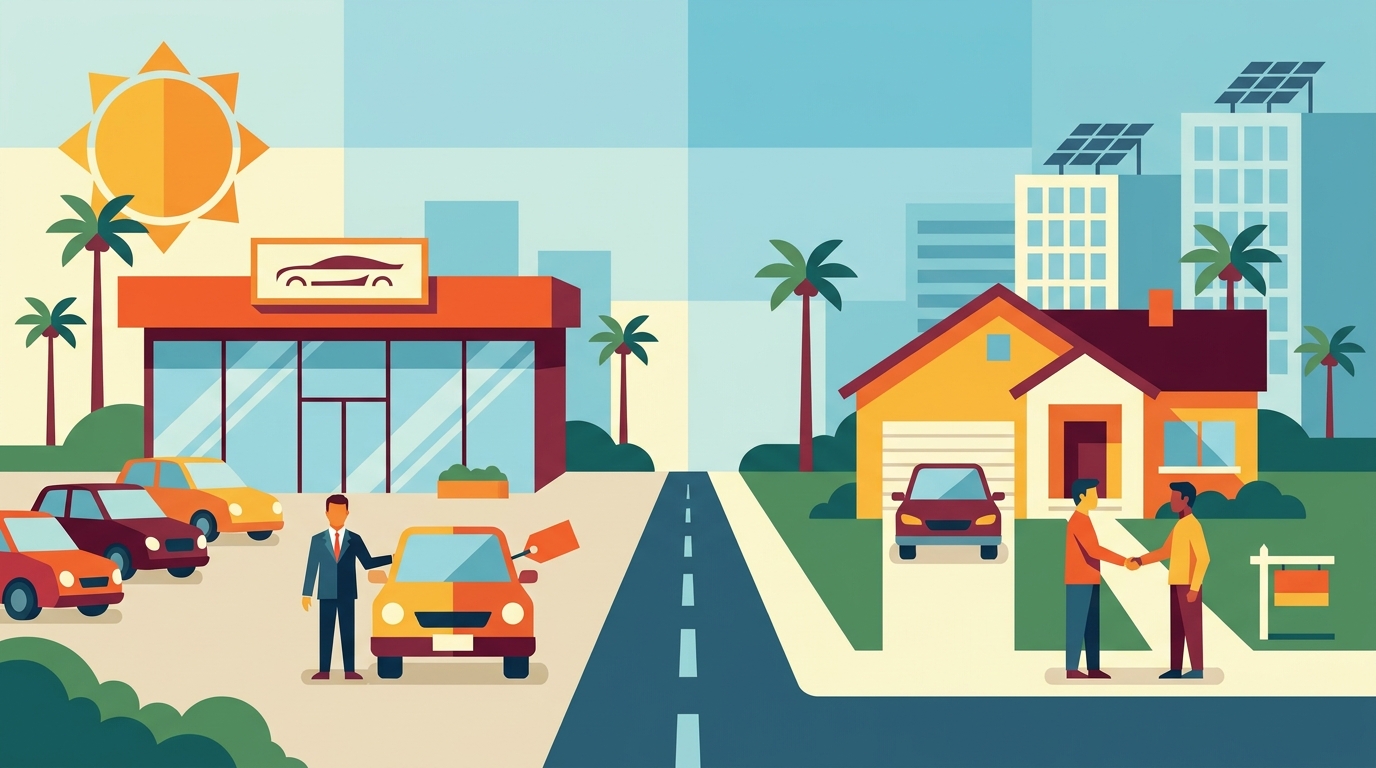
Buying a used car in Sunnyvale comes down to a fundamental choice: purchase from a licensed dealership or buy directly from a private seller. Both paths can lead to a solid vehicle at a fair price — but they carry meaningfully different levels of risk, convenience, and long-term protection. Understanding those differences before stepping onto a lot or responding to a Craigslist listing can save buyers thousands of dollars and weeks of frustration.
The used car market in the Bay Area remains competitive in 2026, with average used vehicle prices elevated compared to pre-pandemic norms. That makes it more important than ever to approach the purchase with a clear framework — not just a budget.
The Core Difference: Protection vs Price
The single biggest distinction between buying from a used car dealer in Sunnyvale and buying from a private party is the layer of consumer protection that comes with a licensed dealership. Dealers are regulated by the California Department of Motor Vehicles, required to provide a completed title transfer, and obligated to disclose known defects under California law. Private sellers face far looser requirements.
Private party transactions can, in theory, offer lower sticker prices — sellers aren't carrying the overhead costs of a lot, staff, or reconditioning program. But that cost difference often narrows or disappears once buyers factor in inspection fees, registration processing, and the absence of any warranty coverage. A vehicle sold "as-is" by a private seller in Sunnyvale means exactly that.
Buying From a Used Car Dealer in Sunnyvale: What to Expect
Vehicle Preparation and Transparency
Reputable Sunnyvale auto dealers put used vehicles through a multi-point inspection before listing them for sale. This process — often called a pre-owned certification or reconditioning inspection — identifies mechanical issues, addresses safety concerns, and gives buyers a documented baseline for the vehicle's condition. Many dealers provide Carfax or AutoCheck vehicle history reports as a standard part of the sale.
Buyers are legally entitled to request the vehicle history and inspection records before signing anything. Any dealer unwilling to provide that documentation should be treated as a red flag.
Financing and Title Processing
One practical advantage of working with a dealership is the ability to arrange financing on-site. Sunnyvale auto dealers typically work with multiple lenders, which means buyers with varying credit profiles can often secure a rate without visiting a bank separately. The dealership also handles title transfer and DMV registration paperwork — a process that's straightforward in concept but time-consuming in practice when done independently.
For buyers who haven't financed a vehicle before, having a finance manager walk through the contract terms can be genuinely useful — provided they ask questions and review all line items carefully before signing.
Warranty and Post-Sale Support
Dealerships offer warranty coverage that private sellers simply cannot. Options range from manufacturer certified pre-owned (CPO) warranties on eligible vehicles to dealer-backed limited warranties and third-party extended service contracts. For buyers planning to keep a vehicle for several years, this coverage represents real financial protection — not just a sales feature.
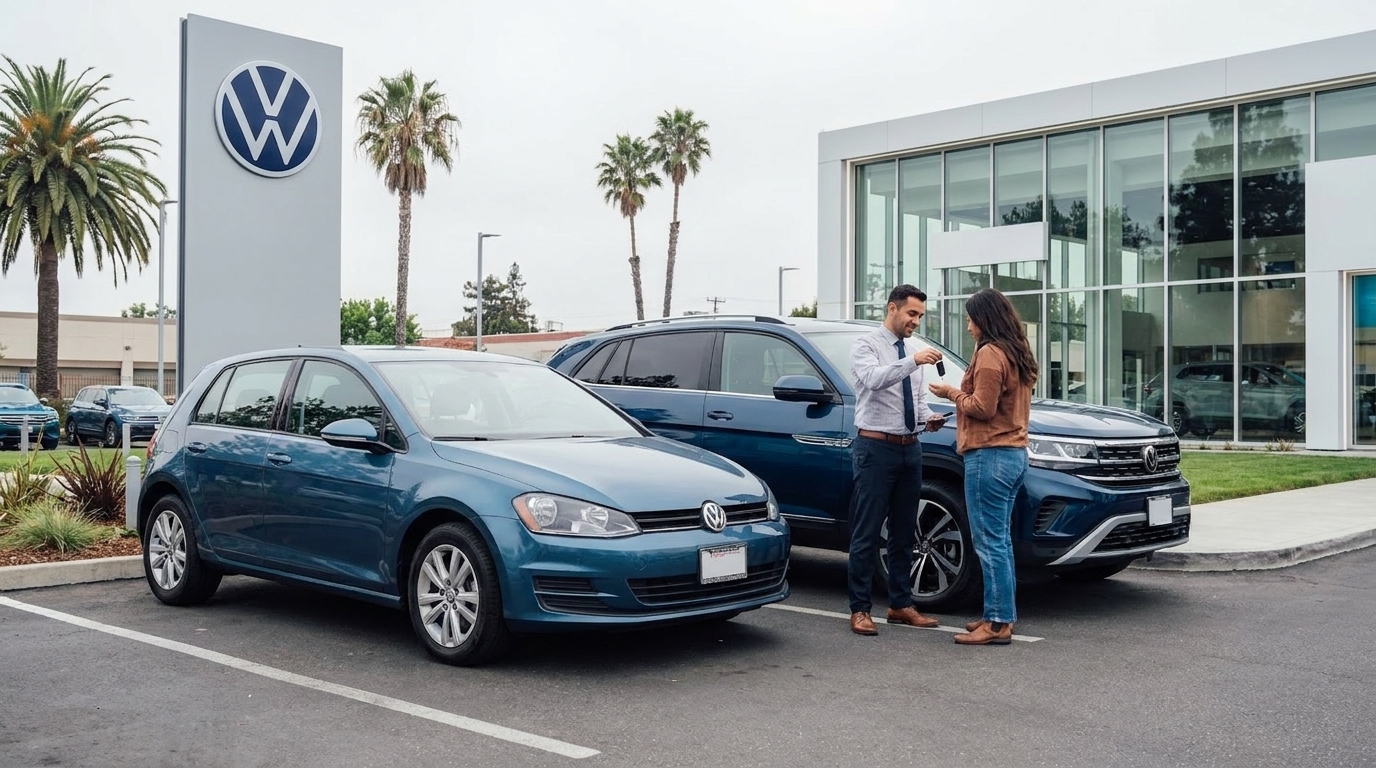
Sunnyvale Volkswagen, for example, offers a used vehicle inventory alongside its certified pre-owned VW lineup, with a service department on-site that can support buyers after the sale. Customers who have gone through the process there consistently highlight the absence of pressure tactics and the transparency around pricing — one customer wrote that a sales representative was "the only sales representative to give me a complete breakdown of the cost," noting they had visited multiple dealerships before finding that level of clarity. That kind of straightforward transaction is what buyers should expect from any dealership they work with.
Buying From a Private Party in Sunnyvale: The Real Tradeoffs
Potential Savings — and Their Limits
Private party vehicles listed on platforms like Facebook Marketplace, Craigslist, or AutoTrader can sometimes be priced below dealer retail. Sellers motivated by a quick sale, a move, or a vehicle they no longer need may negotiate aggressively. For buyers willing to do the research legwork themselves, this can be a real advantage.
However, that savings potential requires the buyer to absorb all the due diligence costs. A pre-purchase inspection from an independent mechanic in Sunnyvale typically runs $100–$200 as of 2026. A Carfax report adds another $40–$50. If the vehicle needs repairs not disclosed by the seller, the buyer has limited legal recourse — and pursuing it in small claims court is time-consuming and uncertain.
Title and Transfer Risks
Private party sales in California require the seller to sign over the title, and the buyer must register the vehicle with the DMV within a defined window. Complications arise when the title is lost, when there's a lienholder that hasn't been paid off, or when the seller's name doesn't match the title. These situations are not uncommon — and they can delay or derail the purchase entirely.
Buyers should run a title search and confirm the VIN matches across all documents before handing over any payment. Cashier's checks and secure payment platforms are strongly recommended; cash transactions with strangers carry obvious risks.
No Recourse After the Sale
California's "as-is" doctrine applies firmly to private party vehicle sales. If a transmission fails a week after purchase, or an undisclosed accident appears on a late-running history report, the buyer generally has no practical remedy unless they can prove fraud — which is a high legal bar. This is the single largest risk private party buyers accept, and it's one that's easy to underestimate when a vehicle looks clean and drives well on a test drive.
Side-by-Side Comparison: Dealer vs Private Party
- Vehicle History Disclosure: Dealers are required to provide this; private sellers are not obligated to volunteer it.
- Inspection Standards: Dealerships conduct multi-point inspections; private party vehicles are sold in whatever condition the seller chooses to present them.
- Warranty Coverage: Available through dealers (CPO or limited); not available from private sellers.
- Financing Options: Dealerships offer in-house financing through multiple lenders; private sales require buyers to arrange their own financing in advance.
- Title Transfer Complexity: Dealerships manage paperwork; private party buyers handle the process independently.
- Price Negotiability: Both paths allow negotiation, though private sellers may have more flexibility on price in some cases.
- Post-Sale Support: Dealerships with service departments provide ongoing support; private party transactions end at the point of sale.
What Buyers in Sunnyvale Should Prioritize
The right choice depends on the buyer's risk tolerance, mechanical knowledge, and how much time they're willing to invest in the process. Buyers who are comfortable inspecting vehicles independently, have secured their own financing, and are purchasing a lower-priced car may find private party transactions worthwhile. The math can work — if the vehicle is exactly what it appears to be.
Buyers who want a cleaner process, documented vehicle history, warranty protection, and financing support will generally find better value working with a reputable dealership. That's not a reflexive endorsement of every dealership — the quality of the experience varies considerably. What matters is choosing a dealer who operates transparently, doesn't layer in undisclosed fees, and has a verifiable track record with real customers.
Sunnyvale Volkswagen holds a 4.4-star rating across more than 1,455 Google reviews, with buyers frequently describing the purchasing process as pressure-free and straightforward. One customer wrote that their sales representative was "professional, friendly, and genuinely focused on helping me find the right vehicle" and "never pressured me into making a decision" — the kind of experience that reflects what buyers should look for in any dealership they consider.
Frequently Asked Questions
Is it cheaper to buy a used car from a private party than from a dealer in Sunnyvale?
Not necessarily. Private party vehicles are often listed below dealer retail, but buyers must independently cover inspection fees, title processing, and any post-sale repairs. When those costs are factored in, the price difference frequently narrows. Dealers also offer financing, which private sellers do not — and favorable loan terms can offset a slightly higher purchase price.
What should buyers check before purchasing a used car from a private seller?
Buyers should request a vehicle history report (Carfax or AutoCheck), pay for an independent pre-purchase inspection from a licensed mechanic, verify the title is clear and in the seller's name, and confirm the VIN matches across all documentation. Payment should be made via cashier's check or a verified electronic transfer — never cash for a high-value vehicle transaction.
Do used car dealers in Sunnyvale offer warranties on non-certified vehicles?
Many dealerships offer limited dealer warranties on used vehicles that don't qualify for manufacturer CPO certification. The terms vary — typically covering drivetrain components for 30 to 90 days. Buyers should ask specifically what is and isn't covered, get the terms in writing, and understand the claims process before signing the purchase agreement.
Can buyers negotiate price at a Sunnyvale dealership the same way they can with a private seller?
Yes. Used vehicle prices at dealerships are generally negotiable, particularly on vehicles that have been on the lot for an extended period. Buyers who have done market research using tools like Kelley Blue Book or Edmunds are in a stronger position to negotiate. Dealers also have more flexibility on financing terms, trade-in value, and added features than private sellers, which creates additional negotiating levers.
What paperwork is required when buying a used car in California?
For a dealership purchase, the dealer manages most of the paperwork, including the DMV registration application, title transfer, and smog certification (if required). For a private party transaction, the buyer and seller must complete a Release of Liability, the buyer must submit a Title Transfer application to the California DMV within 10 days of purchase, and the buyer is responsible for smog compliance.
How do I know if a Sunnyvale used car dealer is trustworthy before I visit?
Check Google and Yelp reviews for volume and recency — a dealership with hundreds of recent reviews gives a more reliable signal than one with a handful. Look specifically for comments about hidden fees, pressure tactics, and post-sale support. Verify the dealership holds a valid California DMV dealer license. Consistent praise for transparency and a pressure-free process are the strongest indicators of a trustworthy operation.
Is buying a used car from a private seller in Sunnyvale safe if I use an escrow service?
An escrow service reduces payment fraud risk but does not protect against undisclosed mechanical problems, title complications, or post-sale defects. It is a useful tool for high-value private party transactions, but it should be combined with — not substituted for — an independent pre-purchase inspection and a clean title verification. Escrow protects the money transfer; it does not protect the purchase itself.
The Bottom Line
For most buyers in Sunnyvale, purchasing a used vehicle through a licensed dealership offers a more predictable, protected experience than the private party route — particularly when buying a vehicle valued above $15,000. The key is choosing a dealership that operates with genuine transparency: no hidden fees, documented vehicle history, clear warranty terms, and staff who treat the transaction as a long-term relationship rather than a one-time close.
Buyers in Sunnyvale who want to explore certified pre-owned and used vehicle inventory with that kind of straightforward approach can visit Sunnyvale Volkswagen at sunnyvalevw.com — a useful starting point for understanding current inventory, pricing, and available financing options before making a final decision.