Dealership Financing vs Bank in Sunnyvale, CA (2026)
Compare dealer financing and outside bank loans in California: APR, disclosures, CARS Act rules, and how to walk in pre-approved without losing leverage.

For most California buyers, the smartest move is to secure a bank or credit union pre-approval before visiting the dealership, then let the dealer try to beat it. Dealer financing is often competitive — sometimes better, thanks to manufacturer subvention — but arriving with an outside loan in hand gives buyers a hard number to negotiate against and protects against markup on the finance rate. Both paths are legal, regulated, and legitimate; the difference is leverage.
What's the core difference between dealership financing and a bank loan in California?
Dealership financing is a retail installment sale contract arranged by the dealer and typically assigned to a lender, governed by California's Rees-Levering Automobile Sales Finance Act (Civil Code §§ 2981–2984.6). A bank or credit union loan is a direct loan between the buyer and lender, governed primarily by federal Truth in Lending and California credit statutes. The vehicle purchase and the financing are separate transactions.
That legal distinction matters. When the dealer arranges financing, Rees-Levering and the Car Buyer's Bill of Rights kick in — mandating specific disclosures on the contract itself. When a buyer walks in with a check from their credit union, the dealer is essentially a cash seller for financing purposes, though most other California consumer protections still apply to the sale.
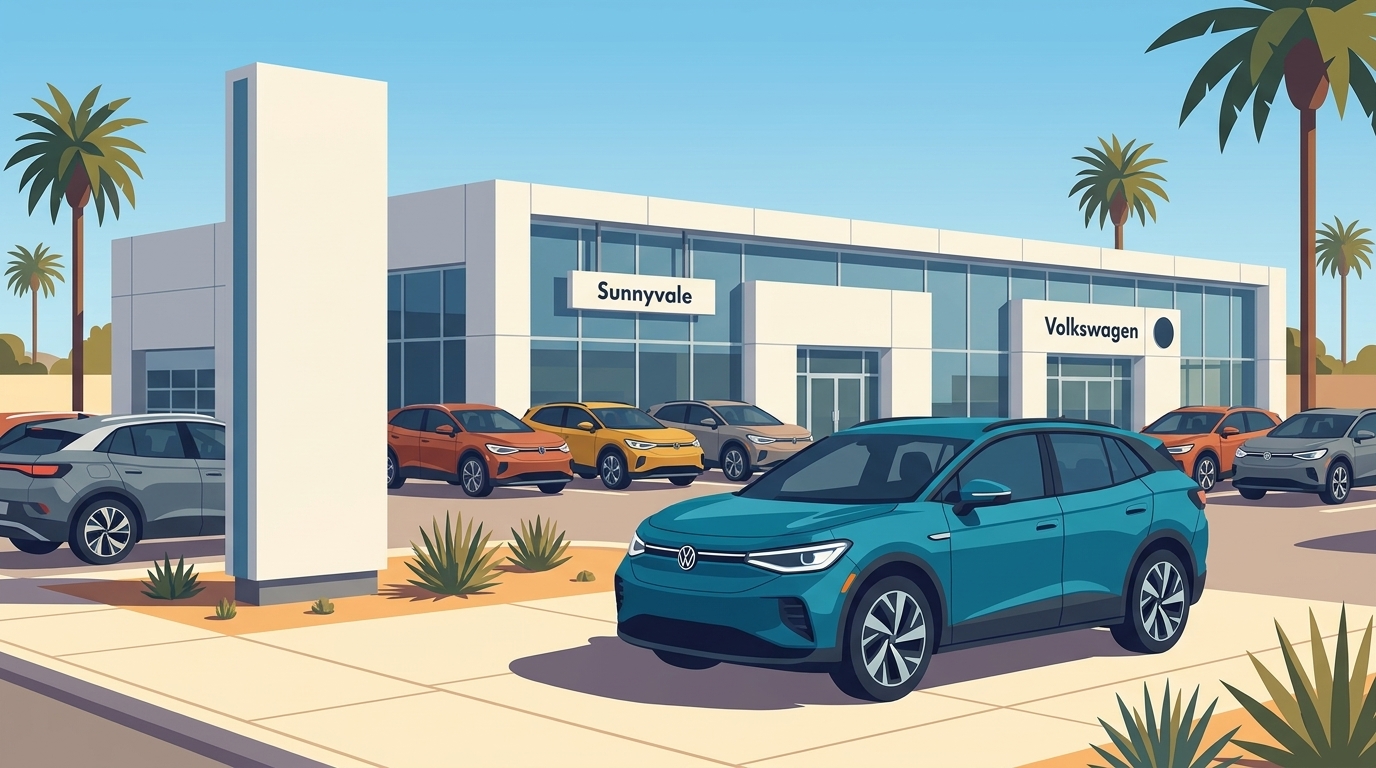
At Sunnyvale Volkswagen, buyers regularly use both approaches. Some arrive pre-approved through Star One or a national bank; others take a manufacturer-subvented VW Credit offer that the outside lender can't match on a new Jetta or ID.4.
How does dealer financing actually work in California?
Under the Rees-Levering Act, a California retail installment sale contract must clearly and conspicuously disclose the amount financed, the finance charge in dollars, the annual percentage rate, the total of payments, the payment schedule, and the dealer's security interest in the vehicle. The dealer shops the buyer's application to multiple lenders and typically earns a small margin on the rate — called dealer reserve or participation.
The Car Buyer's Bill of Rights (Civil Code § 2982) adds another layer: dealers must provide a written itemization of every add-on product — service contracts, GAP, theft deterrent, surface protection, contract cancellation agreements — showing how each affects the monthly payment. That itemization is the buyer's cheat sheet for spotting payment inflation.
What changes under the CARS Act on October 1, 2026?
The Combating Auto Retail Scams Act (SB 766) takes major operative effect on October 1, 2026, and materially tightens dealer disclosure duties in California. Dealers must disclose a vehicle's total price clearly in any advertisement referencing a specific vehicle and in the first written communication with a potential buyer. Add-ons must be presented as optional, with plain language stating the buyer does not need to buy them to get financing or the vehicle.
When monthly payments come up in written negotiations, the dealer must also show the total amount paid over the term, the length of any extended term used to reach that payment, and any downpayment or trade-in value assumed in the math. The two-year record retention requirement for that first written communication puts real teeth behind the rule.
Bank vs credit union vs dealer financing: how do they compare?
Each channel has structural strengths. Banks offer stability and broad approval criteria. Credit unions — especially California-based institutions common around Sunnyvale like those serving Silicon Valley employers — often have the lowest APRs for well-qualified members. Dealers can access manufacturer captive lenders (VW Credit, in this case) with promotional rates the outside market can't touch.
| Factor | Bank Loan | Credit Union | Dealer Financing |
|---|---|---|---|
| Typical APR position | Mid | Often lowest for members | Lowest on subvented deals; higher on standard |
| Speed at the dealership | Slower — requires funding coordination | Slower — same | Fastest — signed same visit |
| Governing law on the finance contract | TILA + CA credit statutes | TILA + CA credit statutes | Rees-Levering ASFA |
| Add-on disclosure protection | N/A to loan itself | N/A to loan itself | Car Buyer's Bill of Rights + CARS Act |
| Manufacturer incentive access | No | No | Yes (captive lender only) |
The practical playbook: get pre-approved before the visit, then ask the dealer to beat the rate. If they can — often through a captive lender promo — take it. If they can't, use the outside loan and keep negotiating price and add-ons separately.
What are the real trade-offs of financing through the dealership?
The upside of dealer financing is convenience, speed, and access to manufacturer-subvented APRs that no bank can match on specific new models. Everything closes in one sitting, and California's disclosure regime — Rees-Levering plus the Car Buyer's Bill of Rights, and after October 1, 2026, the CARS Act — puts the numbers in writing before signing.
The downside is rate markup on non-promotional loans and the risk of payment packing when add-ons get bundled into a monthly figure without the buyer seeing the itemization. That's exactly what California's add-on disclosure rule targets, but the buyer still has to read it.
Reviewers of Sunnyvale Volkswagen consistently mention transparent pricing walkthroughs — one recent customer noted being given "a complete breakdown of the cost" after visiting multiple dealerships that wouldn't provide one. That kind of itemization is what California law increasingly requires anyway; the question for buyers is which dealers do it as a matter of practice.
What are the trade-offs of financing through your own bank?
A pre-approval from an outside lender fixes the rate before negotiations begin, which converts the financing conversation from "what monthly payment can you afford" back to "what's the out-the-door price on the car." That single reframing is the biggest reason financial advisors push pre-approval.
The trade-offs: outside loans can't access manufacturer promotional APRs, funding sometimes takes 1–3 business days, and buyers still need to negotiate the vehicle price and any add-ons separately under California's consumer protection rules. Also worth noting — California sales tax is charged on the full purchase price of the vehicle, not the price after trade-in credit, so trade-in strategy does not change based on financing source.
What language and disclosure rights apply in Sunnyvale?
Under California Civil Code § 1632, if the negotiation is conducted primarily in Spanish, Vietnamese, Korean, Chinese, or Tagalog, the dealer must provide the key disclosures and the contract in that language before signing. Given the linguistic diversity across Sunnyvale and the greater Santa Clara County market, this protection covers a meaningful share of buyers.
Vehicle Code § 11713.18 separately requires dealers to disclose in writing, before sale, if a vehicle has a salvage title, structural damage affecting safe operation, flood damage, or is a manufacturer lemon-law buyback. These apply regardless of how the vehicle is financed.
Frequently asked questions
Should I get pre-approved before visiting a dealership in California?
Yes, in most cases. A bank or credit union pre-approval locks in a rate and gives buyers a concrete number for the dealer to beat. If the dealer can match or improve it — often through a manufacturer captive lender promotion — take the better offer. If not, the pre-approval funds the deal and prevents rate markup on the finance contract.
Does dealer financing come with different legal protections than a bank loan in California?
Yes. Dealer-arranged retail installment contracts are governed by California's Rees-Levering Act, which mandates specific written disclosures of APR, finance charge, total of payments, and payment schedule on the contract itself. Outside bank loans fall under federal Truth in Lending and California credit statutes. Both regimes require APR disclosure, but Rees-Levering adds California-specific protections on the sale side.
What is the CARS Act and when does it take effect?
, with major operative provisions taking effect October 1, 2026. It requires California dealers to disclose a vehicle's total price in advertisements and first written communications, disclose total amount paid and loan term when monthly payments are discussed in writing, and label add-on products as optional with clear language that they are not required for financing.
Can a California dealership mark up the interest rate on my loan?
Yes, dealers can earn compensation on the finance rate — often called dealer reserve or participation — when arranging financing through a third-party lender. This is legal but is exactly why pre-approval matters. The Rees-Levering Act requires the final APR to be disclosed on the contract, so buyers can compare the dealer's quote to their outside pre-approval and choose the lower rate.
Do California dealers have to give me disclosures in my language?
Yes, under California Civil Code § 1632, if the negotiation is conducted primarily in Spanish, Vietnamese, Korean, Chinese, or Tagalog, the dealer must provide the key disclosures and the contract in that language before signing. This applies whether the transaction is financed through the dealer or paid through an outside lender. It does not extend to languages beyond those five.
Are add-ons like GAP and service contracts required for financing in California?
No. Add-on products are optional. The Car Buyer's Bill of Rights requires dealers to itemize each add-on and show its effect on the payment. Beginning October 1, 2026, the CARS Act further requires dealers to disclose add-ons as optional with plain language stating the buyer does not need to purchase them to get the vehicle or financing. Misrepresenting them as mandatory is prohibited.
The bottom line for Sunnyvale buyers
The strongest position for a California car buyer in 2026 is pre-approved and informed — walking in with an outside loan offer, reading every disclosure the Rees-Levering Act and CARS Act require, and letting the dealer earn the financing by beating the outside rate rather than assuming they will. Sometimes the dealer wins on a manufacturer-subvented promotion; sometimes the credit union wins on straight rate. Either outcome is fine if the buyer chose it with full numbers on the table.
Readers in Sunnyvale, CA who want to compare a pre-approved offer against a dealer quote — or who want the numbers walked through line by line — can reach Sunnyvale Volkswagen at https://www.sunnyvalevw.com/ to see current inventory, run financing options, and get an itemized breakdown before signing anything. The dealership's reviews reflect a consistent theme of transparent, no-pressure walkthroughs — the kind of experience California's disclosure laws are designed to make standard.