Best Time to Buy a Car: Seasonal Timing and Dealer Incentives
Learn the best time to buy a car using seasonal timing, model year clearance cycles, and dealer incentives. Expert guidance for Sunnyvale car buyers in 2026.

Best Time to Buy a Car: Seasonal Timing and Dealer Incentives
Everyone wants to know if there's a magic window to buy a car — a week or month when the stars align, prices drop, and dealers are suddenly eager to deal. The honest answer is: yes, timing does matter, and knowing how the automotive retail calendar works can genuinely save you money. But it's not about luck. It's about understanding how inventory cycles, manufacturer incentive programs, and seasonal demand patterns interact throughout the year.
This guide walks you through the real mechanics of car buying timing — when to look, what to watch for, and how to position yourself to take advantage of the moments when dealers have the most flexibility.
How the Automotive Sales Calendar Actually Works
Dealerships don't operate on a simple monthly reset. Their inventory and pricing pressures follow a layered calendar driven by manufacturer production schedules, regional demand, and corporate sales targets. Understanding that calendar is the foundation of smart car buying timing.
At the broadest level, there are two forces working in your favor at predictable points in the year: model year changeovers and end-of-period sales quotas. Both create real incentive for dealers to move vehicles — and both create real opportunity for buyers who know when to show up.
Model Year Changeovers: The Biggest Opportunity Most Buyers Miss
Automakers typically begin rolling out the next model year vehicles in late summer and early fall. When new model year inventory arrives on the lot, outgoing models — which are often functionally identical or nearly so — need to move. Dealers face carrying costs on existing inventory, and manufacturers often layer in additional dealer cash or consumer incentives to accelerate model year clearance.
This window, roughly July through October, is historically one of the strongest periods for negotiating on current-year vehicles. You're buying a car that may be labeled as a prior model year but is still brand new, has never been titled, and often carries the same warranty coverage. The discount, however, can be meaningful — sometimes several thousand dollars below what the same trim commanded just months earlier.
If you're flexible on model year and prioritize value over having the absolute newest version, this is the window worth planning around.
End of Month, Quarter, and Year: When Dealer Incentives Peak
Dealers work against manufacturer-set sales targets that reset monthly, quarterly, and annually. When a dealership is close to hitting a volume threshold — which unlocks bonuses or manufacturer support — individual salespeople and managers have more room to negotiate because closing your deal helps the whole store hit its number.
End-of-month pressure is real, but end-of-quarter and end-of-year pressure is where the biggest deals historically emerge. December is widely regarded as the single strongest month for buyer leverage, combining model year clearance (on any remaining prior-year inventory), annual sales targets, and slower foot traffic. Dealers who need to hit year-end numbers to qualify for manufacturer bonuses are often willing to structure deals they'd have turned down in April.
The last few days of December, in particular, can produce deals that aren't available at any other point in the year. If you can visit a dealership on December 28th, 29th, or 30th with financing arranged and a clear sense of what you want, you're walking in at one of the best moments in the retail calendar.
End-of-Year Sales Events: Hype vs. Reality
You've seen the holiday sales event advertising — the inflatable snowmen and year-end clearance banners. Some of that is genuine opportunity; some of it is marketing designed to create urgency where none exists. The underlying dynamic is real: manufacturers do push extra incentive dollars toward dealers in Q4. But not every vehicle on the lot qualifies equally, and promotional APR rates or lease deals often apply only to specific trims or configurations.
The practical advice here is to do your homework before walking in. Know which models and trims are part of an active incentive program, understand the current market value, and separate the manufacturer-backed incentives (which are real) from the dealer-level promotional framing (which varies widely).
Seasonal Demand Patterns by Time of Year
Beyond the calendar pressure points, seasonal demand shifts create softer but consistent buying opportunities throughout the year.
- January and February are traditionally slow months for dealerships. Holiday spending has peaked, weather in many markets keeps casual shoppers at home, and foot traffic drops noticeably. Dealers who are sitting on inventory they hoped to move in December may be more flexible in early Q1.
- Spring (March through May) is when buyer demand picks back up. Tax refund season brings more shoppers onto lots, and demand for SUVs, crossovers, and family vehicles climbs as the weather improves. This is generally not the window for aggressive negotiating — competition among buyers increases and dealers have less pressure to deal.
- Summer brings mixed dynamics. It's a high-traffic period for dealerships, but it's also when new model year inventory starts arriving — meaning that model year clearance opportunity begins opening up, particularly by July and August.
- Fall (September through November) combines the model year clearance window with the early stages of Q4 sales pressure. For buyers who want a broad selection of both outgoing and incoming model year vehicles, this is a strong window.
What Dealer Incentives Actually Look Like in 2026
Manufacturer incentive programs in 2026 generally fall into a few categories: consumer cash (a direct reduction in the purchase price), low-APR financing offers (often subsidized below market rates), lease support (reduced money factors or capitalized cost reductions), and dealer cash (paid directly to the dealer, giving them room to negotiate without reducing the advertised price).
Understanding which type of incentive is in play matters because it affects how you negotiate. A consumer cash offer reduces the price directly and stacks with your negotiation. A low-APR offer may require you to forgo consumer cash — meaning you need to run the math on which option saves more over your ownership period.
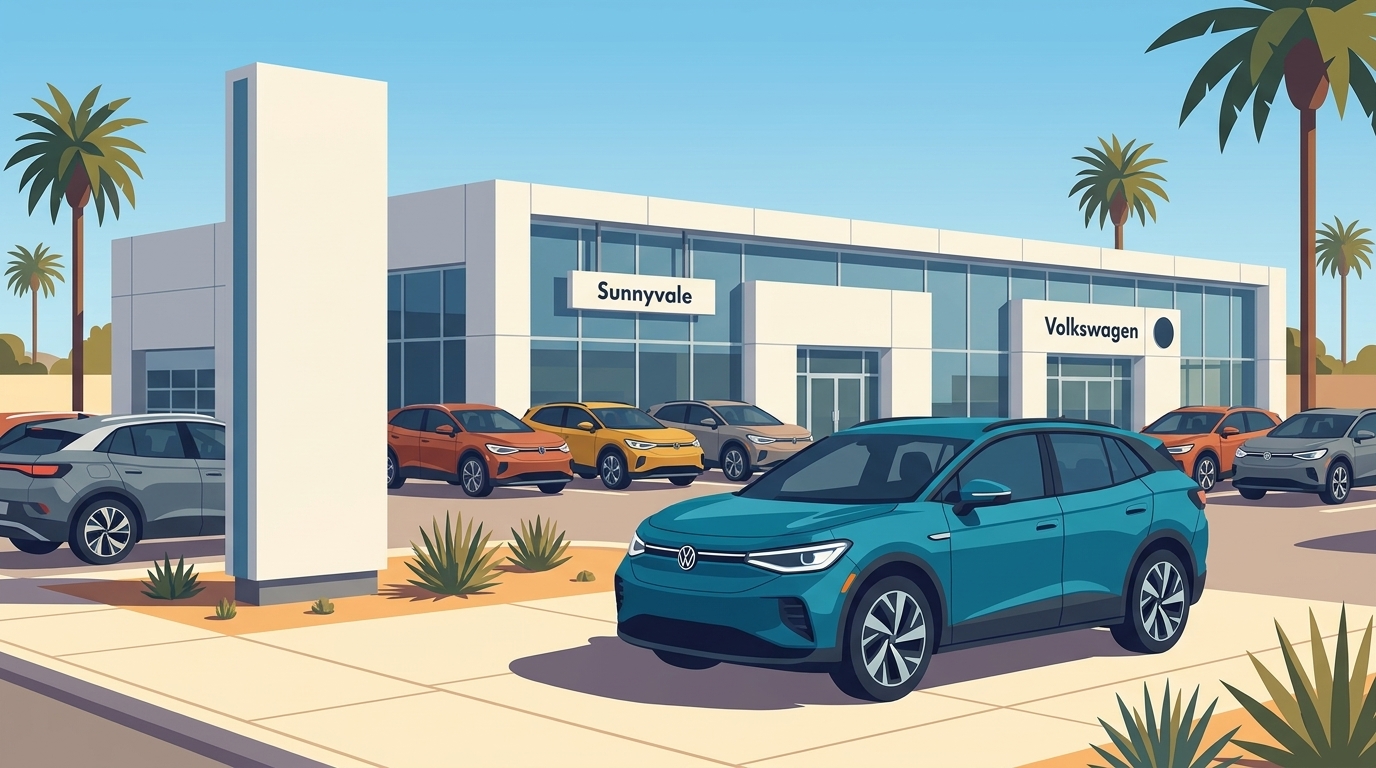
The team at Sunnyvale Volkswagen walks buyers through exactly these trade-offs during the purchase conversation — helping you understand whether taking the manufacturer financing or arranging your own loan makes more financial sense given current rates and available incentive structures.
Practical Tips for Timing Your Purchase in Sunnyvale
Sunnyvale's market has its own rhythm. The Bay Area's strong economy means demand for vehicles stays relatively consistent year-round compared to softer regional markets, which can compress the seasonal advantage slightly. That said, the calendar-driven pressure points — end of month, end of quarter, model year clearance — still operate the same way here as anywhere else in the country.
A few practical moves that hold up in the Sunnyvale market:
- Come in with financing pre-arranged. Walking in as a cash-equivalent buyer — one who doesn't need the dealer to arrange financing — gives you cleaner negotiating leverage and speeds up the transaction significantly.
- Know your target vehicle's current incentive status. Manufacturer websites publish current offers monthly. Check VW's national incentives page before visiting any dealership so you know what's actually on the table.
- Visit toward the end of the month, particularly in Q4. The last week of any month is when dealership staff are most focused on closing volume. In December, that pressure intensifies.
- Be ready to decide. The buyers who get the best outcomes are usually those who've done their research ahead of time and can make a decision the same day. Drawn-out negotiations over multiple visits often don't yield better prices — they just extend the process.
Recent customers at Sunnyvale Volkswagen illustrate this well. One customer wrote that their salesperson was "always responsive, and helpful throughout the process" and was "the only sales representative to give me a complete breakdown of the cost" after visiting multiple dealerships — exactly the kind of transparency that makes it easier to act decisively. Another noted that "from start to finish, the entire buying experience was smooth and stress-free." That kind of outcome tends to happen when a buyer comes prepared and works with a team focused on clarity over pressure.
Frequently Asked Questions: Car Buying Timing
Is the end of the year really the best time to buy a car?
For most buyers, yes — December combines more potential advantages than any other month. Model year clearance inventory may still be available, annual sales targets create dealer motivation, and manufacturer incentive programs are typically at their most competitive. That said, January can also offer residual opportunity on vehicles that didn't move in December.
Does the day of the week matter when buying a car?
Weekdays — particularly Monday through Wednesday — tend to be quieter at dealerships, which means more focused attention from sales staff and less competition from other buyers. Weekends bring more traffic, which reduces the leverage individual buyers have. If your schedule allows it, a weekday visit toward the end of the month is a reasonable approach.
How do I know if a dealer incentive is genuine?
Check the manufacturer's official website directly. Volkswagen, for example, publishes current national offers monthly. Compare what's advertised with what the dealer is presenting. Legitimate incentives are documented and verifiable — if a dealer is describing an offer that doesn't appear in manufacturer materials, ask for it in writing.
Is it better to lease or buy during incentive periods?
It depends on the structure of the incentive. Some manufacturer programs favor purchase financing; others make leasing significantly more attractive through reduced money factors or subsidized residuals. During strong incentive periods, leasing can offer monthly payments that would be hard to match through a traditional purchase loan. Running both scenarios with current numbers is the only way to know which works better for your situation.
What's the best time to buy a Volkswagen specifically?
VW typically introduces new model year vehicles in the fall, which means late summer and early fall often represent a model year clearance window on current inventory. Additionally, Volkswagen's end-of-year sales events in December frequently include manufacturer-backed financing and cash offers across multiple models. Monitoring VW's national incentives page from August onward is a reasonable strategy for buyers who aren't in a rush.
Does it help to get pre-approved for financing before visiting a dealership?
Yes — arriving with a pre-approval in hand is one of the most practical steps a buyer can take. It establishes a benchmark interest rate so you can objectively compare any financing the dealer offers, and it signals that you're a serious, ready buyer. Dealers are generally more willing to sharpen their pencil on price when the financing variable is already settled.
Can you negotiate on a car that's already discounted or part of a sales event?
In most cases, yes. Advertised sale prices and manufacturer incentives set a floor, not a ceiling on your negotiation. Dealer cash — incentives paid to the dealership rather than the consumer — gives salespeople room to move further without reducing the sticker price. Understanding which type of incentive applies to your vehicle tells you how much additional flexibility may exist beyond the advertised deal.
Closing Thoughts
Timing a car purchase well isn't about waiting indefinitely for a perfect moment — it's about understanding when the structural conditions favor buyers and showing up prepared to act on them. The end of the year, model year clearance windows, and end-of-quarter pressure points are real and consistent. Layering in your own preparation — pre-arranged financing, clear vehicle knowledge, and a willingness to decide — is what converts timing into actual savings.
For buyers in Sunnyvale looking at Volkswagen models specifically, Sunnyvale Volkswagen (https://www.sunnyvalevw.com/) is a practical starting point — their 4.4-star rating across more than 1,455 Google reviews reflects a consistent approach to transparent pricing and a purchase process that customers regularly describe as low-pressure and efficient. You can browse current inventory and available incentives directly on their site before stepping foot in the showroom.