What First-Time Car Buyers Should Know Before Visiting a Dealership in Palo Alto
A practical 2026 guide for first-time car buyers in Palo Alto: what to research, what to bring, how financing works, and how to navigate the dealership visit.
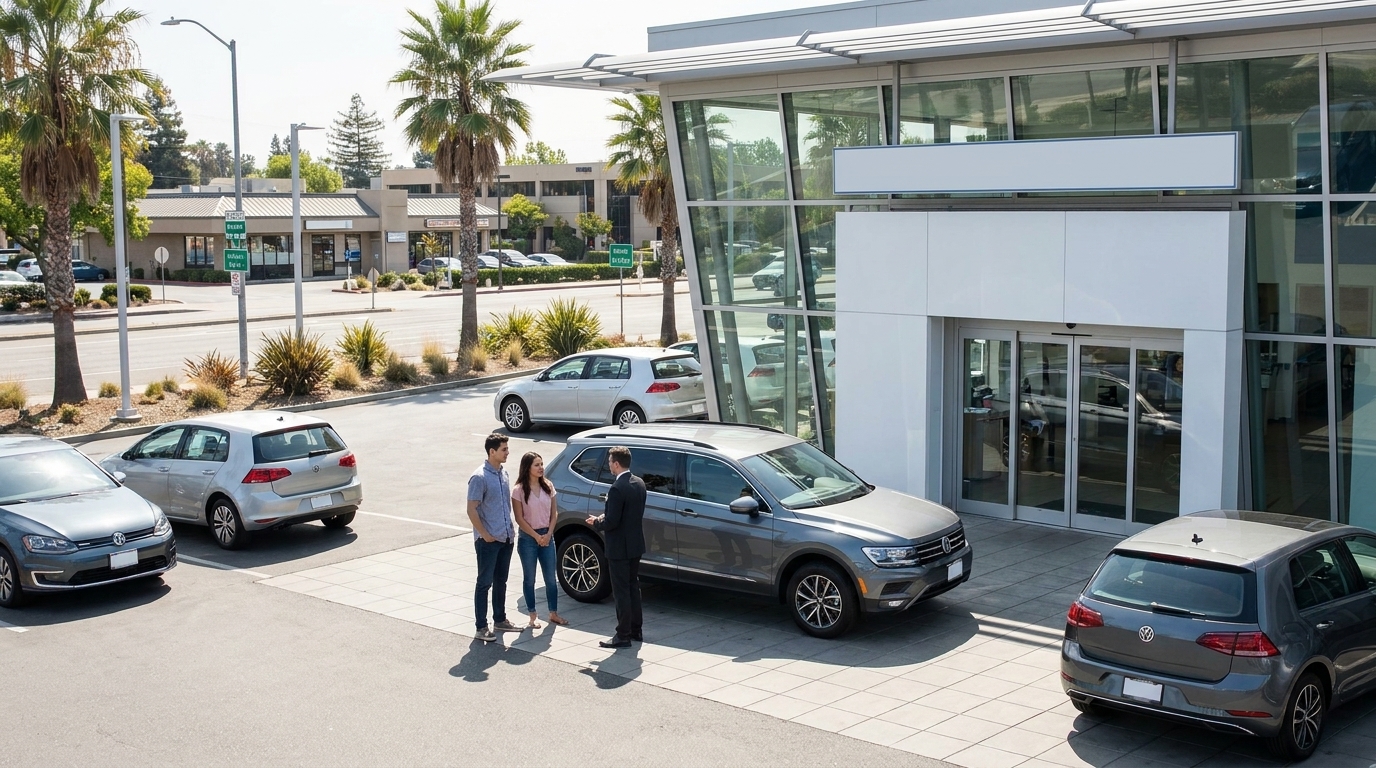
For a first-time car buyer in Palo Alto, the dealership visit is often the most intimidating part of the process. Between financing paperwork, trade-in negotiations, California-specific fees, and the sheer volume of choices on the lot, it is easy to feel outmatched before the first test drive. The good news: nearly every source of stress at a dealership can be neutralized with preparation done in the days before the visit.
This guide walks through what to know before buying a new car at a dealership in Palo Alto — from budget math and financing pre-approval to the specific line items California buyers should expect on a purchase order. It is written for the buyer who wants to walk in informed, not the one who wants to wing it.
Start With the Budget, Not the Car
The single most common mistake first-time buyers make is choosing a model before setting a realistic monthly budget. A widely used guideline is the 20/4/10 rule: put at least 20% down, finance for no more than four years, and keep total transportation costs (loan payment, insurance, fuel, maintenance) under 10% of gross monthly income. In a market like Palo Alto, where insurance premiums and parking costs run higher than the California average, the 10% ceiling matters more than the sticker price.
Buyers should also account for California's registration fees, which include a Vehicle License Fee calculated as a percentage of the vehicle's value, plus county and district surcharges. On a $35,000 new car, first-year registration and title costs in Santa Clara County typically add well over a thousand dollars to the out-the-door price. Palo Alto buyers registering vehicles through the local DMV should factor these into the budget before signing anything.
Get Financing Pre-Approval Before the Visit
Walking into a dealership with a pre-approval from a credit union or bank changes the dynamic of the conversation. It gives the buyer a benchmark interest rate to compare against the dealer's financing offer, and it removes the pressure of making a financing decision under time constraints in the finance office.
Local credit unions serving the Palo Alto area — including options through Stanford Federal Credit Union and other Peninsula institutions — often offer competitive auto loan rates for members. Buyers should request a pre-approval that specifies the maximum loan amount, the rate, and the term. Dealers can and often do beat outside offers through manufacturer-subsidized financing, particularly on new Volkswagen models, but the buyer needs the outside offer in hand to make that comparison meaningful.
Research the Specific Vehicle, Not Just the Brand
Trim levels, packages, and model-year updates matter more than most first-time buyers realize. Two vehicles with the same badge can differ by $8,000 or more depending on drivetrain, technology package, and interior options. Before the dealership visit, buyers should identify:
- The exact trim level that matches their needs (base, mid, or top)
- Any option packages that are worth the upcharge (all-weather, technology, driver assistance)
- Current manufacturer incentives, lease specials, or APR promotions for the model year
- Fuel economy or range figures relevant to a Peninsula commute
For buyers considering an EV — a common choice in Palo Alto given the density of home charging infrastructure and HOV-lane incentives — federal and California state EV credit eligibility should be verified through the manufacturer and current government guidance before the visit. Rules and eligibility have shifted repeatedly, and a dealer's finance office can confirm what applies to a specific VIN.
Understand the California Purchase Order Line by Line
The out-the-door price in California includes several items first-time buyers frequently overlook:
- Sales tax: In California, sales tax is charged on the full purchase price of the vehicle. Unlike many other states, California does not reduce the taxable amount by the value of a trade-in — buyers pay tax on the new car's full price, and receive the trade-in credit separately.
- Vehicle License Fee and registration: Collected by the dealer on behalf of the DMV.
- Documentation fee: California caps the dealer doc fee at a state-set maximum, which is significantly lower than in many other states.
- Tire fee and electronic filing fee: Small statutory charges that appear on every California new-car purchase.
Buyers should ask for an itemized out-the-door quote in writing before agreeing to anything. A reputable dealership will provide this without pushback. If a line item is unclear, that is the moment to ask — not after signing.
What to Bring to the Dealership
A prepared first-time buyer arrives with:
- A valid California driver's license
- Proof of insurance (or the insurance agent's phone number for a same-day binder)
- Pre-approval paperwork from a credit union or bank
- Two recent pay stubs or proof of income if financing through the dealer
- The title and registration for any trade-in vehicle, plus loan payoff information if applicable
- A written list of the specific trim, options, and out-the-door target price
How the Dealership Visit Typically Unfolds
A well-run new car purchase in Palo Alto generally moves through four stages: vehicle selection and test drive, trade-in appraisal (if applicable), price and financing negotiation, and finance office paperwork. Buyers should expect the full process to take two to four hours for a well-prepared transaction — longer if financing is arranged on-site without pre-approval.
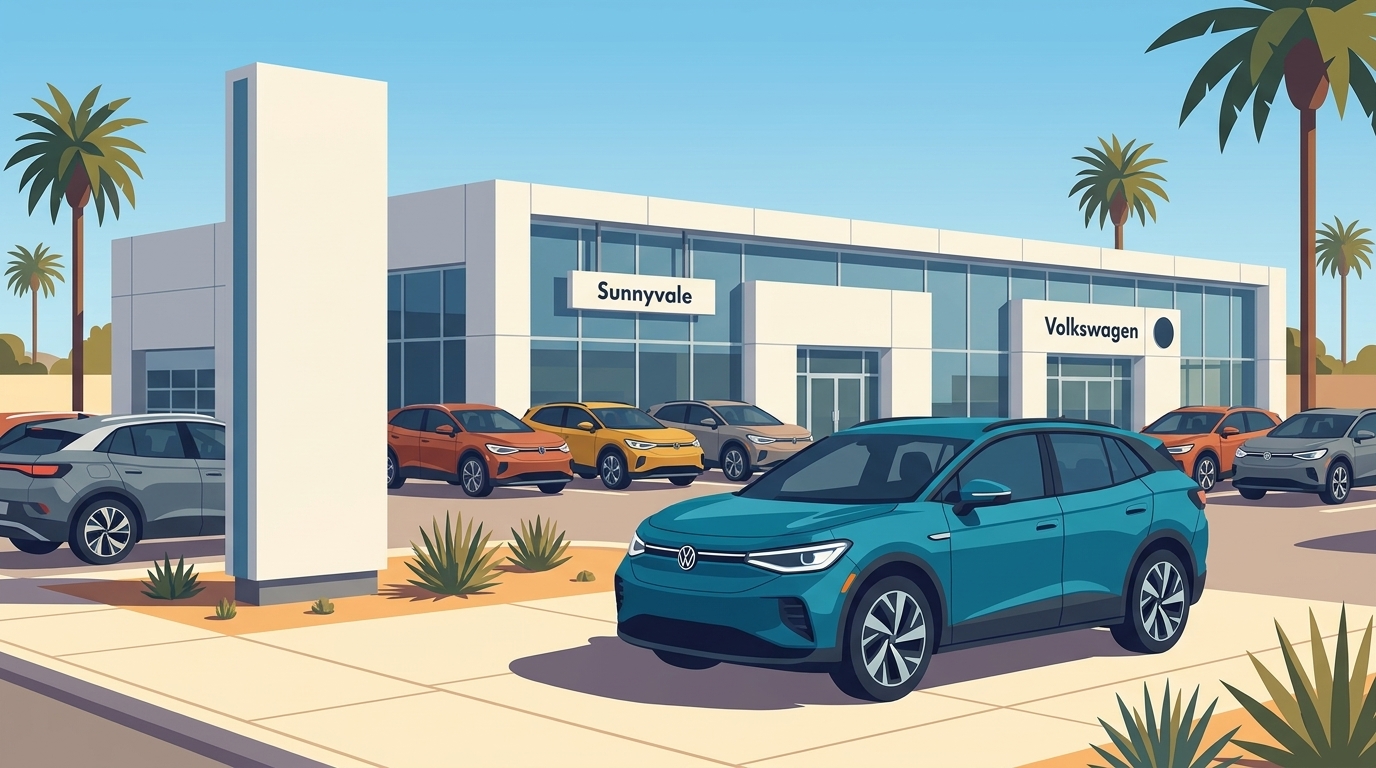
Sunnyvale Volkswagen, which serves Palo Alto buyers from just down the Peninsula, is one dealership where recent reviewers have highlighted the pace of the process. One customer described purchasing a 2026 Jetta as "a smooth process and stress free," with "no hidden fees" — the two attributes first-time buyers most consistently value. Sunnyvale Volkswagen's 4.4-star rating across more than 1,400 Google reviews reflects a pattern of transparency in pricing that first-time buyers should look for wherever they shop.
Negotiation: What Is Actually Negotiable
First-time buyers often assume everything is on the table. In practice, negotiation typically focuses on three things: the selling price of the vehicle, the value of the trade-in, and the financing rate. Manufacturer-set fees, state fees, and (in California) the capped doc fee are not negotiable. Add-ons offered in the finance office — extended warranties, paint protection, GAP insurance, tire-and-wheel coverage — are optional, and most can be purchased later or from third parties at lower cost.
Buyers should evaluate each add-on on its own merits rather than as a bundle. GAP insurance, for example, can be genuinely useful for a buyer putting less than 20% down on an EV that depreciates quickly; a paint protection package usually is not.
Frequently Asked Questions
How long does it take to buy a car at a dealership?
For a first-time buyer with pre-approval and a clear model choice, expect two to three hours. Add an hour or more if arranging financing on-site or negotiating a trade-in.
Should first-time buyers lease or finance?
Financing builds equity in an asset; leasing offers lower payments and warranty coverage during the lease term but no ownership. For buyers who drive fewer than 12,000 miles per year and want a new car every three years, a lease can make sense. For most first-time buyers planning to keep the vehicle five years or longer, financing is generally more economical.
Do I need to bring my own insurance to the dealership?
Yes. California requires proof of insurance before a vehicle can be driven off the lot. Most insurers can issue a binder over the phone within minutes if the buyer provides the VIN.
Can I return a new car after buying it in California?
California does not have a general cooling-off period for new car purchases. Once the contract is signed and the car is delivered, the sale is final. Buyers should be fully comfortable with the vehicle and the paperwork before signing.
The Bottom Line for Palo Alto Buyers
A first dealership visit does not need to be adversarial. Buyers who arrive with a budget, a pre-approval, a specific vehicle in mind, and a written target for the out-the-door price nearly always have better experiences — and better outcomes — than those who improvise. The dealership's role, when it works well, is to match the buyer with the right vehicle and handle the paperwork cleanly.
First-time buyers in Palo Alto who want to work with a dealership known for a straightforward purchasing process can reach Sunnyvale Volkswagen at https://www.sunnyvalevw.com/ to schedule a visit or request an out-the-door quote in writing before coming in.