How Long Do Electric Car Batteries Last? What Sunnyvale Buyers Should Know
Sunnyvale EV shoppers ask how long electric car batteries last. Get expert answers on lifespan, warranties, and what to expect in the Bay Area climate.
Battery longevity is the single biggest question Sunnyvale shoppers bring to electric vehicle showrooms — and for good reason. The battery is the most expensive component in any EV, and its expected lifespan directly affects total cost of ownership, resale value, and whether an electric car makes sense for a given household. The good news, supported by nearly a decade of real-world data, is that modern EV batteries are lasting considerably longer than early skeptics predicted.
The Short Answer: 12 to 20 Years for Most Modern EVs
Current industry data suggests that EV batteries in vehicles sold today are engineered to last between 12 and 20 years, or roughly 150,000 to 200,000 miles, before degrading to the point where range becomes a meaningful concern. That estimate reflects lithium-ion chemistry improvements, better thermal management systems, and more sophisticated battery management software than what was available in the first generation of mass-market EVs.
Most automakers, including Volkswagen, back their EV batteries with an 8-year or 100,000-mile warranty — whichever comes first — that guarantees the battery will retain a minimum percentage of its original capacity (typically 70%). California buyers receive additional protection: under the state's Advanced Clean Cars regulations, EV batteries sold in California must carry a 10-year or 150,000-mile warranty on certain components, which is more generous than the federal minimum.
What Actually Determines EV Battery Lifespan
Battery degradation isn't a single event — it's a gradual process influenced by several factors. Understanding them helps Sunnyvale buyers make better decisions about which EV to buy and how to care for it.
Climate and Operating Temperature
Heat is the primary enemy of lithium-ion batteries. EVs in Phoenix or Las Vegas typically degrade faster than EVs in temperate climates. Sunnyvale buyers have a natural advantage here: the South Bay's Mediterranean climate, with mild summers moderated by Bay breezes and rare freeze events, falls into one of the most favorable temperature bands for battery longevity. Drivers commuting between Sunnyvale, Mountain View, and Cupertino along the El Camino Real corridor rarely subject their batteries to the kind of sustained heat soak that accelerates degradation in desert markets.
Charging Habits
Frequent DC fast charging — the kind available at public stations along Route 101 — generates more heat and stress than slower Level 2 home charging. Industry guidance suggests limiting fast charging to roadtrips and using Level 2 charging at home or at workplace stations for daily replenishment. Most manufacturers also recommend keeping the daily state of charge between 20% and 80% rather than routinely charging to 100%.
Depth of Discharge
Running a battery from full to nearly empty repeatedly puts more strain on cells than shallower cycles. Modern battery management systems handle much of this automatically, but driver behavior still matters over a 10-plus year ownership horizon.
Battery Chemistry
Newer EVs increasingly use lithium iron phosphate (LFP) chemistry for entry-level trims, which tolerates frequent full charges better than the nickel-based chemistries used in longer-range packs. The Volkswagen ID.4 and similar vehicles use carefully managed NCM packs designed for a balance of range and longevity.
What Real-World Data Shows
Fleet studies of EVs that have been on the road for five to eight years show that most batteries retain 85% to 90% of their original capacity after 100,000 miles. Outright battery failures — the catastrophic event many shoppers fear — are rare and typically covered under warranty when they do occur. A 2026 EV driven 12,000 miles per year in Sunnyvale should reasonably expect to retain useful daily range well into the 2040s.
That projection assumes normal use. EVs used heavily for ride-share work, frequent towing, or daily fast charging will degrade faster — though still typically within warranty parameters during the first 8 to 10 years.
How Battery Lifespan Affects the Cost of Buying an EV
One of the most common questions at any electric vehicle dealership near me search is whether the higher upfront price of an EV pays off. As of 2026, new mainstream EVs in the Sunnyvale market typically range from the high $30,000s for compact models like the Volkswagen ID.4 to well over $60,000 for premium long-range SUVs. Lease deals on EVs have become increasingly competitive as manufacturers pass along federal incentives through leasing structures, often making monthly payments on a new EV comparable to a similarly equipped gas vehicle.
For buyers weighing the best EV to buy near me, battery warranty terms should sit alongside range, charging speed, and interior quality as a top evaluation criterion. A vehicle with strong battery warranty coverage, proven thermal management, and a track record of slow degradation is a fundamentally better long-term value — even if its sticker price is slightly higher.
Frequently Asked Questions
Do EV batteries need to be replaced like a phone battery?
No. EV batteries are engineered with far more robust thermal and electronic management than consumer electronics. While some capacity loss is normal over a decade of ownership, full replacement is uncommon within the typical ownership window.
What happens if my EV battery fails under warranty?
If the battery falls below the warranted capacity threshold (typically 70%) within the warranty period, the manufacturer will repair or replace it at no cost. In California, the extended warranty requirements provide additional protection beyond the federal minimum.
How does Bay Area weather affect EV range?
Sunnyvale's mild climate is among the most favorable in the country for EV ownership. Buyers may notice modest range reduction during winter cold snaps or summer heat waves, but the day-to-day impact is minimal compared to harsher climates.
Are EV lease deals a good way to avoid long-term battery concerns?
Leasing is a reasonable path for buyers who want to drive a new EV every three years without taking on long-term battery risk. Current ev lease deals near me searches often surface attractive terms, particularly on models where manufacturers are actively building market share.
Does Sunnyvale have enough charging infrastructure to support an EV?
Yes. The South Bay has one of the densest public charging networks in the country, with stations clustered around downtown Sunnyvale, major employer campuses, and shopping centers near Lawrence Expressway and El Camino Real. Most owners charge primarily at home, supplemented by workplace and public Level 2 stations.
Choosing an EV With Long-Term Confidence
Battery longevity comes down to a combination of engineering, climate, and habits — and Sunnyvale buyers happen to live in one of the most favorable EV markets in the country. The practical implication is that EVs purchased today should comfortably outlast their loan or lease term and continue serving as reliable daily transportation well beyond it.
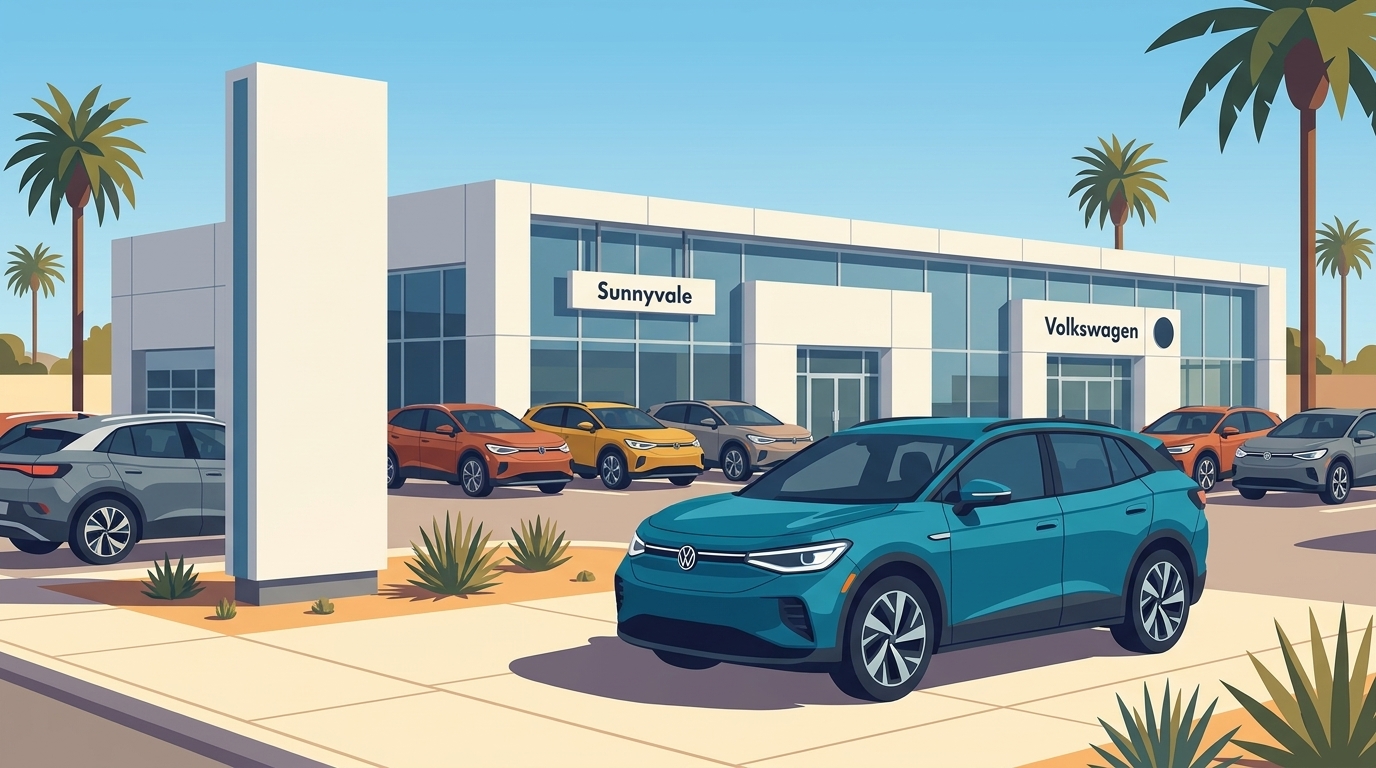
Sunnyvale Volkswagen carries the ID.4 alongside a broader new and pre-owned inventory, and the team there spends a meaningful share of its time walking shoppers through exactly the questions covered above — warranty coverage, charging behavior, and how a specific household's driving pattern will affect long-term battery health. The dealership's 4.4-star rating across more than 1,400 Google reviews reflects a consistent pattern of unpressured, transparent conversations, with one recent reviewer noting there were "no hidden fees" and another describing the process as "quick and painless."
Sunnyvale, CA shoppers who want to compare specific EV models, review current lease and finance offers, or talk through battery warranty details in person can visit Sunnyvale Volkswagen at https://www.sunnyvalevw.com/ to schedule a test drive or get a personalized quote.