EV Tax Credit Eligibility in Palo Alto, CA: 2026 Guide
How Palo Alto EV buyers should think about federal credits, California's CVRP rebate, income caps, and charger incentives now that federal rules have changed.
For Palo Alto buyers shopping electric vehicles in 2026, the short answer is this:, but California's Clean Vehicle Rebate Project (CVRP) can still deliver a state rebate, and a federal credit for home charging equipment may remain available through June 30, 2026 for qualifying census tracts. The landscape has narrowed, but meaningful incentives still exist for California residents who plan carefully.
Is the federal EV tax credit still available for Palo Alto buyers in 2026?
No. That means a Palo Alto buyer purchasing an EV in 2026 cannot claim the federal credit on their return, regardless of the vehicle or income level, unless they qualify under a narrow binding-contract exception.
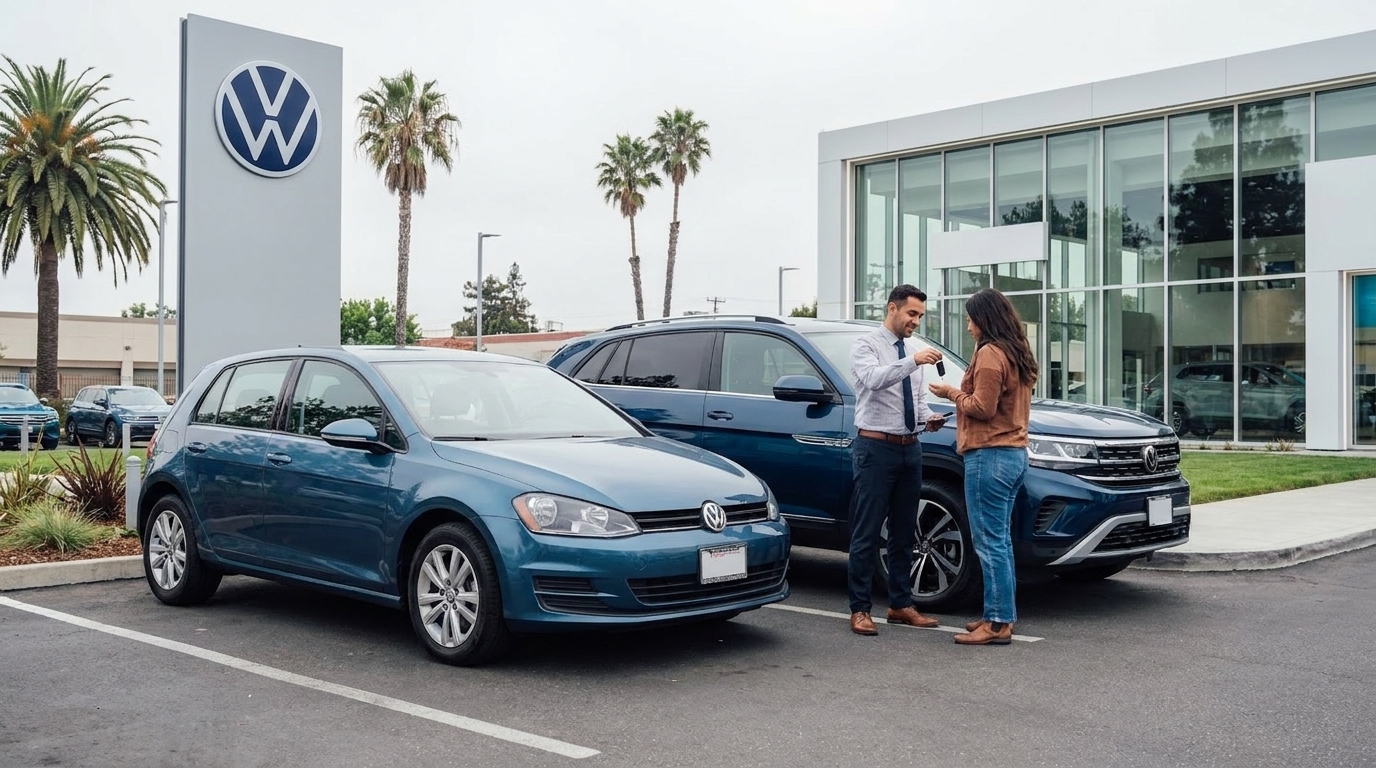
, which amended the underlying tax code sections. Buyers, sales staff, and even some tax preparers still cite the old $7,500 figure out of habit — but as of this writing, that credit no longer applies to new 2026 EV purchases. Sunnyvale Volkswagen, which serves buyers across Palo Alto, Mountain View, and the broader Peninsula, works from the current rules rather than the pre-2026 framework many online calculators still reflect.
Who still qualifies under the binding-contract exception?
when the vehicle is placed in service, even if delivery slipped into 2026. All other statutory requirements (income, MSRP cap, North American final assembly, battery and critical-minerals sourcing) must still be met.
For the § 30D new-vehicle credit under the pre-cutoff rules, the credit is up to $7,500, split as $3,750 for critical minerals and $3,750 for battery components. Income caps are $150,000 for single filers, $225,000 for head of household, and $300,000 for joint filers, based on modified adjusted gross income. The § 25E used credit was up to $4,000 (30% of sale price), limited to vehicles priced $25,000 or less, at least two model years old, and purchased from a licensed dealer, with tighter income caps of $75,000, $112,500, and $150,000.
What California incentives still apply to Palo Alto EV buyers?
California's Clean Vehicle Rebate Project (CVRP), administered by CARB, continues to offer post-purchase rebates on new eligible BEVs, PHEVs, and FCEVs for California residents. Palo Alto buyers must be California residents at both purchase and application, register the vehicle with the California DMV in their name, and apply within the program window — commonly within 90 calendar days of purchase or lease.
CVRP applies standard income caps of $135,000 for single filers, $175,000 for head of household, and $200,000 for joint filers, as documented in CARB's program materials. Lower-income applicants may qualify for increased rebate amounts subject to income documentation. The vehicle must appear on CARB's current CVRP eligible vehicle list and meet the MSRP cap in the current Implementation Manual.
Two Palo Alto-specific realities are worth flagging. First, CVRP funding is not guaranteed — the program has periodically paused new applications when funds were exhausted, and rules shift with each annual CARB Funding Plan. Second, Bay Area electricity rates and the density of workplace charging around Stanford Research Park, Palo Alto's California Avenue business district, and the downtown University Avenue corridor make total-cost-of-ownership math more favorable here than in most U.S. markets, even without the federal credit.
How does the CVRP 30-month rule affect Palo Alto buyers?
CVRP requires the rebate vehicle to remain registered in California for a minimum period of approximately 30 months. Selling, transferring, or moving the vehicle out of state before that window closes triggers pro-rated or full repayment obligations under the CVRP Terms and Conditions. For a Palo Alto buyer whose employer might relocate them, this is a real consideration.
Enforcement runs through CARB and its program contractor, using DMV registration cross-checks, income and residency verification, and audits. Fraudulent applications or early removal can lead to rebate clawback, application denial, and referral for civil or criminal penalties. Buyers weighing a short-term lease against a purchase should factor the 30-month registration commitment into that decision.
Does the federal home charger credit still exist?
Yes — the IRC § 30C Alternative Fuel Vehicle Refueling Property Credit for EV charging equipment remains available through June 30, 2026, providing a 30% credit on purchase and installation costs, claimed on IRS Form 8911. Critically, the equipment must be installed in an eligible low-income or non-urban census tract. Not every Palo Alto address will qualify, and buyers should verify their specific location using the IRS or DOE census tract lookup tools before assuming eligibility.
Because Palo Alto's census tracts skew high-income and urban, many residents will find their primary residence does not qualify. Buyers with second properties, rental units, or family homes in outlying San Mateo or Santa Clara County tracts may have more flexibility. The credit applies to the charging hardware and installation — not the vehicle itself.
What should Palo Alto buyers do differently in 2026?
The practical shift is that the sticker-to-driveway math no longer starts with a $7,500 federal deduction. Palo Alto buyers should evaluate financing terms, manufacturer incentives, lease residuals, and the CVRP rebate as the primary levers — rather than assuming a federal credit will backfill the price. Dealer-side EV financing programs, manufacturer-subvented lease rates, and California utility rebates from PG&E for charger installation often now carry more weight than the residual federal picture.
Working with an EV-focused dealership
Experienced EV-focused dealerships help buyers model the full picture — CVRP eligibility, MSRP cap compliance, lease-versus-buy math under current rules, and charger install economics. Sunnyvale Volkswagen carries the ID.4 and works with Palo Alto buyers on that end-to-end analysis. The dealership's customer reviews reflect a consistent theme in customer feedback: transparent pricing breakdowns and a no-pressure sales process.
Comparing incentive scenarios for a 2026 Palo Alto EV purchase
The table below summarizes what a Palo Alto buyer can realistically expect from each incentive category in 2026, based on current federal and California rules.
| Incentive | Status for 2026 Palo Alto Buyer | Maximum Value | Key Condition |
|---|---|---|---|
| Federal § 30D new EV credit | Not available | $0 | Repealed for vehicles acquired after Sept 30, 2026 |
| Federal § 25E used EV credit | Not available | $0 | Repealed for vehicles acquired after Sept 30, 2026 |
| Binding-contract exception | Narrow eligibility | Up to $7,500 | Contract signed and payment made on or before Sept 30, 2026 |
| California CVRP rebate | Available, funding-dependent | Per current CARB schedule | Income caps, MSRP cap, 30-month CA registration, apply within ~90 days |
| Federal § 30C charger credit | Available through June 30, 2026 | 30% of cost | Eligible low-income or non-urban census tract only |
Frequently asked questions
Can a Palo Alto buyer claim the federal EV tax credit on a 2026 purchase?
No. and is now taking delivery under that pre-existing agreement.
How does the CVRP rebate application work in California?
CVRP is a post-purchase rebate. The buyer purchases or leases an eligible new BEV, PHEV, or FCEV from CARB's current eligible vehicle list, registers it with the California DMV, and applies through CARB's program administrator — commonly within 90 calendar days of purchase or lease. Applicants must be California residents at both purchase and application, and must meet income and MSRP requirements.
What are the CVRP income limits for 2026?
Documented CVRP income caps are $135,000 for single filers, $175,000 for head-of-household filers, and $200,000 for joint filers, per CARB's program implementation materials. Lower-income applicants may qualify for increased rebate amounts with additional documentation. Because CARB updates these figures through annual Funding Plans, Palo Alto buyers should verify current thresholds before applying.
What happens if a CVRP rebate recipient moves out of California?
CVRP requires the vehicle to remain registered in California for approximately 30 months. Early sale, transfer, or removal from the state triggers pro-rated or full rebate repayment under the CVRP Terms and Conditions. CARB enforces this through DMV registration cross-checks and audits, and can pursue repayment demands and further penalties for violations or fraudulent applications.
Does the federal home charger credit apply in Palo Alto?
Only for eligible locations. The IRC § 30C credit — 30% of charger purchase and installation costs through June 30, 2026 — applies only when the equipment is installed in a qualifying low-income or non-urban census tract. Many Palo Alto residential addresses fall outside those tracts. Buyers should verify their specific address using the IRS or DOE census tract lookup tool before assuming eligibility, then claim the credit on Form 8911.
Should Palo Alto buyers lease or buy an EV in 2026?
The answer depends on the buyer's tax situation, driving needs, and how long they plan to keep the vehicle. With federal purchase credits repealed, the historical lease advantage of a passed-through commercial credit is also gone. Manufacturer-subvented lease rates, CVRP eligibility, and residual values now drive the math. A dealership experienced with EV transactions can model both scenarios against current California rules.
The bottom line for Palo Alto EV buyers
The 2026 incentive picture is narrower than it was a year ago, but not empty. California's CVRP still delivers meaningful value for eligible Palo Alto residents, the § 30C charger credit remains available through June 30, 2026 for qualifying locations, and manufacturer and financing incentives have become more important levers in the total-cost equation. This summary reflects current federal and California rules and is not legal or tax advice — buyers should verify current CVRP status directly with CARB and consult a qualified tax professional for their specific situation.
Readers in Palo Alto who want a straightforward walk-through of what applies to their specific purchase — CVRP eligibility, MSRP caps, financing options, and charger considerations — can reach Sunnyvale Volkswagen at https://www.sunnyvalevw.com/ to get started.