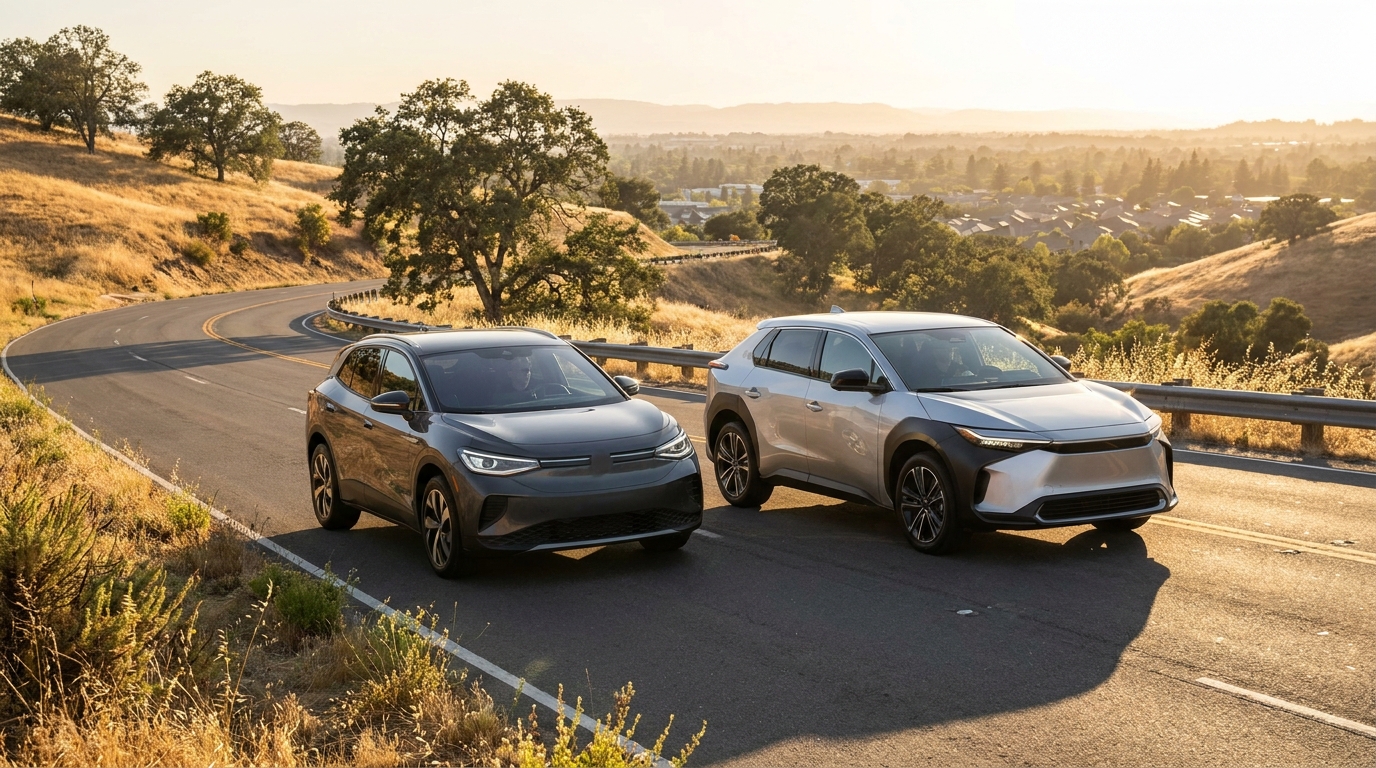
2026 VW Tiguan vs Nissan Rogue in Palo Alto, CA
Compare the 2026 Volkswagen Tiguan and Nissan Rogue on price, MPG, cargo, power, and Bay Area fit — with clear guidance for Palo Alto shoppers.
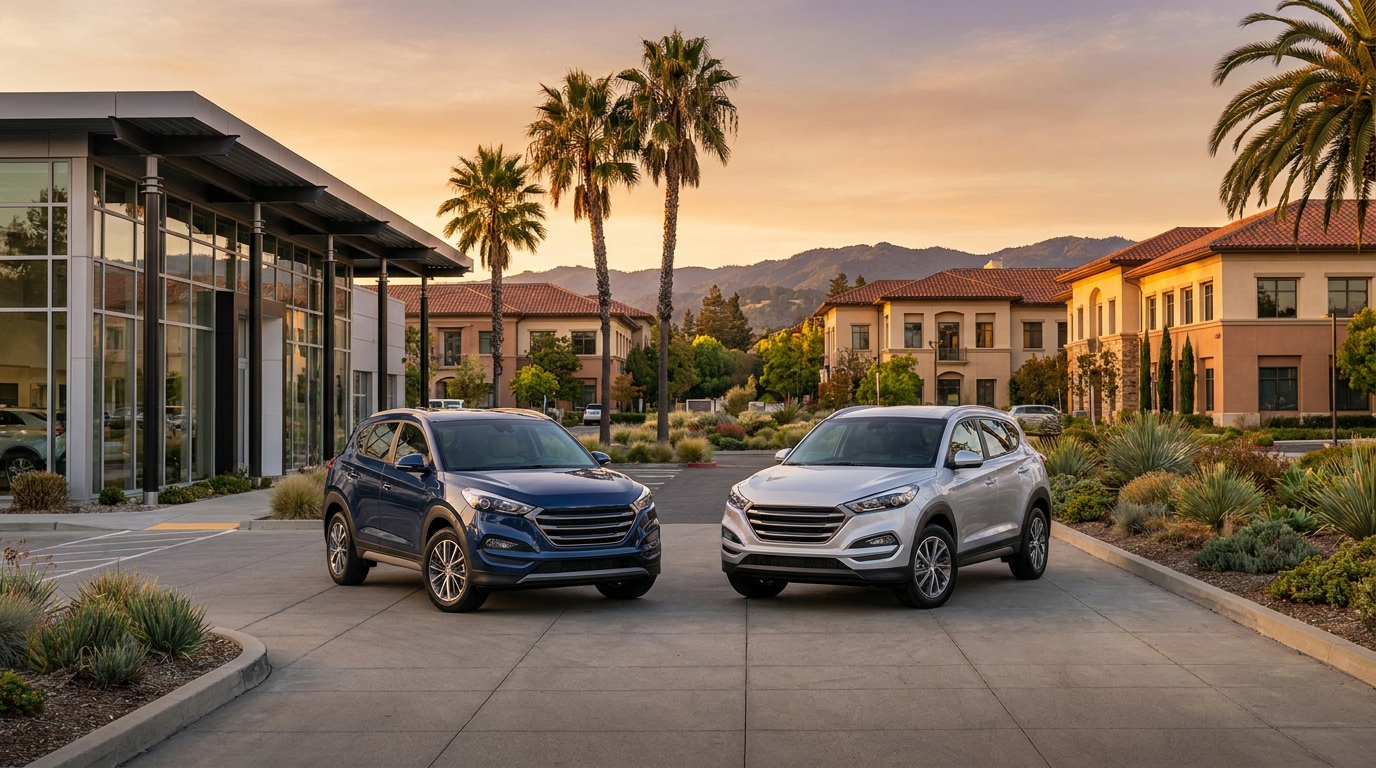
The 2026 Volkswagen Tiguan and 2026 Nissan Rogue are the two compact crossovers most often cross-shopped in the Bay Area, and on paper they look closer than they drive. Both seat five, both make 201 horsepower, and both target the same commuter buyer. The meaningful differences show up in transmission behavior, fuel economy, cargo volume, performance headroom, and starting price — and those differences point toward two distinct kinds of buyers.
The short answer for Palo Alto shoppers: the Rogue is the value and efficiency pick, while the Tiguan is the driver's pick with a genuine performance ceiling. Below is how the two stack up across the dimensions that actually decide the sale.
Price: Tiguan Starts Lower, Rogue Reflects a Refresh
The 2026 Volkswagen Tiguan starts at $30,805, while the 2026 Nissan Rogue starts at $33,340 per Nissan USA's specs page (reflecting the 2026.5 model year designation). That's a roughly $2,500 gap at the base trim in the Tiguan's favor.
The picture inverts as you climb the range. Mid- and upper-trim Tiguans often price above equivalent Rogue trims, and in the Palo Alto and greater Bay Area market, comparably equipped Rogues typically transact $1,500-$2,500 below Tiguans of similar content. Buyers focused on entry price lean Tiguan; buyers matching feature-for-feature at the SL or Platinum level often find the Rogue lands cheaper on the out-the-door figure.
Fuel Economy: Rogue's Clear Advantage on the 101
The 2026 Nissan Rogue returns up to 33 mpg combined in front-wheel-drive S and SV trims, versus 29 mpg combined for the front-drive Tiguan S. In all-wheel drive, the Rogue holds 31 mpg combined on S/SV and Platinum, while the Tiguan drops to 25 mpg combined in AWD and in the SEL R-Line Turbo. The Rock Creek AWD Rogue still delivers 29 mpg combined.
For a Palo Alto commuter running the 101 corridor to Mountain View, San Jose, or up to San Francisco, that 3-6 mpg combined gap is material. Over 15,000 annual miles at current California gas prices, the Rogue's efficiency advantage compounds — and it matters even more because the Tiguan's high-output SEL R-Line Turbo requires premium fuel.
Engine and Transmission: 8-Speed Auto vs CVT
Both crossovers make 201 hp in standard trim, but they get there differently. The Tiguan uses a 2.0-liter turbocharged inline-four paired with an 8-speed automatic, producing 207 lb-ft of torque. The Rogue uses a 1.5-liter VC-Turbo three-cylinder paired with an Xtronic CVT, producing 225 lb-ft at 2,800-4,000 rpm — more torque than the Tiguan in standard form.
The transmission is where preferences diverge. The Tiguan's 8-speed automatic delivers the stepped, responsive feel most enthusiast drivers prefer, especially on Skyline Boulevard or Highway 84 heading toward the coast. The Rogue's CVT is smoother in stop-and-go traffic on El Camino Real but can feel less engaging under hard acceleration onto a short freeway ramp.
The Tiguan's Performance Trump Card
The Tiguan SEL R-Line Turbo produces 268 hp and 258 lb-ft of torque — an output no Rogue trim comes close to matching. For buyers who regularly drive Highway 17 to Santa Cruz or climb into the Santa Cruz Mountains, that headroom translates to easier passing and more confident merging on grades. If real performance is on the shopping list, only the Tiguan offers it.
Cargo and Interior Space: Rogue Hauls More
The 2026 Rogue offers 36.5 cubic feet behind the second row and 74.1 cubic feet with the seats folded, versus 33.8 and 69.8 cubic feet in the Tiguan. That's roughly 2.7 more cubic feet for everyday cargo and 4.3 more with the seats down.
The Rogue also edges the Tiguan on front headroom, front legroom, and rear shoulder and hip room. For families packing for weekends at Half Moon Bay or hauling gear back from Stanford Shopping Center, the Rogue is the more accommodating box.
Towing: Tiguan Pulls More
The Tiguan is rated to tow 1,800 pounds, versus 1,500 pounds for the Rogue. Neither is a serious tow vehicle, but that 300-pound advantage matters for small utility trailers, jet skis, or a light teardrop camper heading to Big Basin.
Maneuverability: Rogue Is Easier to Park
The Rogue has an approximate 35.4-foot turning circle, versus roughly 38.1 feet for the Tiguan. In practical terms, that's a meaningful difference when threading the parking structures at Town & Country Village, the tight lots off University Avenue, or the residential streets of Professorville and Crescent Park.
Trim Lineups: Rogue Offers More Variety, Tiguan Offers a Halo
The 2026 Rogue is offered in five trims: S, SV, SL, Rock Creek, and Platinum. The Tiguan comes in four: S, SE, SE R-Line Black, and SEL R-Line Turbo.
Nissan's lineup covers more use cases — the Rock Creek adds mild off-road styling and hardware, while the Platinum leans luxury. Volkswagen's lineup is narrower but includes the SEL R-Line Turbo as the only trim in either lineup with meaningful performance content.
Warranty: Nissan's Terms Are Explicit
The Rogue carries a 3-year/36,000-mile basic warranty, a 5-year/60,000-mile powertrain warranty, and 5-year/unlimited-mile corrosion coverage. The Tiguan is covered by Volkswagen's standard new-vehicle limited warranty plus powertrain warranty and roadside assistance; specific term lengths should be confirmed with the dealer.
Which One Fits a Palo Alto Buyer?
Choose the 2026 Nissan Rogue if base price, fuel economy, cargo volume, and tight-quarters maneuverability lead your list. It's the pragmatic commuter pick for buyers logging heavy miles on 101 or 280 and parking in dense urban lots.
Choose the 2026 Volkswagen Tiguan if driving feel, transmission behavior, towing headroom, or the option of the 268 hp SEL R-Line Turbo matter. It's the pick for drivers who want a compact crossover that responds like a car rather than a commodity, and who appreciate a more refined cabin. Sunnyvale Volkswagen serves Palo Alto shoppers looking to test the full Tiguan range including the SEL R-Line Turbo, which is not stocked at every Bay Area dealer.
FAQ: 2026 Tiguan vs 2026 Rogue
Should I buy the Tiguan or the Rogue?
Buy the Tiguan if you value driving engagement, want a traditional 8-speed automatic, or need the 268 hp option. Buy the Rogue if you prioritize fuel economy, cargo room, and a lower starting price. Both are 5-passenger compact crossovers with 201 hp in standard trim.
Which has better fuel economy in 2026?
The Rogue. It delivers up to 33 mpg combined (FWD S/SV) versus 29 mpg combined for the Tiguan FWD S. In AWD, the Rogue returns 31 mpg combined versus 25 mpg for the AWD Tiguan.
Which has more cargo space?
The Rogue, with 36.5 cubic feet behind the second row and 74.1 cubic feet with seats folded, compared to 33.8 and 69.8 cubic feet in the Tiguan.
Does the Tiguan really out-tow the Rogue?
Yes. The Tiguan is rated at 1,800 pounds versus 1,500 pounds for the Rogue — useful for small trailers and light recreational loads.
Which is better for driving in the Bay Area?
It depends on the driving. For hilly routes like Highway 17 or Skyline, the Tiguan's 8-speed automatic and available 268 hp engine are more satisfying. For daily commuting and tight parking in downtown Palo Alto, the Rogue's efficiency and 35.4-foot turning circle are easier to live with.
The Bottom Line
The 2026 Volkswagen Tiguan and 2026 Nissan Rogue are both credible compact crossovers, and the right answer depends on which tradeoffs a buyer is willing to make. The Tiguan wins on starting price, driving feel, towing, and performance headroom; the Rogue wins on fuel economy, cargo, maneuverability, and warranty clarity.
Palo Alto shoppers who want to drive the Tiguan lineup — including the 268 hp SEL R-Line Turbo — and compare it directly against a Rogue they've already sat in can visit Sunnyvale Volkswagen at https://www.sunnyvalevw.com/ to schedule a test drive and review current inventory and pricing.